



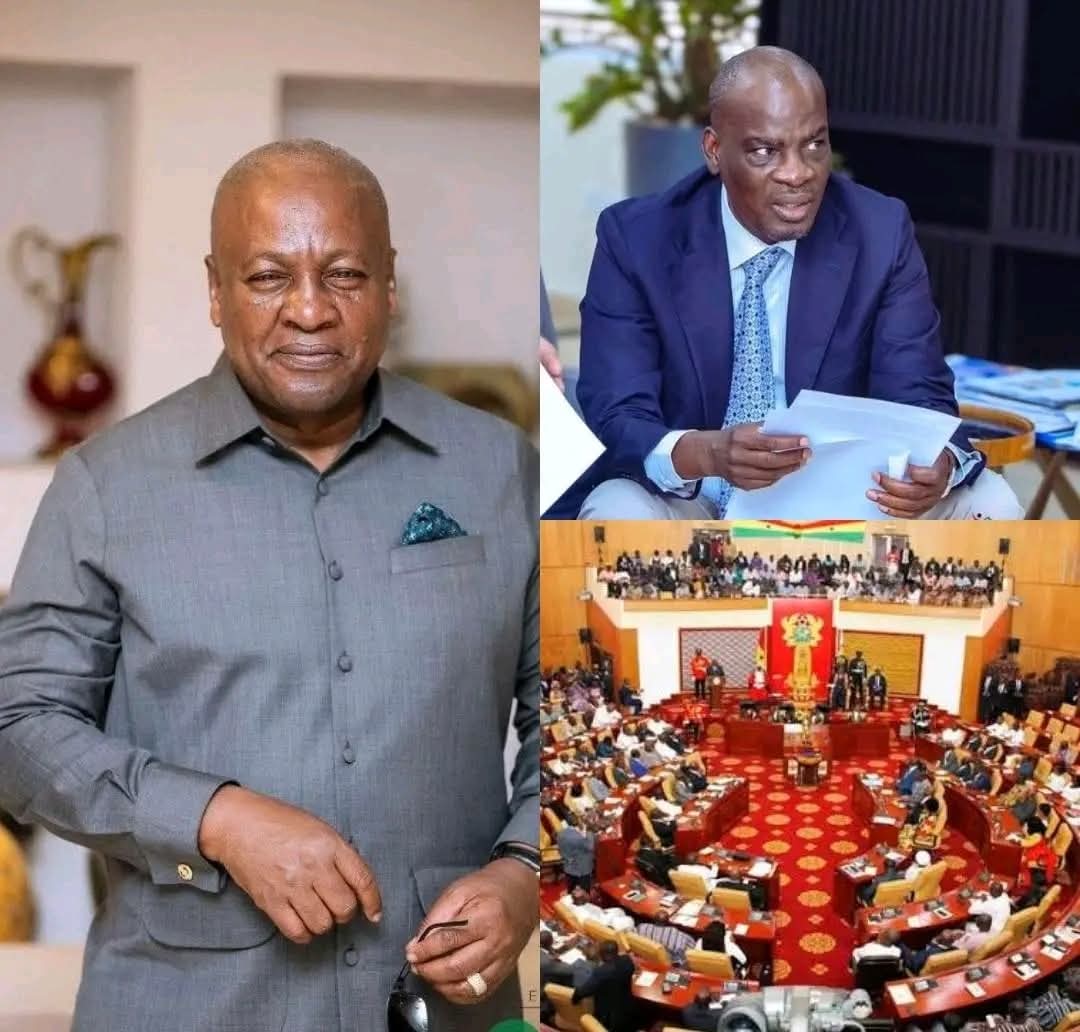
In a move aimed at deepening inclusivity in governance, the Minister of Education, Haruna Iddrisu, has announced that President John Dramani Mahama and his administration are actively considering plans to restructure Parliament. The proposal seeks to expand the legislative body to include reserved seats for traditional leaders, the youth, and more women.
This development aligns with ongoing constitutional review processes initiated by the President, which seek to broaden the frontiers of Ghana’s democracy beyond the current parliamentary structure.
A More Inclusive Legislature
According to sources familiar with the discussions, the plan involves a significant departure from the current winner-takes-all parliamentary system. The administration is examining a model of proportional representation or reserved seats that would formally integrate key demographic and traditional groups into the legislative process.
The Constitutional Review Committee (CRC), set up by President Mahama, has reportedly been a driving force behind these proposals. The committee has previously recommended a shift in the governance architecture to ensure that voices outside the traditional political party structure are heard in the House of Representatives.
“The era where Parliament is exclusively the domain of politicians elected solely on a partisan ticket may be evolving,” a source close to the Ministry of Education suggested, echoing the Minister’s sentiments.
Role of Traditional Leaders
The inclusion of traditional leaders is a cornerstone of the proposal. This idea is not entirely new to Ghana’s political discourse; it mirrors suggestions previously made by former President John Agyekum Kufuor, who once advocated for a second chamber or “House of Chiefs” composed of traditional rulers, religious leaders, and distinguished professionals to serve as a “house of wisdom and experience” .
President Mahama has already signaled a shift toward a more structured partnership with traditional authorities. During a recent meeting with the Northern Regional House of Chiefs, he emphasized that traditional leadership has been “underutilized” in Africa and announced frameworks for chiefs to partner with Metropolitan, Municipal, and District Assemblies (MMDAs) to monitor development .
Formalizing their presence in Parliament would elevate their role from advisory to legislative, giving them a platform to debate bills and national policy.
Women and Youth Representation
The administration is also prioritizing gender balance and youth empowerment. The push for more women in Parliament aligns with the long-pending Affirmative Action Bill and recent calls by Queenmothers for greater inclusion in governance .
Furthermore, the Constitutional Review Committee has recommended lowering the age of candidacy for President from 40 to 30, signaling a desire to bridge the generational gap in leadership . By creating reserved seats for the youth, the government aims to ensure that the demographic bulge of young Ghanaians has a direct say in shaping the future of the country.
“The government is committed to ensuring that the voices of young people are not just heard in the streets but in the chambers where laws are made,” Minister Iddrisu noted, highlighting the administration’s vision.
Political and Constitutional Hurdles
While the proposal has been met with public enthusiasm as a “complete democracy” move, it faces significant constitutional hurdles. Establishing reserved seats or a second chamber would require amendments to entrenched provisions of the 1992 Constitution.
Currently, the CRC has recommended that some entrenched provisions be reclassified as “semi-entrenched,” allowing amendments with a 75% majority in Parliament rather than a costly referendum . However, creating an entirely new parliamentary structure would likely require significant cross-party consensus and public buy-in.
Speaker of Parliament Alban Bagbin has also launched a new five-year Corporate Strategic Plan aimed at strengthening legislative effectiveness . Any expansion of the House would require a corresponding expansion of resources and administrative capacity.
Public Reaction
Political analysts view the move as a strategic effort by President Mahama to leave a legacy of institutional reform. For many Ghanaians, the idea of seeing chiefs in parliament—sitting alongside elected representatives—represents a fusion of traditional authority with modern democratic governance.
As Ghana continues to review its constitution, the proposal to expand Parliament is expected to dominate public discourse in the coming months. The administration has urged Ghanaians to support the reforms, stating that this is the next logical step in the nation’s democratic evolution.


