



Organised labour has thrown its weight behind the government’s proposal to establish an Independent Public Emoluments Commission (IPEC), but with a firm caveat: the process must be a genuine partnership, not a token consultation. At a two-day stakeholder engagement in Accra, labour leaders made it clear that they will not accept a piecemeal approach to overhauling Ghana’s public sector compensation system, demanding full and continuous involvement from the drafting stage through to implementation.
The engagement, organised by the Fair Wages and Salaries Commission (FWSC) under the theme “Towards an Independent, Equitable, and Sustainable Compensation System: Stakeholders’ Perspectives on Ghana’s Public Sector Pay Reforms,” brought together more than 50 labour organisations, including the Trades Union Congress (TUC), Ghana Federation of Labour (GFL), Civil and Local Government Staff Association, Ghana (CLOGSAG), University Teachers Association of Ghana (UTAG), and the Ghana Registered Nurses and Midwives Association (GRNMA). The aim was to incorporate labour’s input into the draft IPEC Bill before it is presented to Parliament.
IPEC: A New Era or Just a New Name?
The proposed IPEC, when passed into law, will repeal the existing FWSC Act (Act 737) and establish a fresh framework for determining and managing public sector remuneration. The government has pitched the reform as a move toward greater fairness, transparency, and fiscal sustainability — a response to growing dissatisfaction with the Single Spine Pay Policy (SSPP), which has been in operation since 2010.
FWSC Chief Executive Dr. George Smith-Graham, however, cautioned that IPEC must not be a mere rebranding exercise. “IPEC should represent the next generation of public compensation governance,” he said. “Our purpose is not to manufacture consensus. It is to understand differences and build a system that commands legitimacy.”
He acknowledged that the Single Spine policy, while revolutionary at its inception, has faced significant implementation challenges — including wage compression, grade creep, and persistent disparities between professional and administrative classes. He stressed that these lessons must inform the new architecture.
Labour’s Non-Negotiable Condition
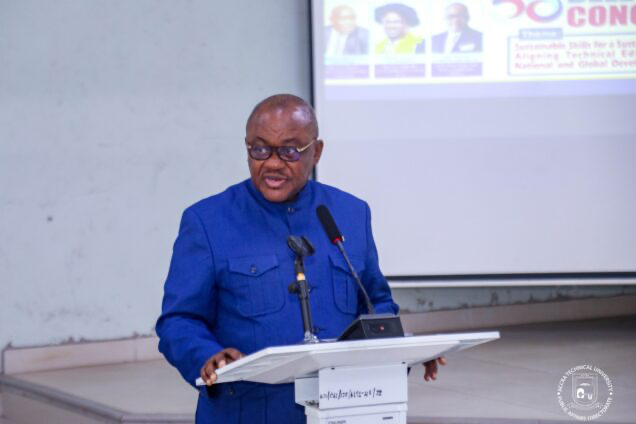
Speaking on behalf of organised labour, TUC Secretary-General Joshua Ansah affirmed their support for the establishment of IPEC but insisted that labour’s involvement must be institutionalised throughout the reform journey. “We will monitor the process and provide inputs to help ensure that the proposed commission achieves its intended objectives,” he said, but warned against any “half-hearted” or fragmented approach.
“We don’t want a piecemeal approach. It should be holistic so that what is good for the goose is also good for the gander,” Ansah declared. He called for a comprehensive review that tackles all components of public sector compensation — base pay, allowances, pensions, and overtime — in one integrated framework, rather than addressing individual grievances separately. “We must have people who start the process from the beginning and end it properly — not start halfway through only to tell a different story. If that happens, our presence here has no meaning,” he added.
The Broader Context: Why IPEC Now?
Ghana’s public sector wage bill has long been a fiscal pressure point, consuming over 40% of total government revenue in recent years. The Single Spine Pay Policy, introduced to unify salary structures across the public service, has been criticised for failing to adequately reward specialised skills, leading to brain drain in health and education. Meanwhile, ad-hoc allowances and market premiums have eroded transparency, creating inequities between different grades and institutions.
The IPEC proposal, which emerged from the recommendations of a 2024 technical committee on public sector wage reform, envisions a body that is constitutionally independent of both the executive and the Ministry of Finance. It would set pay levels based on job evaluation, market benchmarks, and fiscal space, with a mandate to publish clear, evidence-based determinations — a departure from the often opaque, negotiation-driven process under the FWSC.
Government’s Openness to Collaboration
Dr. Smith-Graham made a pointed appeal to labour, emphasising that the FWSC does not view them as passive recipients of a government-designed Bill. “Government needs Organised Labour. We do not want you to see yourselves as merely invited to comment on somebody else’s Bill,” he said. He stressed that the new compensation framework would have long-term implications for the efficiency and morale of Ghana’s public service, and therefore must be co-designed with the people who will live under it.
What Next?
The stakeholder engagement is part of a broader consultative process that will also include input from civil society, the private sector, and development partners. Once the draft Bill is finalised, it will be submitted to the Attorney-General’s Department for legal scrubbing before being laid before Parliament. The government has signaled a desire to pass the IPEC Act before the end of the 2026 legislative session.
For organised labour, however, the pledge of support comes with a clear warning: they will not accept a new commission that merely repeats the flaws of the old system. As Ansah put it, “We are ready to work with the government, but we will not be passive observers. We intend to be co-architects of the system that will determine our members’ livelihoods for decades to come.”
The outcome of these negotiations will be watched closely by over 600,000 public sector workers across Ghana — and by a government keen to demonstrate that reform can be both inclusive and fiscally responsible.


