



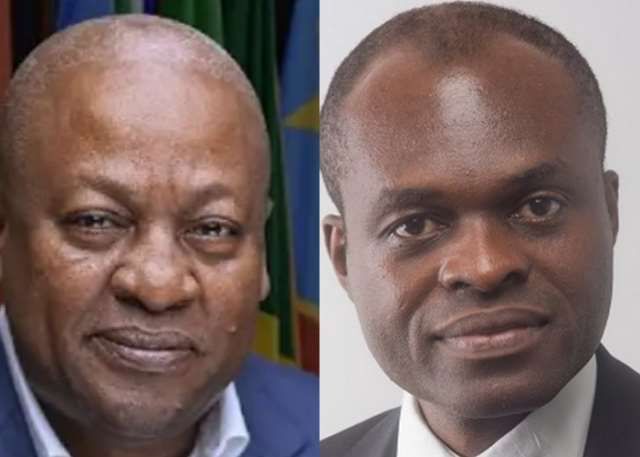
Private legal practitioner Martin Kpebu has issued a stark warning to President John Dramani Mahama, urging immediate action following a devastating World Bank report revealing that 56.4% of Ghanaians remain trapped in poverty .
Speaking on TV3’s The Key Points, Kpebu described the country’s growing unemployment crisis as “gunpowder ready to be fired,” warning that the situation poses an imminent threat to national security .
“The unemployment rate is scary. Too many people are unemployed; that is gunpowder,” Kpebu declared. “This is scary; even when you are in your car, it is not safe. We have to do something urgently about unemployment” .
The lawyer further cautioned that if the unemployment crisis is not addressed decisively, Ghana could face youth uprisings similar to those witnessed in Kenya over poor governance .
World Bank’s Grim Assessment
The World Bank’s 10th Ghana Economic Update, launched in Accra on August 26, painted a troubling picture of the country’s development trajectory. Despite Ghana’s economy expanding by 6% in 2025 and accelerating to 6.4% in the first quarter of 2026, the benefits of growth have failed to reach the majority of the population .
Dr. Robert Taliercio O’Brien, World Bank Division Director for Ghana, Liberia, and Sierra Leone, highlighted the growing disconnect between macroeconomic performance and citizens’ lived realities .
“56.4% of Ghanaians remain in poverty. And spatial disparities are widening,” Dr. Taliercio O’Brien stated. “Growth is led by sectors with limited employment absorption relative to its growing young population entering the labour market in the next decade. This is a structural imbalance that demands urgent attention” .
Regional Disparities Deepen
The report revealed that poverty remains disproportionately concentrated in Ghana’s three northern regions, where absolute poverty rates exceed 50% . More than 80% of Ghana’s poverty incidence is concentrated in rural areas, where farming households rely almost entirely on rain-fed subsistence agriculture .
These spatial inequities reflect both income sources and disparities in service delivery, with the southern regions benefiting from expanding industries, improved infrastructure, and better access to education and healthcare .
Macroeconomic Recovery Masks Deeper Problems
While Ghana has made significant progress in restoring macroeconomic stability following the 2022/2023 economic crisis, the World Bank cautioned that the recovery remains incomplete . Inflation declined dramatically from 23.2% in February 2025 to 3.2% in March 2026 — the lowest level since 1999 — and currently stands at 4.6% .
However, Dr. Taliercio O’Brien noted that fiscal gains had been achieved largely through expenditure compression rather than stronger revenue mobilisation .
“The fiscal surplus was achieved largely through expenditure compression. Capital spending was 38% below budget, which is not a sustainable path to growth and development,” he warned .
Unemployment and Inequality Crisis
The unemployment situation appears even more dire when considering broader metrics. The African Development Bank’s Economic Outlook 2026 report estimated Ghana’s unemployment rate at 13.1%, with inequality standing at 43.5% . Unemployment disproportionately affects women (14.8%) and youth (32%) .
Organised Labour has also flagged the severity of the crisis, with TUC Secretary-General Joshua Ansah noting that nearly 80% of employed people work in the informal sector and many workers remain underpaid, insecure, and inadequately protected .
“Applications from more than 500,000 young people for limited security service recruitment underscore the severity of the problem,” Ansah stated at the 2026 National May Day parade .
Call for Urgent Action
Kpebu urged President Mahama to deal with the issue decisively, despite the difficulty of the task . He emphasised that the World Bank report by the Bretton Woods institution should be taken seriously and that the growing unemployment rate in Ghana is “scary” .
The World Bank projected Ghana’s growth at 4.8% in 2026, expected to converge to around 5% over the medium term, while inflation is expected to remain within the target range . However, Dr. Taliercio O’Brien stressed that these gains should not create complacency, noting that Ghana still has significant structural challenges to address before the benefits of economic growth can be widely felt across the population .


