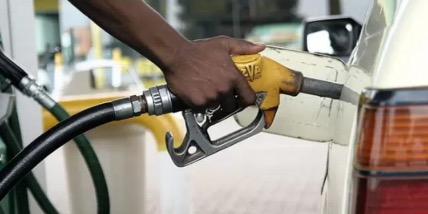
The government has extended the GH¢2 per litre reduction in the regulatory margin on diesel for at least one more pricing window, offering continued relief to motorists, transport operators, and businesses as international oil prices remain volatile .
The intervention, originally introduced as a temporary measure for two pricing windows in August, was set to expire at the end of the month. However, Citi Business News understands the government opted to maintain the reduction following growing concerns over expected fuel price increases from the first pricing window of September .
The extension effectively prevents the full restoration of the GH¢2 regulatory margin on diesel prices, which currently sell at around GH¢17 per litre at most Oil Marketing Companies (OMCs) .
COPEC’s Advocacy for Relief
The Chamber of Petroleum Consumers (COPEC) had been pressing the government to extend the intervention, warning that its expiration could push diesel prices dangerously close to GH¢20 per litre .
“Government originally indicated it was going to do that for just two window periods, which is a month. We would want to plead that at least the next two weeks be considered again,” said COPEC Executive Secretary Duncan Amoah in an interview with Citi Business News .
“Already diesel is around GH¢17 a litre for most OMCs. Allowing the GH¢2 to come back [off] would mean we will be doing GH¢19, approaching GH¢20 a litre. That situation I think the government itself is uncomfortable with,” he added .
COPEC had projected marginal increases in petroleum prices from Tuesday, September 1, citing developments on the international oil market. The chamber noted that petrol prices were particularly likely to increase following a nearly 10% rise in the commodity’s international trading price over the preceding two weeks .
The National Petroleum Authority (NPA) has set a new price floor of GH¢14.53 per litre for petrol and GH¢15.60 per litre for diesel for the September 1-16 pricing window . COPEC forecasts diesel retail prices could rise to about GH¢17.61 per litre, a 2.58 per cent increase over the current mean price of GH¢17.17 .
Background of the Intervention
President John Dramani Mahama introduced the GH¢2 per litre reduction on diesel effective August 4, following a surge in international oil prices that pushed up petroleum prices on the domestic market . The intervention marked the government’s second major attempt to cushion consumers from rising fuel prices since tensions in the Middle East began escalating in February .
The initial measure was approved by Cabinet and was intended to prevent imminent increases in transport fares, curb inflationary pressures, and limit the ripple effects of high fuel prices on the cost of goods and services . A similar intervention was implemented in April 2026, when the government absorbed GH¢2.00 per litre on diesel and GH¢0.36 per litre on petrol following the outbreak of the US-Israel-Iran war and the blockade of the Strait of Hormuz .
The April intervention had been extended with a reduced absorption of GH¢1.07 per litre on diesel effective May 16, which lasted for two pricing windows .
Cost of the Subsidy
COPEC estimates the one-month intervention would cost the government between GH¢200 million and GH¢225 million in forgone revenue . However, Mr Amoah argued this was a worthwhile trade-off, as the broader economic impact of unchecked price rises—through increased transport and goods costs—could be double or triple that amount .
“I think it is a good bargain or a good trade-off for the likely economic impact we would have had if the government had not taken this intervention decision,” he said .
Calls for Long-Term Strategy
While welcoming the temporary measure, Mr Amoah cautioned against viewing such ad hoc subsidies as a sustainable policy .
“These interventions should not be viewed as something the government can consistently avail itself of,” he warned. “If prices increase further, what else is the government going to throw in? That seems a very unsustainable thing to do” .
He urged the government to prioritise a long-term strategic reserve programme, pointing out that BOST Energies currently held no strategic petroleum stocks . Mr Amoah proposed introducing a strategic reserve margin within existing taxes to purchase products when global prices are low and release them during price spikes .
“If you study the trends, you will know in which seasons prices are likely to go down and which months prices are likely to go up. If you observe that curve, anytime prices go down, the government buys some to store, so that when prices are going up, the government can use what it bought and stored to cushion the market,” he explained .
Fiscal Sustainability Concerns
The extension comes amid broader concerns about fiscal sustainability. Tax analyst Francis Timore Boi has urged the government to establish clear parameters for fuel price interventions, cautioning that repeated subsidies could undermine fiscal discipline and eventually force the introduction of new taxes to offset mounting costs .
“The absence of a clearly defined policy risks creating expectations among transport operators and consumers that government will always absorb increases in fuel prices, making future reforms politically and economically difficult,” Mr Timore Boi said .
The New Patriotic Party (NPP) has also questioned the financing and sustainability of the intervention, with Policy Coordination Committee Chairman Kojo Oppong Nkrumah calling on the government to disclose the specific taxes, levies or regulatory margins being reduced to finance the diesel price relief .
Impact on Consumers and Businesses
The extension into September is expected to limit the immediate impact of higher international oil prices on diesel consumers and prevent a sharper increase in transport, logistics, and operating costs for businesses . It will also be the government’s third attempt at mitigating rising fuel prices since the escalation of Middle East tensions .
The relief could provide some respite to households, as higher diesel prices typically feed into transportation costs and the cost of goods and services across the economy . However, analysts note that petrol users have been left out of the intervention, and pump prices for petrol are expected to rise .