



In a dramatic shift from its earlier decision to revoke the company’s mining leases, the government has granted Adamus Resources Limited a fresh opportunity to revive its operations, directing the company and state regulators to develop a comprehensive 12-month roadmap for the mine’s recovery .
The arrangement, announced by the Presidency on Friday, August 21, 2026, follows a high-level meeting aimed at resolving the protracted dispute between the government and the mining firm. The Presidency described the agreement as a move “to salvage what is one of a few operating indigenous large-scale mines” in the country .
Under the new framework, the Ministry of Lands and Natural Resources, the Minerals Commission, and Adamus Resources have been tasked with jointly drafting the roadmap, which is expected to be submitted to the Presidency within two weeks . Central to the plan is the formation of a six-member management team—comprising three representatives from Adamus and three from the government—tasked with supervising the mine’s operational turnaround .
The development comes just days after the Lands and Natural Resources Minister, Emmanuel Armah-Kofi Buah, upheld the revocation of three of the company’s mining leases for the Akango, Salman, and Nkroful concessions, following a review by an Inter-Ministerial Committee .
Background to the Dispute
The conflict began in April 2026, when the Minister, acting on the recommendation of the Minerals Commission, revoked the company’s leases following a series of inspections by the Commission’s Inspectorate Division . These investigations alleged “sustained and material breaches” of the Minerals and Mining Act, 2006 (Act 703) .
Key allegations included the unauthorised subleasing of portions of the concessions to foreign nationals without ministerial approval, mining outside demarcated areas without an approved operating permit, and failing to obtain necessary environmental and forestry approvals .
Financial Liabilities and Production Discrepancies
The inter-ministerial review committee subsequently uncovered significant financial obligations. The company reportedly owed over GH¢205.83 million in statutory arrears, comprising GH¢86.78 million in royalties to the Minerals Income Investment Fund (MIIF) and GH¢119.04 million in tax arrears to the Ghana Revenue Authority (GRA), along with US224.61 million was transferred to related parties abroad between 2020 and 2024, while statutory payments remained outstanding .
The committee’s report also pointed to inconsistencies in gold production and export records. Between 2020 and January-March 2026, discrepancies between Form 16A records and GRA royalty returns amounted to 6,580.04 ounces of gold, with an associated revenue variance estimated at approximately US$27.13 million .
Adamus Rejects Allegations
Adamus Resources has consistently denied all allegations, describing the revocation process as “unlawful” and an abuse of power . The company has argued that the government failed to follow due process under Act 703, noting it was not formally served with any notice of material breach before the leases were revoked . Head of Exploration and Geology, Ekow Taylor, insisted the company had provided evidence to substantiate its position, stating, “We’ve not sublet our mining lease to anybody… We can’t do that” .
The Roadmap Ahead
The new agreement paves the way for a more collaborative approach. In addition to the joint management team, the roadmap will require Adamus to develop a plan to settle its liabilities to the Ghana Revenue Authority, MIIF, financial institutions, and suppliers . The government and Adamus will also explore options for injecting fresh capital into the operation, potentially by inviting new partners to take equity in the business .
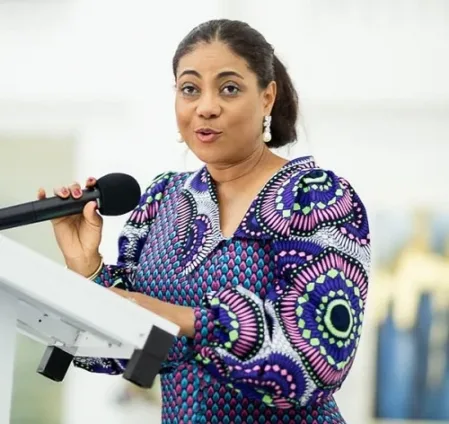
Felix Kwakye Ofosu, Spokesperson to the President and Minister for Government Communications, stated the arrangement was intended to salvage the mining operation and protect its value . The agreement marks a significant shift from the government’s earlier directive to assume administrative control of the mine, offering a structured path toward restoring the operation under joint management .
As one of the few operating indigenous large-scale mines in Ghana, the outcome of this 12-month turnaround plan will be closely watched by industry stakeholders and the local community.


