



Economist and Board Chairman of MTN Ghana, Dr Ishmael Yamson, has issued a strong critique of Ghana’s historical approach to economic management, calling on policymakers to move beyond short-term stabilisation measures and invest in structural pillars that can sustain stability over decades .
Speaking on Joy News’ PM Express on Tuesday, Dr Yamson acknowledged the significant progress made by the current administration in its first 18 months but warned that true sustainability requires a fundamentally different strategy .
Acknowledging Progress, Questioning Sustainability
Dr Yamson commended the government for achieving a level of economic stability that has not been seen in recent memory . “First of all, let me congratulate this government for what it has achieved in 18 months. We haven’t achieved that level of economic stability before. It’s just dramatic, and it is worth commending them,” he said .
However, he cautioned that the current gains must be evaluated differently from short-term stability. “You won’t get sustainability unless you build resilience,” he emphasised . He argued that successive governments have historically focused on quick fixes without establishing the foundational structures needed to preserve those gains over the long term .
The Persistent Challenge of Food Inflation
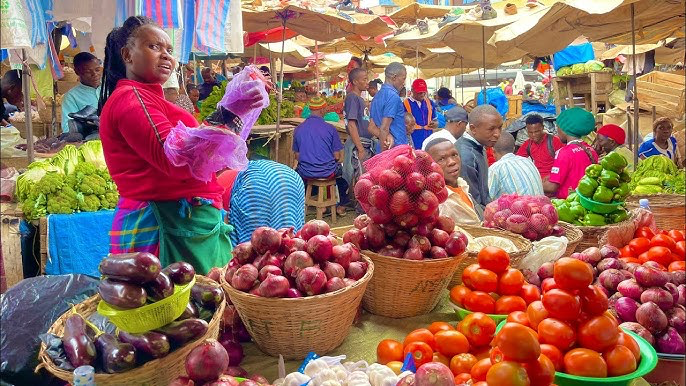
Dr Yamson singled out Ghana’s agricultural policies as a prime example of this short-term thinking. He noted that food prices have consistently been the biggest driver of inflation in the country’s inflation basket, yet years of investment in programmes like Planting for Food and Jobs (PFJ) have failed to yield the desired results .
“We spent millions of money on Planting for Food and Jobs, right? And yet, food inflation never responded,” he said .
This critique is supported by recent data. Ghana’s heavy investment in agricultural programmes has not translated into stable food prices. Although headline inflation fell to 4.6% in July 2026, down from 5.3% in June, food inflation has shown signs of resurgence in recent months . In May 2026, food inflation rose to 3.3% from 2.2% in April, with a shocking 2% jump in just one month . Despite the improvement in the national figures, the cost of food remains a sensitive issue for households.
Proposed Solutions: Long-Term Structural Investment
To address these structural problems, Dr Yamson advocates for a shift in investment strategy. He used the example of oil palm plantations as an alternative to traditional input subsidies.
“Now, if the government says, I’m going to invest in 250,000 hectares for oil palm plantation, and part of it will be for food production in plantation form, you are resolving a very fundamental issue on a long-term basis,” he explained .
This approach would create an integrated agricultural value chain, addressing not just production but also storage, processing, and distribution—gaps that have historically undermined programmes like PFJ .
Gold for Reserves: A Pillar of Resilience
Dr Yamson also highlighted the Gold for Reserves (G4R) programme as a critical component of building economic resilience, though he acknowledged the associated risks.
“I know that everybody is saying this is ambitious, but the Gold for Reserves program, it has its risks. There’s no doubt about that,” he said .
The G4R programme, which formalises gold trading through the Ghana Gold Board (GoldBod), has been instrumental in accumulating foreign exchange reserves and bringing informal gold trading into the formal economy . Recent agreements require large-scale mining companies to sell 30% of their gold output to GoldBod for local refining, a move expected to significantly boost Ghana’s reserves .
Dr Yamson stated that if the government achieves its target of a 15-month reserve cover by 2028, it would provide the resilience needed to sustain current macroeconomic stability .
The Investor Confidence Challenge
For Dr Yamson, the ultimate test of Ghana’s economic management is whether it can convince serious investors that stability can last far beyond a political cycle.
“I believe that unless we can demonstrate to investors that we can maintain stability for a minimum of 10 years, we will go nowhere,” he asserted .
He noted that while portfolio investors may have short horizons, serious investors—those who set up factories and employ people—think in terms of 30 to 40 years . “So, we need to create that mindset that our stability should not be four years. Should be five years,” he added .
Broader Economic Context
Dr Yamson’s comments come at a pivotal moment for Ghana’s economy. The country recently completed its $3 billion IMF Extended Credit Facility programme, securing a final disbursement of $371 million in July 2026 . The IMF has acknowledged substantial gains, including a sharp decline in inflation and a near doubling of reserves to $11.9 billion by the end of 2025 . However, the Fund has also warned that vulnerabilities remain, including commodity price volatility and risks linked to state-owned enterprises .
The IMF has approved a new 36-month Policy Coordination Instrument (PCI) to maintain reform momentum, focusing on fiscal discipline, governance, and private sector-led growth .
Dr Yamson has also previously argued that the full implementation of the African Continental Free Trade Area (AfCFTA) is critical for unlocking Africa’s economic potential, describing it as a major step that would fundamentally reshape the continent’s future if fully executed .
Policy Implications
Dr Yamson’s critique suggests that Ghana’s economic recovery, while commendable, must be underpinned by enduring structural reforms to be truly sustainable. As the country transitions from a programme of stabilisation to one of consolidation, the focus must shift towards building the resilience that will allow the gains of the past two years to withstand future shocks.


