



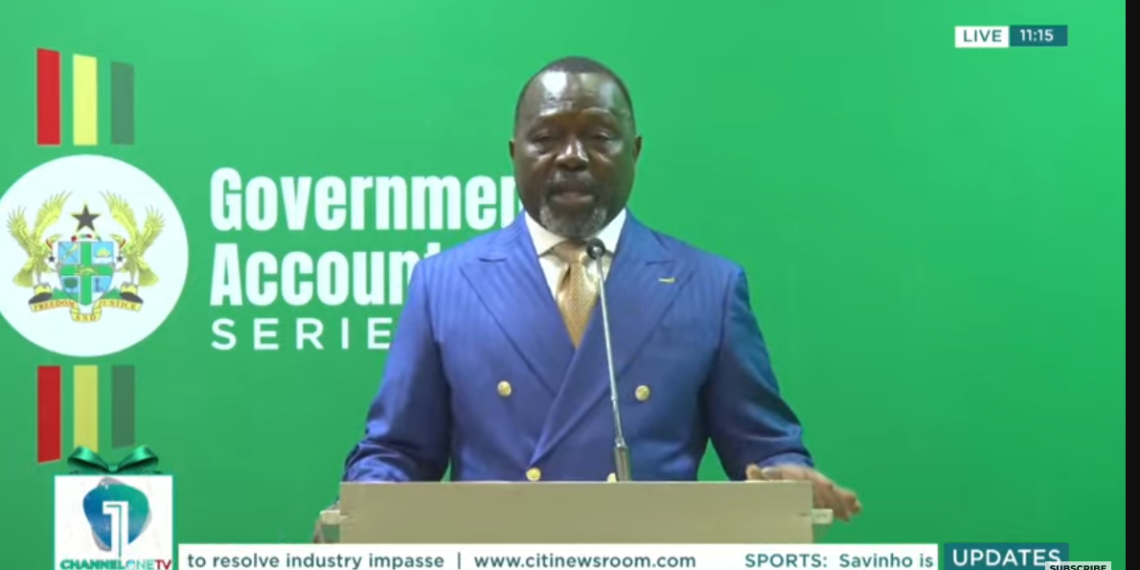
The government has officially endorsed a constitutional amendment to cap the size of the cabinet, but has set the maximum number of ministers at 60 – three more than the 57 recommended by the Constitutional Review Committee (CRC).
Attorney General and Minister for Justice, Dr. Dominic Ayine, made the announcement on Thursday while presenting the government’s White Paper on the CRC’s recommendations at a press conference in Accra. The move marks a significant step in the ongoing effort to streamline governance and curb the executive’s power to expand the cabinet at will.
“Government has accepted the proposal to cap the number of ministers. But instead of 57, as the committee recommended, the government is proposing that it should be capped at 60,” Dr. Ayine stated.
He stressed that the figure – which includes all Ministers of State and Regional Ministers – would be firmly entrenched in the 1992 Constitution, making it legally binding on all future presidents. The constitutional amendment will be drafted to ensure that no president can exceed the prescribed number, regardless of political pressure or coalition-building needs.
Flexibility Beyond Parliament
In a notable departure from the CRC’s broader recommendations, the Attorney General clarified that the cap would not come with a mandatory requirement for ministers to be drawn from Parliament. The government maintains that the 60-minister ceiling allows presidents the flexibility to appoint technocrats and independent experts from outside the legislature, without expanding the cabinet beyond the limit.
“So it will be put into the Constitution that the number of ministers that any president elected by the sovereign people of this country can appoint will be only 60,” Dr. Ayine reiterated, adding that this flexibility would help ensure “the best minds” are available to run ministries, while still maintaining a lean executive.
Context and Debate
The decision comes against the backdrop of long-standing public criticism over the size of the executive branch in Ghana. Critics have frequently argued that large cabinets drain the national purse and create inefficiencies. The CRC, in its report submitted earlier this year, had proposed a 57-member cap as part of a sweeping governance reform agenda.
The government’s decision to bump that figure up by three has already sparked initial debate among political analysts and civil society groups, with some arguing that the extra three positions could dilute the intended fiscal discipline. However, government insiders insist that 60 is a “pragmatic figure” that accounts for the country’s diverse regional and sectoral representation needs.
Part of Broader Reforms
The minister cap is part of a larger package of constitutional reforms currently under review. Other proposals in the White Paper include a cap on parliamentary seats at 300, a five-year presidential term (down from four), and a reduction in the presidential age eligibility from 40 to 35. The government has also endorsed the separation of the Attorney-General’s office from the Ministry of Justice.
The proposed amendments are expected to be tabled before Parliament in the coming weeks. If passed, they will require a two-thirds majority vote in the House before being submitted for a national referendum, as required by the Constitution’s amendment procedures.
The ruling administration has framed the package as a historic opportunity to “reset the architecture of governance” and make the executive more accountable to the Ghanaian people. The opposition and civil society groups are expected to scrutinise the 60-minister cap closely as the legislative process unfolds.


