



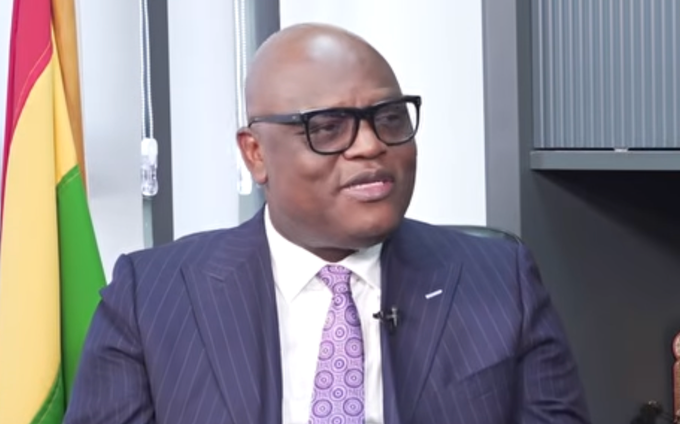
The Chief Executive Officer of the Ghana Investment Promotion Authority (GIPA), Simon Madjie, has described the government’s model market programme as the ultimate solution to the longstanding problem of foreign participation in Ghana’s informal retail sector, which is legally reserved for Ghanaians.
Speaking on Joy News’ PM Express Business Edition on Thursday, Mr Madjie said the model markets would give authorities the physical and regulatory infrastructure needed to control trading spaces and enforce restrictions on non-Ghanaians. “The law reserves it for Ghanaians. So regardless of whatever amount of money you bring in, you are not expected to be there,” he said.
He insisted the core challenge is not the law but enforcement. “It’s just a question of enforcement, and how do we get all the agencies together, especially those who control the markets?” He said the model markets being built under President John Mahama would give the state greater control over trading spaces. “It’s well regulated. You have your fire service. You have everything there, and so I see that as the solution to these major issues that we’ve had for a very long time.”
The model market programme is being rolled out across districts as fully serviced trading hubs, with facilities expected to include banking services, storage, fire and security protection, restaurants, crèches and clinics. Government officials have said construction is expected to begin simultaneously in districts by mid-December, with the markets designed to operate around the clock and reflect Ghanaian cultural aesthetics.
A Longstanding Enforcement Problem
The legal framework reserving informal retail for Ghanaians is well established. The Ghana Investment Promotion Centre Act, 2013 (Act 865) bars non-citizens from petty trading, hawking, selling in markets or operating retail stalls. Foreigners may only engage in ordinary retail if the enterprise invests at least $1 million and employs at least 20 Ghanaians.
The newly enacted Ghana Investment Promotion Authority Act, 2026, has strengthened the enforcement architecture. It imposes administrative penalties on non-citizens or non-wholly Ghanaian-owned enterprises trading in reserved areas, and makes it a criminal offence for any person to let or sublet a market stall or store to a foreigner for trading purposes.
Despite these provisions, enforcement has remained weak. The Ghana Union of Traders Association (GUTA) has repeatedly raised alarm over foreign encroachment in local retail, particularly in areas such as Abossey Okai and parts of the Ashanti Region. Trade Minister Elizabeth Ofosu-Agyare has also said Ghanaians themselves are acting as enablers by fronting for foreign traders.
GIPA and GUTA have since agreed on measures to strengthen protection for Ghanaian-owned informal retail businesses, including tougher monitoring, public education on investment rules, a direct reporting mechanism for suspected breaches, and a proposed inter-agency task force involving GIPA, the Ministry of Trade, local government authorities and security agencies.
Trade Is Not Investment
Mr Madjie also linked the confusion over foreign participation in retail to a failure to distinguish between trade and investment. Trading, he explained, involves the exchange of goods and services. Investment involves committing resources, establishing an entity and creating value, with the investor taking a risk.
“So these are completely two different things. We tend to confuse the two,” he said.
He rejected suggestions that Ghana is relaxing its rules to attract foreign investors. “Ghana is not bending the rules for investors,” he stated, adding that both domestic and foreign investors must comply with the country’s regulations. Internationally listed companies, he noted, face accountability systems that can make breaches in Ghana consequential for their shares abroad.
For businesses facing VAT or tax collection challenges, Mr Madjie said GIPA seeks solutions through its aftercare system, which is designed to address investor grievances and retain existing investment.
“Ghana has just levelled the playing field to bring in more people to partner with our businesses,” he said.


