



Ghana’s economic recovery has moved past the emergency phase, but Finance Minister Dr. Cassiel Ato Forson says the harder test is only beginning: turning restored stability into jobs, higher incomes, and a measurable improvement in how ordinary Ghanaians live.
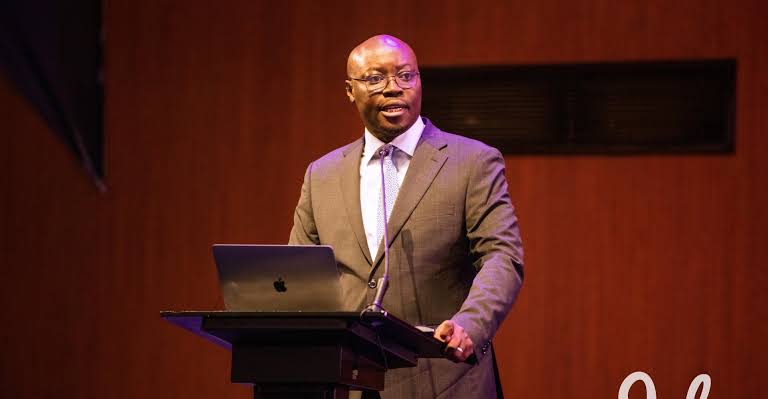
Speaking to students and faculty at the University of Ghana, Forson said the government’s success in bringing inflation down, stabilizing the cedi, and managing debt pressures was never meant to be the finish line. “Stabilisation, as I’ve always said, was never the destination,” he said in a post on X on Sunday. “It was the price of entry.”
The minister’s remarks come as Ghana completes a dramatic turnaround from the 2022 debt crisis. Inflation, which peaked above 54% that year, fell to 5.4% by the end of 2025 and has remained in single digits through 2026 . Growth rebounded to 6.0% in 2025 and accelerated to 6.4% year-on-year in the first quarter of 2026 . Ghana also completed its $3 billion IMF Extended Credit Facility programme in July 2026, securing a final $371 million disbursement and transitioning to a non-financing Policy Coordination Instrument .
Yet the labor market tells a more difficult story. Unemployment stood at 13.0% in the third quarter of 2025, with youth unemployment at 32.4%, according to data cited by local media. Nearly two million Ghanaians aged 15 to 35 were not in employment, education, or training . The IMF has also flagged that youth unemployment remains around 30% despite the macroeconomic gains .
Forson’s answer is what he calls the “New Economy”—a pivot from stabilization toward production, value addition, and private-sector-led job creation. The vision, he said, requires Ghana to produce more of what it consumes and process its raw materials rather than exporting them in unprocessed form. “We have grown, but not transformed enough,” Forson said at a separate engagement at the University for Development Studies earlier this month. “We have exported too much in raw form and imported too much in finished form.”
The 2026 budget already signaled this shift, outlining three strategic priorities: consolidating macroeconomic stability, accelerating economic transformation and job creation, and strengthening social sectors for inclusive growth . President John Mahama has also championed a 24-Hour Economy policy, now backed by law, aimed at extending economic activity beyond traditional hours and creating jobs in agriculture, manufacturing, logistics, and services . The government has allocated GHS 110 million to kickstart the programme .
For Forson, the political stakes are clear. He acknowledged that about 950,000 Ghanaians moved out of multidimensional poverty between 2024 and 2025, and unemployment declined slightly from 13.7% to 12.8% over the same period . But those gains, he argued, must become the baseline rather than the ceiling. “Stability must now become production, exports, investment, decent jobs, and higher incomes,” he said .
The Finance Minister’s background lends weight to the message. A five-term Member of Parliament for Ajumako Enyan Essiam and a former Deputy Finance Minister, Forson holds a PhD in Finance from KNUST and a Master’s in Taxation from Oxford. He was instrumental in negotiating Ghana’s 2015 IMF programme and championed the Public Financial Management Act of 2016 . His return to the Finance Ministry in January 2025 placed him at the center of the recovery effort he now says must deliver more than fiscal indicators.
Critics and analysts have increasingly echoed the point. Professor Bokpin of the University of Ghana Business School has argued that macroeconomic gains must translate into employment, while the IMF itself has warned that vulnerabilities—including elevated non-performing loans at 18.1% of banking sector loans—remain . The Fund has urged Ghana to sustain reforms and create space for development spending.
Forson’s New Economy agenda is expected to be detailed further in the 2027 Budget, with President Mahama announcing plans for a $10 billion investment in key sectors . For now, the minister is framing the next phase in stark terms: the recovery’s legitimacy will be judged not in Accra’s fiscal reports, but in whether Ghanaians can find decent work and see their living standards rise.
“The New Economy will turn the sacrifices of recovery into the dignity of decent work, higher incomes and prosperity that reaches every Ghanaian,” Forson said .


