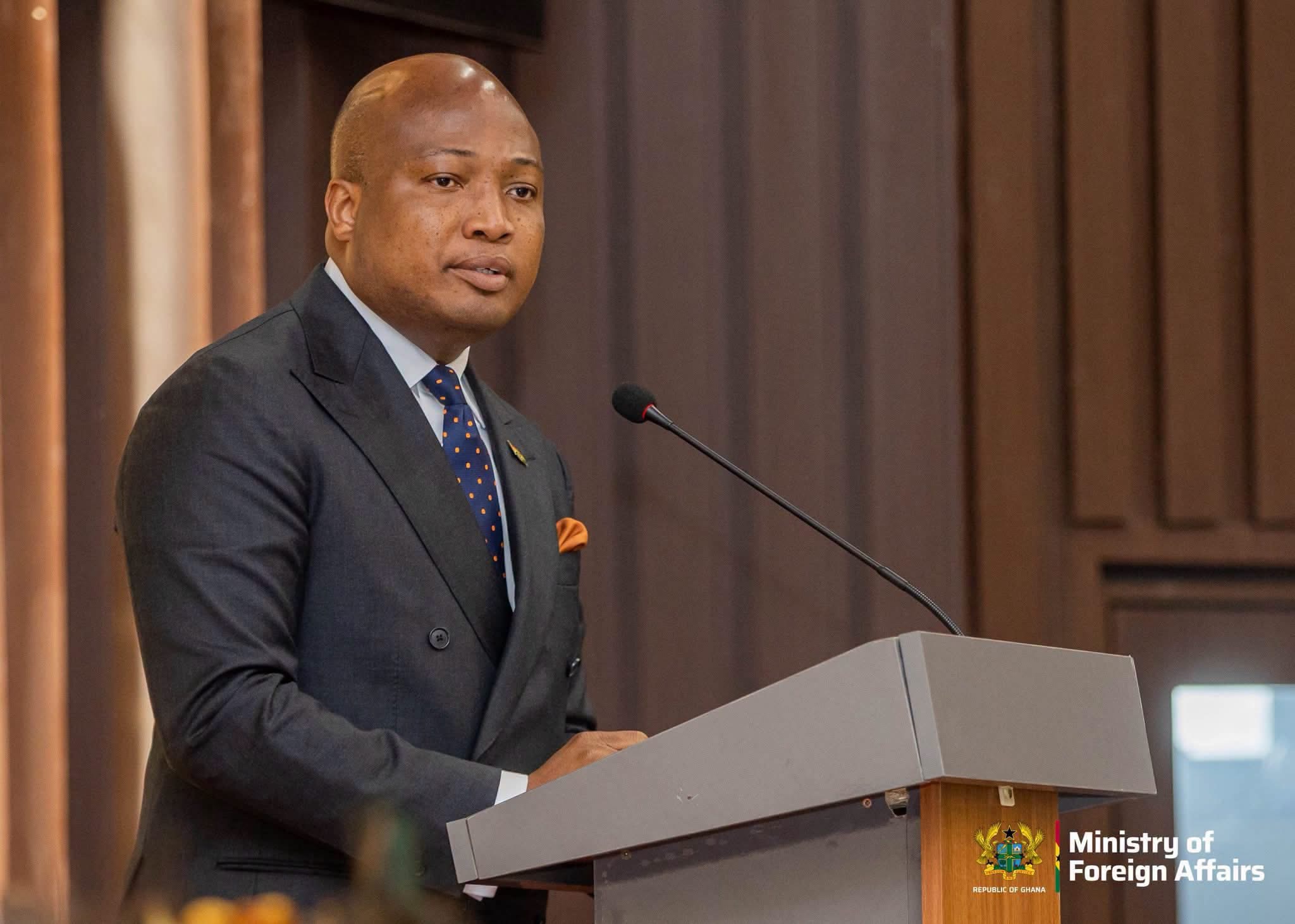
Ghana’s Foreign Affairs Minister, Samuel Okudzeto Ablakwa, has clarified that the country is seeking to join the BRICS economic bloc as a Partner Country, not as a full member. The clarification was made during an exclusive interview on TV3’s Key Points on Saturday, October 10, 2026.
“Ghana already enjoys excellent relations with BRICS member countries and will be joining natural allies in what is arguably the largest trading bloc today,” Ablakwa stated. He emphasised that the decision is anchored in Ghana’s constitutional imperative to prioritise national interest, as enshrined in Article 40 of the 1992 Constitution.
BRICS as a Platform for Diversification
The Minister explained that BRICS brings together eleven major emerging markets and developing countries: Brazil, China, Egypt, Ethiopia, India, Indonesia, Iran, Russia, Saudi Arabia, South Africa, and the United Arab Emirates. He described the bloc as a useful platform for consultation and cooperation on contemporary issues of global and regional significance.
Ablakwa also addressed concerns that the move could strain Ghana’s relations with its traditional Western partners. He explained that the decision affirms Ghana’s longstanding policy of non-alignment, citing President Kwame Nkrumah’s Cold War-era diplomacy. At that time, Ghana secured U.S. support for the Akosombo Dam while simultaneously partnering with the then Soviet Union to launch Africa’s pioneering atomic energy programme, the Ghana Nuclear Reactor Project.
“Prior to the announcement, there were engagements with European Union member states, and Ghana was clear in communicating the rationale for its decision, which was within its right to diversify strategic options for development,” Ablakwa disclosed.
Background on BRICS Expansion
BRIC was formalised in 2006 on the sidelines of the UN General Assembly, with its inaugural summit held in Yekaterinburg, Russia, in 2009. South Africa joined in 2010, expanding the acronym to BRICS.
The bloc has since undergone significant expansion. Egypt, Ethiopia, Iran, Saudi Arabia, and the UAE became full members in January 2024, followed by Indonesia in January 2025. Ten additional nations—Belarus, Bolivia, Kazakhstan, Cuba, Malaysia, Nigeria, Thailand, Uganda, Uzbekistan, and Vietnam—joined as Partner Countries in 2025.
What Partner Country Status Entails
According to BRICS guidelines, Partner Country status is reserved for countries that are not full members but enjoy the support of existing member states. Partner Countries are typically invited to attend BRICS leaders’ summits and may participate in other discussions, subject to consensus among members. The status requires formal application, demonstration of regional strategic significance, economic growth potential, and stability, with final approval by all BRICS members at an official summit.
Political Context and Next Steps
The announcement follows Cabinet approval of Ghana’s bid, which Ablakwa first disclosed during a joint press briefing with India’s Foreign Minister, Dr. Subrahmanyam Jaishankar, on October 6, 2026. The Minister revealed that Ghana has already sought India’s support for its application.
Ablakwa also pushed back against opposition criticism, citing an October 2023 technical committee report prepared during the previous Akufo-Addo administration that examined the merits of BRICS membership. “Why are you out there today saying that you reject this, that this is so scary, this is dangerous, the IMF will be angry?” he asked, accusing critics of allowing partisanship to overshadow a serious national policy question.
Ghana’s formal application is now expected to enter the official process, with the country seeking support from existing BRICS members. If successful, Ghana will join the ranks of Partner Countries, marking a significant shift in its economic diplomacy strategy.