



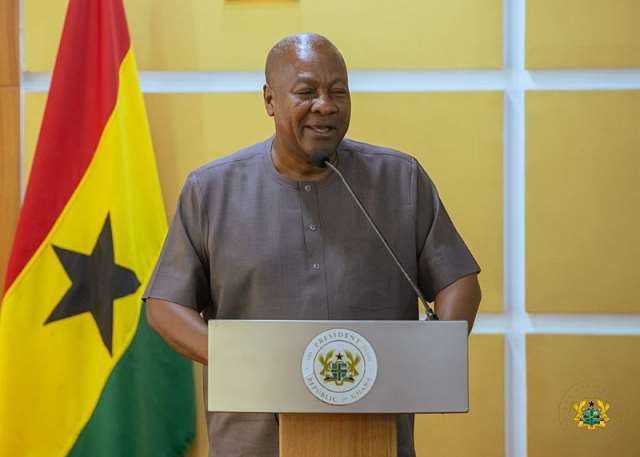
Interior Minister Muntaka Mohammed-Mubarak has issued a stark warning that Ghana’s international intelligence partnerships are at risk of collapse due to growing evidence of insider collusion with criminal syndicates, following the interception of a massive cocaine shipment in France that originated from Ghana.
Speaking at a training programme for Regional Security Councils (REGSEC) and Metropolitan, Municipal and District Chief Executives (MMDCEs) on the Security and Intelligence Agencies Act, 2026 (Act 1168), the Minister expressed frustration over allegations that security officers trained and vetted to protect the state are actively facilitating criminal networks.
“It’s sad that even the recent things that we are hearing… you hear it is insiders who are aiding and abetting criminals,” Muntaka said. “If I’m supposed to be in charge of keying figures into a computer, I’ve been trained, my background checks… they are here before you are taken to do certain roles… and trusted with that position, now you sit and when you are comfortable you are trading with that position”.
Foreign Partners Withholding Intelligence
The Minister disclosed that Ghana’s international intelligence counterparts are increasingly reluctant to share sensitive information, citing fears that it could be compromised by insiders. He specifically named Australia and France as countries that have become hesitant to cooperate.
“Now our counterparts abroad are even beginning to doubt whether to give us information… because they trade it to an insider… they don’t know whether the insider, the minister is also part of it,” Muntaka said. “They are doubting whether they should give you the information, will the information be secured or it will also be abused”.
The Minister revealed he was scheduled to meet the French Ambassador to seek greater cooperation, saying: “Why are they not trying to cooperate? Well, when they feel that it is our own personnel who are aiding”.
Background: The Dunkirk Cocaine Bust
The Minister’s warning follows the seizure of nearly 3.9 tonnes of cocaine by French customs officials at the port of Dunkirk on September 10, 2026. The cocaine, with an estimated street value of €225 million (US$260 million), was concealed in a container of plastic waste that originated from Ghana and was partly destined for Antwerp, Belgium.
Four suspects were arraigned before the High Court in Accra on September 16, 2026, and remanded into custody to reappear on October 13, 2026. They have been jointly charged with conspiracy to commit crime and the exportation of narcotic drugs.
The accused are Desmond Koranteng Curiel, also known as Paul Kweku Yeboah and “Biggs”, described as the alleged Ghana-based point man for Dutch fugitive Jos Leijdekkers, popularly known as “Bolle Jos”; Jessica Hartog, a beautician and Koranteng’s wife; Musah Attah, alias “Kromo”; and Kweku Okyere. A fifth suspect, Leijdekkers, remains at large.
Leijdekkers, a Dutch national convicted in the Netherlands over cocaine trafficking offences and sentenced to 24 years in prison, has been linked by investigators to major cocaine shipments moving from West Africa to Europe.
The Narcotics Control Commission (NACOC) said the arrests followed intelligence gathered over time, with Director General Major General Maxwell Obuba Mantey stating that the suspects had been under monitoring before the seizure in France prompted action.
Call for Attitude Change and an End to Politicisation
Muntaka warned that unless security personnel change their conduct, no amount of institutional reform can fix Ghana’s security vulnerabilities.
“And if we don’t change this attitude, there is no way we are going to get angels coming from the sky to come and solve this problem for us,” he cautioned.
The Minister also condemned the persistent politicisation of law enforcement operations, arguing that partisan interference shields wrongdoers.
“When you go in to arrest someone then they begin, oh because I’m NPP or because I’m NDC, we try to politicize even the security services,” he said.
He called for immediate, seamless collaboration among all domestic security agencies to restore public trust and protect national integrity.
Who is Muntaka Mohammed-Mubarak?
Alhaji Mohammed-Mubarak Muntaka has served as Minister for the Interior since January 30, 2025, following his appointment by President John Dramani Mahama. He has been the Member of Parliament for the Asawase Constituency in the Ashanti Region since 2005.
A seasoned politician, Muntaka previously served as Minister for Youth and Sports in 2009, Majority Chief Whip from 2013 to 2017, and Minority Chief Whip from 2017 to February 2023. He holds a Master’s Degree in Development Policy and Planning and a Bachelor’s Degree in Agriculture Economics from Kwame Nkrumah University of Science and Technology (KNUST), with additional executive education from Harvard Kennedy School.
Broader Implications
The Minister’s warning underscores a deepening crisis of confidence between Ghana’s security apparatus and its international partners at a time when West Africa is increasingly serving as a transit corridor for cocaine flowing from South America to European markets.
President Mahama has since formed a task force to tackle drug trafficking through Ghana’s borders, while NACOC has emphasised its commitment to working with domestic and international agencies to disrupt the people, financing and infrastructure supporting illicit drug trafficking.
However, the Minister’s remarks suggest that without addressing the internal leakages, Ghana’s ability to mount an effective response to transnational organised crime will remain severely compromised.


