



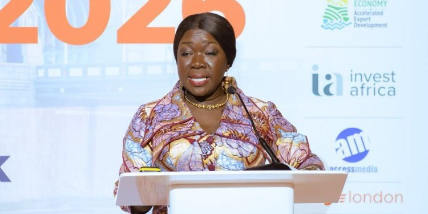
A potentially crippling trade dispute between Ghanaian and Nigerian onion traders has been peacefully resolved, with all four Ghanaian trucks previously detained in Nigeria released and the suspension on onion exports to Ghana formally lifted, following direct intervention by the Minister for Trade, Agribusiness and Industry, Mrs. Elizabeth Ofosu-Adjare.
The resolution, announced on Thursday, August 13, 2026, brings relief to thousands of traders, transporters, and consumers on both sides of the border, ending a standoff that threatened to disrupt the supply of one of West Africa’s most essential staple vegetables.
The Accra Onion Sellers and Importers Cooperative Society, together with the Cross Border Women Traders Association, have expressed profound gratitude to the Minister and her team for their swift and decisive action. In a joint statement, the cooperatives praised the Ministry’s timely engagement with all stakeholders, which averted a prolonged impasse.
The Dispute and Its Resolution
The conflict erupted after the National Onion Producers and Marketers Association of Nigeria (NOPMAN) imposed a suspension on onion exports to Ghana, citing alleged unfair trading practices and what it described as discriminatory treatment of Nigerian traders at Ghanaian ports and markets. The move triggered anxiety among Ghanaian importers, who rely heavily on Nigerian onions to meet domestic demand, particularly during the lean season when local production wanes.
In response, the Minister summoned representatives from both countries to a high-level meeting in Accra on Wednesday, August 12, 2026. At the meeting, Mrs. Ofosu-Adjare called for an immediate end to the dispute, emphasising the importance of strengthening trade relations within the ECOWAS sub-region and promoting economic cooperation.
“We cannot allow petty disagreements to undermine the deep historical and economic ties between Ghana and Nigeria. Both nations are pillars of ECOWAS, and our traders must work together for mutual benefit,” the Minister reportedly urged the delegates.
She cautioned that a prolonged disruption in onion trade would have cascading effects on farmers, traders, transport operators, and consumers in both countries, potentially driving up prices and worsening food inflation.
Following the talks, NOPMAN agreed to lift the suspension, and all four Ghanaian trucks that had been held in Nigeria were cleared for return. Mr. Osman Mohammed, Public Relations Officer of the Accra Onion Sellers and Importers Cooperative Society, confirmed the development on Thursday.
“All four Ghanaian trucks have been released as of today. We are also happy to report that all Nigerian trucks carrying onions that had already arrived in Ghana have completed offloading at various markets across the country, with no further disruptions,” Mr. Mohammed stated.
The cooperative society, which comprises five major onion sellers’ associations – including the Accra group, the Adjei Kotoku group, and the Dominanse Association in the Central Region – expressed confidence that the Minister’s intervention would pave the way for a lasting solution.
Background: The Importance of Onion Trade
Onions are a critical commodity in West African diets, used extensively in soups, stews, and sauces. Nigeria is Ghana’s largest supplier of onions, with an estimated 70 per cent of Ghana’s fresh onion consumption coming from across the border. The trade supports thousands of jobs – from farmers in Nigeria’s northern states to transporters, wholesalers, and retailers in Ghana’s urban centres.
However, the trade has been prone to friction. Past disputes have arisen over issues such as customs valuation, sanitary and phytosanitary standards, and the differential treatment of imported versus locally produced onions. In 2024, a similar standoff led to a temporary shortage and a spike in onion prices in Accra, Kumasi, and Takoradi.
The recent dispute also highlighted the vulnerability of cross-border trade to unilateral actions by producer associations, which operate without direct government oversight. Economists have called for a more institutionalised dispute-resolution mechanism within ECOWAS to prevent such disruptions in the future.
Minister’s Broader Agenda
Mrs. Ofosu-Adjare, who took office earlier this year, has made trade facilitation a cornerstone of her tenure. She has pledged to reduce non-tariff barriers, streamline customs procedures, and enhance dialogue with regional partners. Her handling of the onion dispute has been widely praised by traders as a model of proactive diplomacy.
In her remarks at the meeting, she also urged traders on both sides to formalise their grievances through established channels rather than resorting to unilateral embargoes. She promised to establish a permanent consultative forum between Ghanaian and Nigerian onion traders to address future issues before they escalate.
Reaction from Traders
Mr. Mohammed, speaking on behalf of the cooperative, expressed relief that the matter was resolved without further losses. “We lost a few days of business, but the trucks are back and the onions are moving again. We thank the Minister for listening to us and acting quickly,” he said.
Cross-border women traders, who form a significant portion of the onion retail chain, also voiced their appreciation. Madam Amma Serwaa, a trader at the Agbogbloshie market, noted that the disruption had caused uncertainty and price volatility. “Now that the trucks are coming, we can plan again. Prices will stabilise, and our customers will be happy,” she said.
ECOWAS Context
The resolution of the dispute is seen as a positive signal for intra-regional trade within ECOWAS, which has faced criticism for its slow progress on free movement of goods. The Economic Community of West African States has long championed a common market, but implementation has been uneven. The Ghana-Nigeria onion resolution, however, demonstrates that bilateral dialogue can supplement regional frameworks.
As the trucks roll in and markets return to normal, both Ghanaian and Nigerian stakeholders are hopeful that this episode will serve as a foundation for stronger, more resilient trade ties – and a reminder that cooperation, not confrontation, is the path to shared prosperity in the West African sub-region.


