



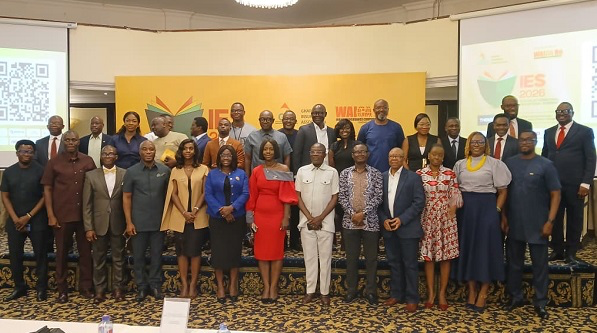
The Ghana Insurers Association (GIA) has issued a rallying call for the nation’s insurance industry to embrace bold leadership, invest heavily in professional capacity building, and rebuild public trust as it confronts an era of unprecedented and complex risks. The appeal came during the opening of the Association’s 4th International Educational Seminar, a three-day gathering in Accra that has drawn underwriters, brokers, regulators, and international experts to chart a forward-looking strategy for the sector.
In her keynote address, GIA President Boatemaa Barfour-Awuah urged industry players to shed their reactive posture and instead become proactive architects of the future. “The world is safer when insurance leads,” she declared, emphasizing that insurers are not merely financial intermediaries but essential guardians of economic stability and individual well-being.
A Decade Defined by Converging Threats
Mrs. Barfour-Awuah painted a stark picture of the next decade, which she said will be shaped by a confluence of disruptive forces: climate change accelerating extreme weather events, a surge in sophisticated cyberattacks, the rapid proliferation of artificial intelligence altering risk landscapes, and persistent global trade disruptions. She stressed that these challenges cannot be met with outdated models or complacent leadership.
“We cannot afford to wait for disaster to strike before we innovate,” she stated. “We must anticipate, prepare, and offer solutions before the risk materializes. That is the essence of true insurance leadership.”
A Legacy of Resilience: The June 3 Disaster and Beyond
To underscore the industry’s critical role, Mrs. Barfour-Awuah reflected on Ghana’s tragic June 3, 2015, twin disaster—a devastating fire and flood that claimed over 150 lives and caused massive property damage. She noted that insurers stepped up to pay an estimated GH¢36 million in claims, providing a lifeline to affected families and businesses and demonstrating that insurance is a pillar of national resilience.
She further revealed that the industry is currently compiling claims arising from the recent severe flooding in Accra and other regions, reiterating that insurers remain on the front lines of disaster recovery. This ongoing commitment, she argued, must be matched by continuous improvement in response speed and transparency.
Four Strategic Pillars for Transformation
Outlining a clear roadmap, the GIA President identified four strategic priorities that she believes will define the industry’s future success:
- Embracing Technology Responsibly – Leveraging insurtech, data analytics, and automation to improve underwriting accuracy, claims processing, and customer engagement, while ensuring ethical use of data and protection of privacy.
- Expanding Access to Underserved Populations – Breaking down barriers of affordability and awareness to bring insurance products to rural communities, informal sector workers, and small enterprises that are currently excluded from formal risk protection.
- Strengthening Ethical Conduct to Build Trust – Enforcing strict codes of conduct, combating fraudulent claims and unfair practices, and ensuring that policyholders are treated with fairness and transparency.
- Deepening Collaboration with the National Insurance Commission (NIC) – Working hand-in-hand with the regulator to promote a solvent, competitive, and well-supervised market that balances innovation with consumer protection.
Seminar Designed for Practical Impact
Also addressing the opening ceremony, Ernest Frimpong, Chief Executive Officer of Bedrock Insurance Limited and Chairman of the GIA Public Relations and External Liaison Committee, explained that the seminar is meticulously designed to equip participants with actionable knowledge. He noted that sessions would focus on disaster response protocols, crisis communication, claims management under pressure, and emerging risk modeling.
“Our goal is not just to inform, but to transform how insurers interact with customers when they need us most,” Frimpong said. He emphasized that the industry must move beyond policy issuance to become a trusted partner in times of crisis.
A Sector at a Crossroads
The GIA’s call comes at a pivotal moment for Ghana’s insurance market. While the sector has grown steadily—with gross written premiums exceeding GH¢3 billion in recent years—penetration remains low at around 2% of GDP, far below the global average. Climate-induced disasters, rising cybercrime, and economic volatility are exposing gaps in coverage and capability.
Industry analysts have long argued that capacity building—from actuarial skills to claims handling expertise—is the single biggest lever for boosting confidence and uptake. The GIA’s seminar is therefore seen as a timely investment in human capital, bringing together local practitioners with international experts to share best practices.
A Unified Front for a Resilient Future
The event also serves as a platform for reinforcing the partnership between the GIA and the NIC, which has been working on regulatory reforms to improve solvency standards, consumer complaint mechanisms, and market conduct.
As the seminar proceeds through its three-day agenda, the overarching message is clear: Ghana’s insurance industry must shed its traditional conservatism and adopt a bold, forward-looking, and ethically grounded approach. In a world where risks are becoming more frequent, interconnected, and severe, the GIA insists that insurers must lead—not just react—if the nation is to build genuine economic resilience.
For policyholders, the promise is one of greater protection, faster payouts, and deeper trust. For the industry, the imperative is to invest in the people, technology, and partnerships that will carry it into the next decade and beyond.


