



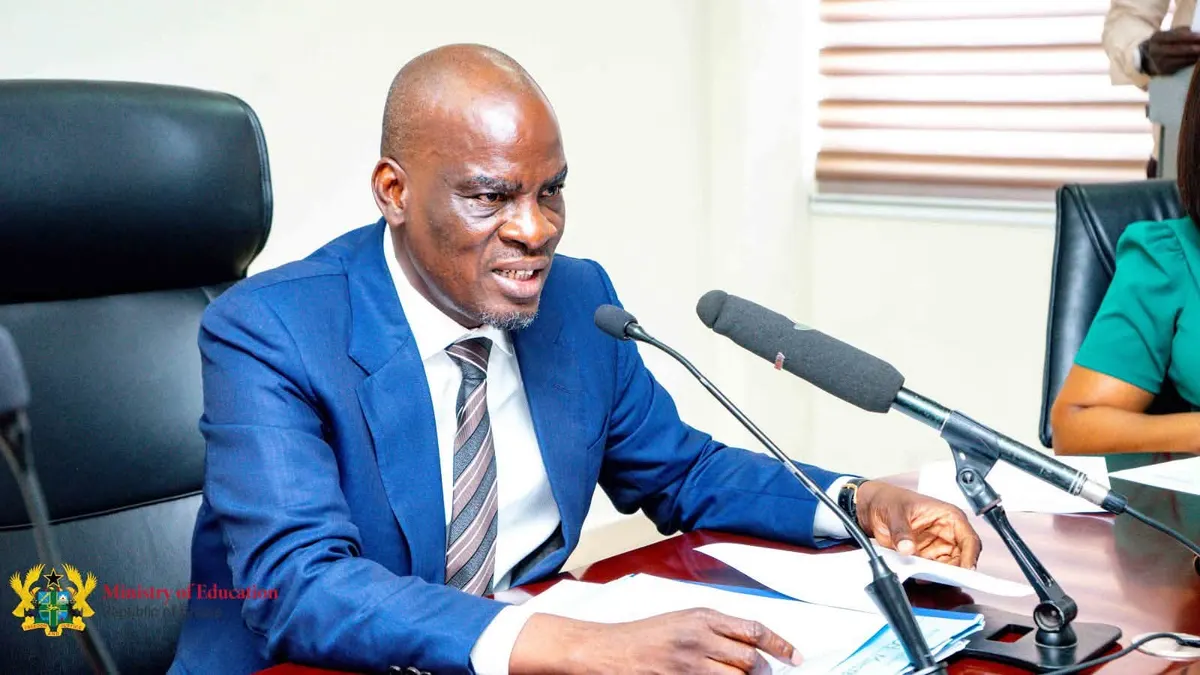
The Minister of Education, Haruna Iddrisu, is set to convene a critical meeting on Monday, September 28, with the leadership of Ghana’s major teacher unions, the Fair Wages and Salaries Commission (FWSC), and the Controller and Accountant General’s Department (CAGD) in a last-ditch effort to halt a crippling nationwide strike.
The emergency talks come after the Ghana National Association of Teachers (GNAT), the National Association of Graduate Teachers (NAGRAT), and the Pre-Tertiary Teachers’ Association of Ghana (PRETAG) declared an indefinite industrial action effective Friday, September 25, 2026. The strike has brought pre-tertiary education across the country to a standstill, threatening the stability of the academic calendar.
A Looming Threat to the Academic Calendar
Speaking on TV3’s Daily Brief on Friday, the Press Secretary for the Ministry of Education, Hashmin Mohammed, expressed deep concern over the timing of the strike. He noted that the action jeopardizes the significant progress made in restoring a stable academic calendar—a key achievement of the current administration.
“We are very worried about the strike action declared by the teacher unions because you and I know that it took a lot of effort by the Minister and his team of technical managers to be able to restore the academic calendar,” Mr. Mohammed stated.
He confirmed that Minister Iddrisu is hopeful that Monday’s engagement will yield an amicable solution. “The Minister intends engaging the other relevant stakeholders in the implementation value chain… and in that meeting, he is very hopeful that they will be able to find an amicable solution to it,” he added, while acknowledging the limits of his office’s power. “At this stage… the compensation goes beyond his responsibility.”
The Grievances: A Breakdown
The teacher unions have outlined three primary grievances driving the strike:
- Delayed Deprived Area Allowance: The non-payment of the 20% Deprived Area Allowance, a critical incentive designed to attract and retain teachers in hard-to-reach communities.
- Promotion Arrears and Payroll Delays: A backlog of qualified teachers who have been promoted but are yet to be placed on the government payroll, resulting in them working in higher grades without corresponding pay.
- Unplaced Promoted Teachers: The immediate placement of approximately 8,000 teachers who have successfully passed their promotion examinations but remain in administrative limbo.
In a statement announcing the strike, the union leadership said, “In light of the above circumstances and given the delays, unfulfilled promises on the part of the duty bearers and the Fair Wages and Salaries Commission (FWSC), as well as threats by the rank-and-file of our members, we… hereby declare a nationwide industrial action.”
Government Acknowledges Inherited Liabilities
The government has acknowledged the financial burden, attributing the arrears to liabilities inherited from the previous administration. However, Press Secretary Mohammed emphasized that this does not absolve the current government of its responsibility to act.
“Let me put it on record that these are arrears and liabilities that this current government has inherited but because government is a continuum, we cannot say that because it is something that started in 2024, we will turn our back on it,” he said.
This position echoes a previous meeting between the Minister and the unions, where it was reportedly agreed that the Ghana Education Service (GES) would provide the necessary data to the CAGD to facilitate the payments. The delay in processing this data appears to be the flashpoint for the current strike.
Background and Implications
The strike presents a significant challenge for the government, which has staked its reputation on improving the country’s educational outcomes. The restoration of the academic calendar after years of disruption was a hard-won victory, and a prolonged teacher strike could undo that progress, leading to lost instructional hours and potential examination disruptions.
Furthermore, the action underscores a growing frustration among public sector workers over compensation issues. The FWSC, the body responsible for negotiating salaries and allowances on behalf of the government, is central to the dispute. Its ability to resolve these long-standing issues will be tested in Monday’s meeting.
As the nation waits for the outcome of the high-stakes talks, millions of students are out of the classroom, and the government faces a critical test of its ability to manage labor relations and deliver on its promises to the very people tasked with shaping the country’s future.


