



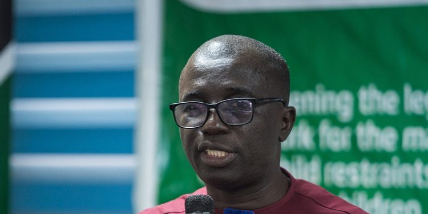
The compulsory towing of broken-down vehicles will help reduce road crashes and improve safety on Ghana’s roads, West Africa Director of CUTS International, Appiah Kusi Adomako, has said.
He said requiring vehicle owners to subscribe to towing services or obtain insurance packages that include towing cover would help prevent motorists from leaving broken-down vehicles on roads and attempting to repair them in traffic.
His comments follow the government’s decision to introduce a mandatory towing regime under the new Road Traffic Regulations, 2026 (L.I. 2519), with vehicle owners expected to make arrangements for the prompt removal of vehicles that break down or are involved in crashes.
The new towing requirement
Under the Road Traffic Regulations, every vehicle owner will be required to subscribe to a towing service company or purchase an insurance policy with towing cover attached. The Director of Registration, Inspection, and Compliance at the National Road Safety Authority (NRSA), Kwame Koduah Attuahene, said owners who fail to comply could have their vehicles compulsorily towed, with the cost charged to them.
“The law is that every vehicle owner will be required to subscribe to a towing service company or buy an insurance policy that has a towing service tied to it,” Mr Attuahene said.
The regulation forms part of a broader overhaul of Ghana’s road traffic regime under the Road Traffic (Amendment) Act, 2025 (Act 1153), and the accompanying Road Traffic Regulations, 2026 (L.I. 2519), which also introduce digital traffic enforcement through the Traffitech system, a shift in vehicle registration policy, and new requirements for abandoned vehicles.
Broken-down vehicles a major hazard
Speaking on Eyewitness News on Thursday, September 10, Mr Adomako said the policy was necessary because broken-down vehicles had become a significant hazard on Ghana’s roads.
“Yes, I agree with it because the practicalities involved are quite tedious,” he said in response to the compulsory towing requirement.
“Most drivers, when their car breaks down on the road, they stop on the road, and they have turned the road into a mechanic shop trying to fix the car. Because there’s no regulation on that, people have turned the highway into garages.”
He said the continued presence of broken-down vehicles on major roads created additional risks for motorists and could contribute to crashes.
“Most accidents that are happening on the road are as a result of broken-down cars on the road,” Mr Adomako said.
How the system will work
Under the emerging system, motorists would be able to call their towing providers when their vehicles break down, allowing the vehicles to be removed from the road rather than repaired at the roadside.
“So now, by compelling car owners to buy insurance, whenever your car breaks down, you call your insurance company, and they have to respond within a certain time frame,” he said.
He expressed confidence that the National Road Safety Authority would be able to ensure that insurance companies and towing operators responded promptly when motorists required assistance.
The new regulations also empower authorities to seize and auction vehicles abandoned on public roads if they are not reclaimed within seven days, providing an additional enforcement mechanism against vehicles left unattended on highways.
A worsening road safety crisis
The towing regime comes amid a worsening road safety crisis in Ghana. Transport Minister Joseph Bukari Nikpe disclosed that 2,949 people died in road crashes in 2025 — an average of about eight deaths every day — from 14,743 reported crashes that also left more than 16,000 injured.
Speeding remained the dominant contributory factor, accounting for more than 60 percent of all collisions recorded during the year. Motorcycle-related incidents also surged, with 6,548 motorcycles involved in 2,025 crashes, a 19.4 percent increase over 2024.
A World Bank report from August 2026 estimated the cost of road crash fatalities and serious injuries in Ghana at $4.55 billion annually, equivalent to approximately 2.1 percent of GDP.
Broader regulatory changes
The towing requirement is one of several significant changes introduced under the new legal framework. The Road Traffic (Amendment) Act, 2025 (Act 1153), passed in December 2025, gave the Traffitech digital enforcement system the statutory backing it needed to move from warnings to enforceable camera-based fines.
Other changes include a shift in vehicle registration policy, with registration numbers now belonging to the registered owner rather than the vehicle. When a vehicle is sold, the registration number remains with the previous owner, and the new owner must obtain a new number. The DVLA also plans to recall existing number plates nationwide as part of a new system for issuing biennial renewal stickers.
With the mandatory towing regime, CUTS International becomes one of the first civil society organisations to publicly endorse the government’s new road safety measures, framing the policy as a practical intervention against a persistent and deadly hazard on Ghana’s highways.


