



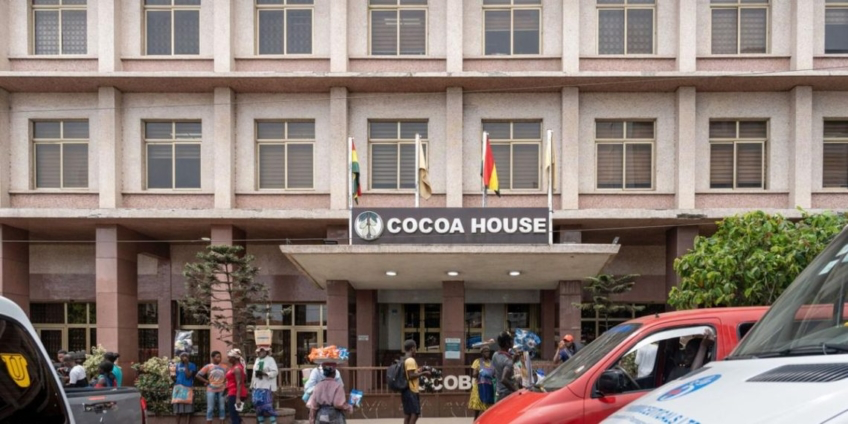
The Ghana Cocoa Board (COCOBOD) has staged a remarkable financial recovery, posting a net profit of GH¢5.11 billion for the 2025 financial year, a dramatic reversal from the GH¢5.73 billion loss recorded the previous year.
This resurgence, detailed in the 2025 State Ownership Report by the State Interests and Governance Authority (SIGA), was driven by a surge in cocoa purchases and sales. The Board’s operating revenue experienced a 207.67% increase, climbing from GH¢15.80 billion in 2024 to an impressive GH¢48.62 billion in 2025 .
Operational Improvements and Debt Reduction
The turnaround is a testament to significant operational improvements. COCOBOD moved from an operating loss of GH¢4.07 billion to a robust operating profit of GH¢6.17 billion . This performance was underpinned by a 33% increase in cocoa purchases, reaching 597,377 tonnes for the year.
Exports were a major catalyst, with revenue from cocoa bean exports surging by 194.19% to GH¢35.70 billion. Domestic sales also saw a massive 252.28% jump to GH¢12.92 billion .
A critical achievement was the improvement in the Board’s balance sheet. Total equity swung from a negative GH¢3.65 billion to a positive GH¢1.48 billion, marking a positive shift of GH¢5.13 billion . This was accompanied by a GH¢2.93 billion reduction in interest-bearing liabilities, which fell by 19.24% from GH¢15.23 billion to GH¢12.30 billion .
A New Era of Fiscal Discipline
The results reflect the government’s comprehensive reforms to stabilize the sector following a period of financial stress. COCOBOD had entered 2025 with a cumulative debt of GH¢32.9 billion, prompting urgent action, including clearing GH¢3.4 billion in loans and converting major obligations into equity .
As part of this reset, the government has maintained a producer price of GH¢41,392 per tonne for cocoa during the 2025/26 Light Crop Season, shielding farmers from a global market decline . A key component of the strategy is the new financing model set for rollout in the 2026/2027 crop season, which will replace the long-standing syndicated loan system with domestic cocoa bonds, commercial paper, and notes . This model aims to boost price stability and ensure farmers receive a guaranteed 70% of the Free-On-Board price, with potential quarterly adjustments .
Strategic Outlook and Climate Resilience
The reforms also signal a shift towards value addition, with a target to process at least 50% of Ghana’s cocoa beans locally starting from the 2026/27 crop year .
Financially, despite the recovery, SIGA notes that COCOBOD remains highly leveraged, with debt accounting for about 95% of its assets (a debt-to-assets ratio of 0.95 times) . The current ratio also remains below one at 0.80 times, indicating liquidity pressures persist .
In tandem with financial reforms, COCOBOD is implementing climate resilience programmes. These initiatives include the Ghana Tree Crop Diversification Project, which aims to improve climate and economic resilience for up to 842,000 farmers by introducing climate-smart practices and digital extension services . Projects focused on Integrated Pest Management (IPM) and the Ghana Cocoa Forest REDD+ Programme are also underway to help farmers combat climate threats like erratic rainfall and pests, ensuring the long-term sustainability of Ghana’s “green gold” .


