



China has eliminated tariffs on imports from 53 African countries, leaving only Eswatini excluded due to its diplomatic relations with Taiwan.
The duty-free policy, which took effect on Friday, expands an existing arrangement that had already granted zero tariffs to 33 least-developed African nations as of December 2024. Beijing says the measure will run until 30 April 2028, though no decision has been announced beyond that date.
China has touted itself as the first major economy to offer unilateral zero-tariff treatment to Africa, a move analysts see as a strategic play for influence on the continent.
“China is positioning itself as the trade liberaliser and Africa-friendly economic partner, in contrast to Donald Trump and the US,” said Lauren Johnston, a senior research fellow at the AustChina Institute.
The United States had imposed tariffs as high as 30 percent on some African nations in August last year, though most now face a 10 percent levy after the US Supreme Court struck down many of the duties.
Trade imbalance persists
Despite the gesture, experts caution that the zero-tariff policy alone will not solve Africa’s deepening trade deficit with China. Last year, Africa’s trade shortfall with Beijing grew by 65 percent to approximately $102 billion, as Chinese exports to the continent continue to far outpace African exports to China.
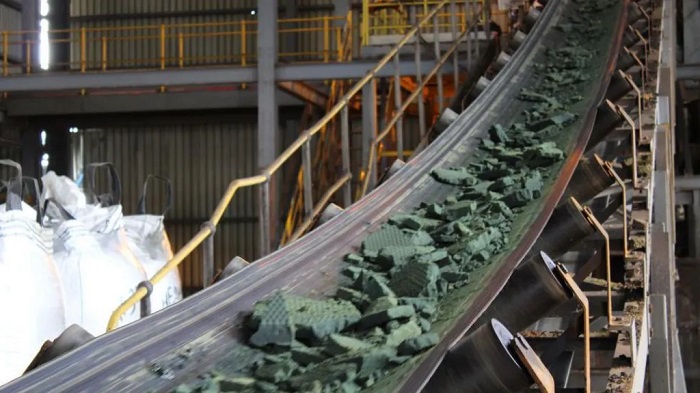
Africa’s shipments remain dominated by raw materials—crude oil, metallic ores, and minerals—while China exports manufactured goods.
“Many African economies still face structural constraints, such as limited industrial capacity, weak logistics, and a reliance on raw commodity exports, which tariff reductions alone cannot address,” said Jervin Naidoo, a political analyst at Oxford Economics Africa.
Alfred Schipke, director of the East Asian Institute in Singapore, agreed that the short-term economic impact “will likely be modest” but noted that long-term gains are possible if African countries expand production, diversify exports, and move up the value chain.
Potential bright spots
Some economists see opportunities for specific sectors. Kenyan economist Ken Gichinga told the BBC the measures will boost sub‑sectors such as avocado, macadamia nuts, coffee, tea and leather.
“These new measures will improve access to Chinese markets, closing that trade deficit and expand opportunities for African companies to prosper,” he said.
However, fiscal policy expert Wangari Kebuchi warned that zero tariffs on unprocessed commodities could entrench Africa’s role as a raw material exporter. “African governments must now ask the harder questions: How do we use improved market access as leverage for industrial policy?” she said.
Why Eswatini was left out
The exclusion of Eswatini is widely seen as a political message. The southern African nation is one of only 12 countries that maintain diplomatic relations with Taiwan, which Beijing considers a breakaway province.
Analysts suggest the move is designed to pressure Taiwan’s remaining allies. “China wants to show the world how it treats its friends, versus Taiwan’s friends,” said Wen‑Ti Sung, a political scientist at the Australian National University’s Taiwan Centre.
Amit Jain, a Singapore‑based expert on China‑Africa relations, believes the exclusion “may even help Eswatini win even more economic concessions from Taiwan”.
Last month, Taiwan’s leader Lai Ching‑te was forced to cancel a trip to Eswatini after three other African nations—Seychelles, Mauritius and Madagascar—refused to allow his aircraft to fly over their territories. Taiwan accused those countries of acting under “intense pressure” and economic coercion from China.


