



Police in the Central Region say they are working hard to break a fraud syndicate targeting traders and mobile money vendors, with three suspects arrested in Mankessim and a manhunt underway for the perpetrators of a GH¢45,000 scam involving a mobile phone dealer.
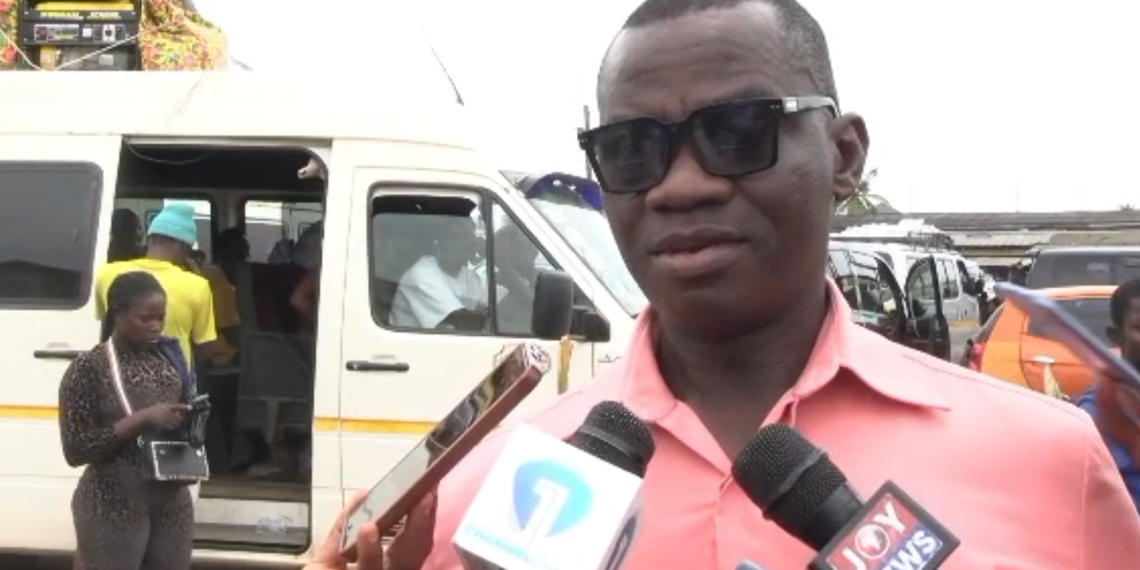
The Mankessim Divisional Crime Officer, ASP Hayford Alavi, disclosed the arrests on the sidelines of a sensitisation meeting organised by the Ghana Chamber of Telecommunications in collaboration with the Ghana Police Service and the Environmental Protection Agency (EPA) for traders in Mankessim.
“This year, we have had three reported incidents. One involves GH¢45,000, the other one is GH¢12,000 and the last one is GH¢9,000,” ASP Alavi told Citi News. “We managed to arrest the culprits involved in the GH¢12,000 and the GH¢9,000 but we are yet to arrest those responsible for the GH¢45,000.”
The arrests followed intelligence-led operations targeting fraud hotspots in busy business areas, particularly marketplaces, where most of the incidents have been recorded. Investigations into the activities of the suspects are ongoing.
Fraudsters Targeting Market Centres
ASP Alavi described the activities of the fraudsters as a serious and growing threat to traders in the area, noting that intelligence gathered indicated fraudsters had deliberately concentrated their operations in market centres and other high-traffic commercial zones to target unsuspecting traders.
He appealed to business people, particularly those who frequently use mobile money platforms, to remain alert, verify transaction details, and avoid sharing sensitive information such as PINs and one-time passwords with anyone.
He also cautioned MoMo fraudsters to desist from the practice, warning that police will ensure the law is applied fully against offenders. Fraud penalties under Ghanaian law range from fines of GH¢30,000 to GH¢60,000 or prison terms of up to 25 years.
Insider Collusion Concerns
Some traders at the Mankessim event raised another concern: the possibility of insider collusion in MoMo fraud cases. They urged telecommunications companies to conduct thorough background checks before employing staff, expressing suspicion that some employees might be conspiring with fraudsters to exploit illiterate or less tech-savvy customers.
A Growing National Threat
The Mankessim cases reflect a broader national crisis. Mobile money fraud has become the most prevalent online scam in Africa, with 97 per cent of countries surveyed by INTERPOL flagging it as a primary cybercrime concern. Ghana alone lost an estimated $1.3 million to mobile money fraud in the first quarter of 2025, according to INTERPOL’s African Cyberthreat Assessment Report 2026.
More than 90 per cent of reported scam cases analysed by TrustGH, a scam verification platform, involved attempts to obtain mobile money payments or gain unauthorised access to victims’ accounts. The Bank of Ghana’s 2025 Fraud Report recorded 24,124 fraud cases within the payment-service-provider sector.
Fraudsters employ a range of tactics including social engineering, identity theft, SIM swap attacks, fraudulent customer care calls, phishing messages, and insider collusion. A common scheme involves fraudsters calling vendors and pretending to be a colleague MoMo operator, mentioning the name of a familiar business associate to gain trust before requesting a transfer.
Victims include market vendors, students, professionals and small business owners — with traders in busy commercial hubs like Mankessim particularly vulnerable.
Industry Response and Stronger Coordination
Sylvia Owusu-Ankomah, Chief Executive Officer of the Ghana Chamber of Telecommunications, assured that stronger stakeholder coordination has been established to ensure the protection of digital funds. She said mobile money agents should be fully integrated into the national fraud-prevention architecture because they are often the first people to detect suspicious activities and the first point of contact for customers who have fallen victim to fraud.
Owusu-Ankomah has also called for the establishment of a National Fraud Control Centre to strengthen the system-wide response to digital fraud. She stressed that the foundation of Ghana’s digital-finance success is not merely mobile applications or technology platforms but trust, with mobile money agents serving as the human face of that trust in communities across the country.
At the Mankessim event, she also debunked the myth that telecom towers cause cancer, reassuring residents that there is no scientific basis for such claims. She explained that poor network quality in parts of the Central Region is not caused by faults within telecommunications companies’ systems but by ongoing road construction under the government’s “Big Push” programme and illegal mining activities destroying buried fibre optic cables.
She cited specific incidents along the Winneba–Mankessim road where major road construction disrupted communications, and appealed to residents and traders to exercise patience as efforts are underway to repair damaged cables and restore stable network services.
Ghana’s Digital Economy Under Threat
The stakes are high. Ghana’s mobile money sector processed approximately 9.7 billion transactions valued at more than GH¢4.5 trillion in 2025, with about 26.6 million active mobile money customer accounts and 491,000 active agents. The country retained the top position globally in the GSMA’s 2025 Mobile Money Regulatory Index.
However, Owusu-Ankomah cautioned that Ghana’s position as a global leader cannot be taken for granted. “Leadership is not permanent and is constantly under threat,” she warned.
As police intensify efforts to dismantle the fraud syndicate in Mankessim and bring the perpetrators of the GH¢45,000 scam to justice, the case serves as a stark reminder of the growing threat posed by cyber-enabled financial crime to Ghana’s digital economy and the livelihoods of traders and vendors across the country.


