

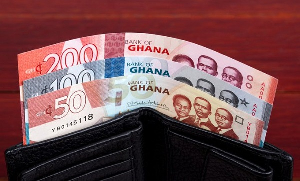
The Ghana cedi has recorded more than three consecutive weeks of appreciation against the US dollar on the interbank market, buoyed by increased foreign exchange supply from the Ghana Gold Board (GoldBod), which has announced plans to inject US$1.5 billion into the market in October 2026.
Under the programme, US500 million is expected to go to the Bank of Ghana for reserve accumulation . The interventions are intended to improve dollar liquidity, ease pressure on the cedi, and support stability in the foreign exchange market.
The planned supply follows a reported US$130 million spot foreign exchange sale at GH¢11.60 to the dollar, highlighting GoldBod’s role in increasing the availability of foreign currency in the market . The cedi was trading at approximately 11.54 to the dollar as of late October, compared with 11.63 a week earlier, according to LSEG data .
A New Architecture for Forex Supply
The gains mark a significant turnaround for the cedi, which had lost more than 11 per cent against the dollar year-to-date by mid-October, trading at GH¢11.78 on the interbank market and an average of GH¢12.10 at forex bureaus, as businesses bought dollars to finance year-end imports and the central bank made energy-related payments .
The recovery has been driven by GoldBod’s Spot FX Sales and Intermediation Framework, announced on October 5, which channels foreign exchange from small-scale gold exports to authorised banks, typically on Tuesdays and Thursdays . Since the beginning of October, GoldBod has sold approximately US$452 million to commercial banks through its GoFX platform, which provides electronic submissions, allocation processing, time-stamping, transaction histories, and audit trails to support transparency and accountability .
The platform operates under the regulatory oversight of the Bank of Ghana, which has real-time access and receives transaction reports after each sale . When demand exceeds the available tranche, allocations are made on a pro-rata basis to ensure fairness among participating banks .
Bank of Ghana Governor Dr. Johnson Asiama praised GoldBod’s contribution, saying he wondered why the institution had not been established much earlier. “We want to focus on reserve build-up while GoldBod supports with FX intermediation as well as some level of intervention for the market,” he said, clarifying that the central bank retained the capacity to intervene when necessary .
Background: GoldBod’s Evolving Role
GoldBod was established in April 2025 under the Ghana Gold Board Act, 2025 (Act 1140), initially serving as a gold-buying agent for the Bank of Ghana under the Domestic Gold Purchase Programme . It ended that agency role in March 2026 following Parliament’s passage of the Ghana Accelerated National Reserve Accumulation Programme and the end of the Domestic Gold Purchase Programme .
Since August 2026, GoldBod has independently raised cedi funding to purchase gold from the small-scale mining sector, before selling the foreign exchange generated to the Bank of Ghana and commercial banks . The shift gave the board a more direct role in mobilising foreign exchange for the economy.
GoldBod CEO Sammy Gyamfi has defended the programme’s broader economic contribution, stating that together with the Bank of Ghana, it generated more than US10.6 billion for the market, contributing to a significant appreciation of the cedi and an increase in international reserves from US13.8 billion by December 2025 .
The IMF’s 2026 Article IV consultation report noted that the scaling-up of the Domestic Gold Purchase Programme in 2025 resulted in losses of more than US$1.7 billion, equivalent to about 1.5 per cent of GDP . Gyamfi has argued that these were largely exchange-rate valuation effects rather than evidence of mismanagement, and that the programme was designed as a foreign exchange mobilisation and stabilisation intervention rather than a profit-making venture .
What It Means for Businesses and Households
The increased supply of US dollars could help sustain the cedi’s appreciation by making foreign currency more readily available to banks and businesses. Importers and other businesses that require dollars to pay for goods, services, and international transactions could benefit from improved access, easing demand pressures and limiting sharp fluctuations in the exchange rate .
The planned US$500 million allocation to the Bank of Ghana for reserve accumulation could also support the country’s external buffers. Governor Asiama said Ghana remained on track to achieve six months of import cover by December 2026 under its Policy Coordination Instrument .
A more stable cedi could help reduce the local currency cost of imported goods, including fuel, food, medicines, and machinery, provided international prices remain stable. However, a stronger currency does not automatically translate into immediate price reductions. Exchange-rate gains usually pass through to retail prices with a delay, depending on how businesses buy, price, and replace their stock. Importers and wholesalers may still be selling goods purchased when the dollar was more expensive .
Ghana’s year-on-year consumer inflation rose slightly to 5.2 per cent in September, from 5 per cent in August, according to the Ghana Statistical Service. While considerably lower than a year earlier, prices continue to rise overall .
Sustainability Hinges on Inflows
The durability of the cedi’s recovery will depend on whether GoldBod can sustain its foreign exchange inflows through November and December, when import demand typically peaks ahead of the Christmas season. GoldBod generated US1.4 billion, giving it more room to sell to banks .
Andrews Akoto, head of trading at Absa Bank Ghana, said decent mining-related foreign exchange inflows should continue to offer the local unit favourable tailwinds against the dollar in the coming week, as energy and commerce sector demand moderates . Ronald Mensah, a trader at Stanbic Bank Ghana, said scheduled dollar sales by GoldBod should provide support for the cedi in the near term .
Databank Research expects GoldBod’s spot sales and central bank interventions to provide near-term support, with the dollar trading between GH¢11.60 and GH¢12.10. But it warned that the durability of any recovery depends on whether inflows can keep pace with seasonal demand without undermining the central bank’s reserve-building target .
There is also a trade-off: every dollar GoldBod sells to banks to support the cedi is a dollar not added to the country’s reserves. For now, a larger, scheduled dollar supply and a central bank ready to step in have given the cedi firmer backing than it had in September, heading into the busiest period of the year.