



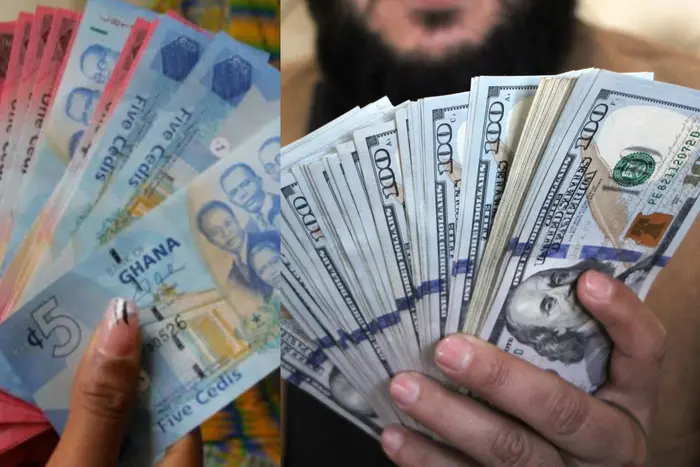
The Ghana cedi is trading at GH¢11.12 against the US dollar, GH¢15.17 to the pound sterling and GH¢12.99 to the euro, according to the latest Bank of Ghana (BoG) reference rates covering transactions conducted on August 21, 2026 .
Compared with the previous rates for August 21, the figures show the cedi has weakened slightly against the US dollar and pound sterling, while movement against the euro remains marginal . The current interbank buying and selling rates for the dollar stand at GH¢11.1144 and GH¢11.1256 respectively, with the average rate at GH¢11.1200 .
Currency performance reflects broader economic trends
The latest rates come amid a mixed year for the Ghanaian currency. Data from the Bank of Ghana shows the cedi depreciated by approximately 9.5% against the US dollar in the interbank market during the first seven months of 2026, compared with a 40% appreciation recorded in July 2025 . In January 2026, the cedi suffered a 4.6% depreciation before losing 2.2% in February, with further declines of 5.0% and 6.6% in March and April respectively .
Despite these pressures, the currency has shown signs of recovery, with the Governor of the Bank of Ghana, Dr Johnson Pandit Asiama, noting that the cedi has recorded significant recovery against major international currencies, supported by strengthened external reserves and increased economic activity across sectors .
Investment inflows signal renewed confidence
The cedi’s stability has been bolstered by improving investor sentiment. Ghana attracted approximately US686 million were registered during the year, reflecting growing confidence among domestic investors .
“Investment, at its core, follows confidence,” Dr Asiama said at the launch of the report. “Investors seek environments where policies are credible, institutions are dependable, and economic conditions are predictable” .
The investment inflows are projected to create approximately 18,748 jobs, with Ghanaians expected to account for 90.3% of the positions . China topped the list of countries by number of projects with 70, followed by India with 22 and Nigeria with 10 .
Inflation eases as monetary policy remains steady
Ghana’s headline inflation has declined significantly from the heights of over 54% recorded during the economic crisis, easing to 4.6% in July 2026 . The Bank of Ghana has maintained its monetary policy rate at 14% following its 130th and 131st Monetary Policy Committee meetings, as policymakers weigh domestic resilience against global uncertainties .
Dr Asiama has emphasised that the central bank’s policy stance continues to support both price stability and sustainable growth, despite disruptions originating from geopolitical tensions in the Middle East . The committee has noted that prolonged geopolitical tensions could keep crude oil prices elevated, potentially affecting transport and utility prices domestically .
External sector strengths support currency outlook
Ghana’s external position has shown improvement, with gross international reserves rising to US13.8 billion at the end of December 2025 . The current account surplus widened to US2.43 billion in the corresponding period of 2025, driven by robust gold and cocoa export earnings and resilient remittance inflows .
The Bank of Ghana’s domestic gold purchase programme has emerged as a critical buffer against external shocks, despite recent accounting losses stemming from high sterilisation costs . Economic analyst Senyo Hosi has explained that the programme was designed to curb gold smuggling and bring more gold into the formal market, with the primary objective being long-term economic benefits rather than short-term profitability .
Growth projections remain positive
Standard Bank has projected that Ghana’s economy will expand by between 5.9% and 6.1% in 2026, supported by growth in gold mining, major infrastructure investments and stronger foreign exchange buffers . The economy’s stronger-than-expected 2025 performance, which achieved six per cent growth against initial forecasts of 5.6% to 5.8%, has reinforced confidence in the medium-term outlook .
Foreign investor participation in Ghana’s domestic debt market has declined sharply to below five per cent, from nearly 40 per cent before the COVID-19 pandemic. While this poses challenges for external financing, analysts note it has paradoxically shielded the economy from global portfolio volatility .
Dr Asiama has highlighted that Ghana’s position as host of the African Continental Free Trade Area (AfCFTA) secretariat, combined with its young population and growing digital economy, strengthens its position as an investment destination . Looking ahead, the Governor has emphasised that the ultimate objective should be to translate investment commitments into new industries, modern technologies, productive infrastructure and sustainable jobs .
The Bank of Ghana’s next Monetary Policy Committee meeting is scheduled for September 22–24, 2026, with the policy rate decision to be announced on September 24 .


