



The Bank of Ghana (BoG) has urged central banks across West Africa to strengthen the regulation and supervision of digital payment systems to safeguard financial stability and protect users against cyber threats, as the region’s digital payments sector continues to expand rapidly.
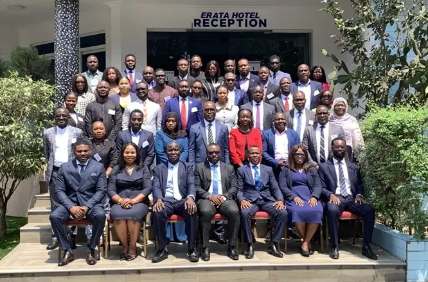
The call was made at a regional course organised by the West African Institute for Financial and Economic Management (WAIFEM) in Accra on Monday, October 12, 2026, on regulating payment systems and financial market infrastructure in the digital era. The event was attended by officials of WAIFEM, the Bank of Ghana, resource persons, participants from various central banks and members of the press.
Speaking on behalf of the Governor of the Bank of Ghana, Dr Johnson Pandit Asiama, the Director of the Payment Systems Department, Mr Clarence Blay, said payment systems had become central to the delivery of financial services, facilitating transactions ranging from everyday purchases to the payment of school fees and medical bills.
He said the rapid growth of digital financial services and virtual assets required central banks to strengthen their regulatory frameworks and build the capacity of their officials to respond effectively to emerging risks.
Payment Systems Now at the Centre of Banking
Mr Blay noted that payment systems were once considered an appendage to monetary policy and did not occupy a central place in central banking. “Fast forward to this time, a lot has changed. You are receiving your payments on your phones, you are transferring money digitally, and you have expanded access to financial services through the mobile money infrastructure,” he said.
He explained that digitalisation had moved the payment system to the centre of financial service delivery and made it the rail on which monetary policy impulses are transmitted and the foundation for liquidity in the financial sector. “This infrastructure is permeating every aspect of human endeavour, including e-commerce. How then are we able to ensure that the infrastructure transmitting monetary policy is safe and secure and has no frictions? That is the responsibility of all of us gathered here,” he stressed.
Cybercriminals and the Growing Threat
Mr Blay said the growing importance of payment systems had attracted cybercriminals, making cybersecurity a major concern. He disclosed that Ghana had addressed this with the establishment of the Financial Service Industry Command Centre, where cyber information is gathered and shared among financial service providers.
He observed that the same technology enabling cybercriminals is also providing tools, including Artificial Intelligence (AI), to enhance the security of the payment system. “While individual transaction values are low, in aggregate they are high. The utility of these systems is so high that you have a responsibility to protect your systems to maintain confidence,” he said, noting that retail payment systems have become systemically important due to the high volume and aggregate value of transactions.
The BoG’s push for tighter controls comes amid a surge in digital payment adoption. Mobile money flows reached more than GH¢40 billion in June 2026, while transactions processed through mobile money platforms were close to GH¢493 billion. Reported fraud cases in Ghana rose by 48% in 2025, although the total value at risk remained broadly unchanged, suggesting fraud is increasingly taking the form of numerous smaller incidents affecting ordinary users.
Cross-Border Trade and the Case for Interoperability
On cross-border trade, Mr Blay said Africa must improve its payment systems to enhance intra-African trade and create wealth for its people. “We have to create opportunities for people on the continent to trade among themselves. When you trade, you have to make payments. So you need a payment system that is less expensive, that is more efficient, that does not cost an arm and a leg to execute a transaction,” he noted.
The Bank of Ghana is currently testing cross-border payment systems using central bank digital currencies (CBDCs), stablecoins, bank accounts and mobile wallets to make transactions between African countries more efficient. The initiative covers the Ghana-Rwanda and Ghana-Nigeria corridors, and the Bank has also extended the Pan-African Payment and Settlement System (PAPSS) to mobile wallets along the Ghana-Nigeria corridor.
“Our objective is to move these pilots to live services, building on existing infrastructure such as PAPSS rather than creating new systems,” Dr Asiama said at a high-level event on digital innovation in payments on the sidelines of the 2026 IMF-World Bank Annual Meetings in Bangkok, Thailand.
Balancing Innovation and Regulation
Mr Blay urged central banks to be open to innovation and to act as facilitators of innovation rather than being afraid of new developments such as embedded finance, stablecoins and digital assets. He also highlighted the complexity of the modern payment chain, which involves “platform-as-a-service providers, software-as-a-service providers and data centre operators,” some of whom are not directly regulated by central banks.
“How do we ensure that safety standards go through all the entities that are in the ecosystem but some of them are not regulated or supervised by us? Do we wish them away and hope that they will disappear? Or do we be bold, pragmatic and work with them using a pilot to understand what is happening?” he questioned.
He commended WAIFEM for continuously scanning the environment to identify knowledge gaps and building the capacity of member central banks, urging participants to take the course seriously, ask questions, share ideas and build a network that would continue beyond the training.
WAIFEM’s Role in Capacity Building
The course was organised by WAIFEM, which was established in 1996 by the central banks of The Gambia, Ghana, Liberia, Nigeria and Sierra Leone to build capacity for macroeconomic and financial management in the sub-region. WAIFEM’s Director of the Financial Sector and Payment Systems Department, Mr Amadou Sawanoe Koora, was present at the event alongside participants from various central banks.
Mr Koora has previously emphasised the critical role of knowledge-sharing in strengthening West Africa’s financial markets, noting that the training curriculum and programmes have been revised to reflect emerging technologies and global challenges that have impacted the economic environment.
The Broader Regulatory Push
The BoG’s call for tighter digital payment controls is part of a wider regulatory drive. In June 2026, the central bank issued a supervisory directive requiring all regulated financial institutions to immediately cease support for unauthorised foreign currency digital wallet services provided by cryptocurrency platforms. The directive applied to banks, specialised deposit-taking institutions, electronic money issuers and payment service providers.
In March 2026, the Bank launched the Cyber and Information Security Directive (CISD) 2026, which Governor Asiama said was necessary because rapid advancements in mobile money, cloud computing and artificial intelligence had expanded financial inclusion but also introduced complex cybersecurity risks, including ransomware attacks and systemic data breaches. The Bank has also expanded the Financial Industry Command Security Operations Centre (FICSOC) beyond universal banks and is preparing forthcoming guidance on the safe use of artificial intelligence, including agentic AI.
In October 2026, the BoG issued a twenty-point advisory to the public on digital financial fraud, cautioning customers against disclosing confidential banking information, including Personal Identification Numbers, internet banking passwords and One Time Passwords. The Bank also warned against “double-your-money” schemes and Ponzi schemes, encouraging customers to regularly monitor transaction alerts, bank statements and mobile money notifications to detect unauthorised transactions promptly.
Additionally, the Bank has implemented measures including consumer education, payee confirmation and stronger controls on SIM replacement as part of its response to the growing threat of digital fraud. Weak authentication systems in Ghana’s expanding digital financial sector have been identified as a threat to public trust, with the BoG noting that most mobile money scams are driven by psychological manipulation rather than sophisticated cyberattacks.
A Regional Imperative
As digital financial services continue to expand across West Africa, the BoG’s call for stronger regulation and supervision reflects a growing recognition that the security and stability of payment systems are fundamental to maintaining public confidence in the financial system. With mobile money transactions approaching half a trillion cedis and fraud cases on the rise, the pressure on central banks to balance innovation with robust oversight has never been greater.
“This training aligns with regional integration efforts within West Africa as part of a broader African agenda monitored by other regions,” Mr Blay said, urging participants to engage actively and build lasting networks beyond the course.


