



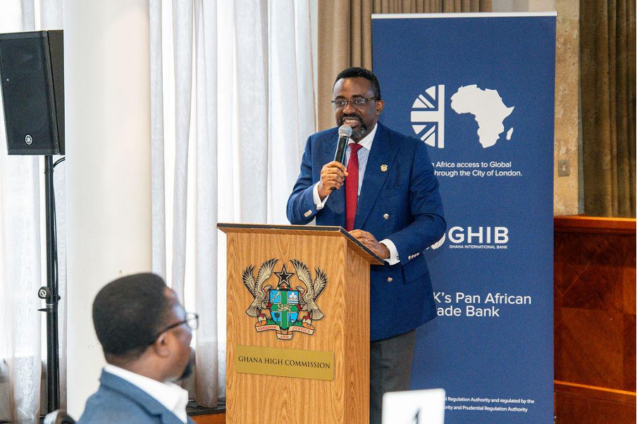
Bank of Ghana Governor Dr. Johnson Asiama has firmly dismissed mounting pressure from international investors to lower the country’s inflation benchmark, warning that external geopolitical risks—particularly the escalating crisis in Iran—make any premature adjustment a dangerous gamble.
Speaking at the 2026 CEOs Connect forum hosted by the Canada Ghana Chamber of Commerce, Dr. Asiama revealed that several investors had questioned why the central bank was not seizing on recent disinflationary gains to reduce its current target of 8%, with a tolerance band of plus or minus 2 percentage points.
“They believe we can sustain inflation at a much lower level and suggested bringing the band down to about 4–6%,” the Governor said. “But I told them: Iran is still around the corner. The crisis there may be too early for me to put that rope around my neck.”
His remarks underscore the central bank’s cautious stance, even as headline inflation has fallen well below the lower bound of the target band—a dramatic reversal from the 40%-plus peaks recorded during the 2022–2023 economic turmoil. The cedi, meanwhile, has shown renewed stability, buoyed by improved foreign exchange reserves and stricter fiscal discipline under the ongoing IMF-supported programme.
Despite the optimism from investors, Dr. Asiama stressed that the central bank’s immediate priority is to cement the hard-won macroeconomic gains rather than chase a more aggressive target that could leave the economy exposed to global supply shocks. The Governor noted that while he envisions stable, low inflation persisting into the medium term, the BoG will not rush to recalibrate its policy framework until the external environment becomes more predictable.
He attributed the cedi’s recent resilience to three interrelated factors: stronger reserve buffers, sustained fiscal prudence, and a carefully calibrated monetary policy stance. These fundamentals, he argued, have provided the bedrock for the current recovery.
Looking ahead, Dr. Asiama said the broader objective is to channel these stability achievements into tangible development outcomes—boosting private-sector investment, expanding export capacity, and creating quality employment opportunities for Ghana’s growing youth population.
“Stabilising the economy is not the end goal,” he said. “It is the foundation upon which we must build sustainable growth and jobs.”
The Governor’s comments come as the Monetary Policy Committee prepares for its next sitting, with analysts widely expecting the policy rate to remain unchanged, pending further clarity on global oil prices and the trajectory of the Iran conflict. For now, the 8%±2 inflation anchor stays firmly in place.


