



About five road projects being executed under the government’s flagship Big Push infrastructure programme could be completed and ready for handover by the end of 2026, Deputy Minister of Roads and Highways Alhassan Suhuyini has disclosed, with President John Dramani Mahama potentially commissioning between four and five of them before the year ends.
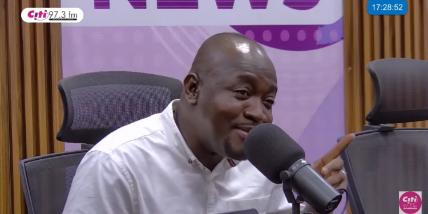
Speaking on Eyewitness News on Friday, September 18, 2026, Mr Suhuyini said the projects were progressing at different stages and that the government was confident several would be completed ahead of the December 2027 deadline set for the programme.
“By the end of this year, about five of the Big Push projects can be taken over and ready to hand over,” he said. “We can commission about four or five of them by the end of the year.”
The Deputy Minister said the government was also working towards a wider December 2027 deadline for the delivery of major road projects under the programme, stating: “We have marching orders from the President to deliver this route by the end of December 2027.”
Mr Suhuyini added that the government was monitoring contractors closely and was prepared to adjust project arrangements where contractors were unable to meet agreed timelines — a warning that echoes earlier statements from the Roads Ministry about terminating the contracts of underperforming contractors.
A $10 Billion Infrastructure Drive Inspired by World Bank Report
The Big Push programme, launched in 2025, is a $10 billion national infrastructure development initiative designed to bridge Ghana’s long-standing infrastructure deficit across roads, railways, health, education, and the digital economy. The initiative was inspired by a World Bank report which estimated that Ghana faces an annual infrastructure shortfall of about $1.5 billion.
Under the programme, the government plans to invest $2 billion annually for five years, with a focus on roads receiving a significant share due to widespread public concern about their poor state. President Mahama has said the programme was conceived to “catch up with that deficit and improve infrastructure so that we can increase productivity and expand our economy.”
The programme’s original scope identified 12 major economic corridors across the country, christened the “12 Disciples,” which form the backbone of Phase One. Phase One prioritises strategic trunk roads linking regional capitals and major economic corridors, while subsequent phases will extend development to more highways and feeder roads connecting towns and rural communities.
50 Major Projects Spanning 1,144 Kilometres
In his 2026 State of the Nation Address, President Mahama announced that 50 major road projects spanning 1,144 kilometres were underway under the Big Push programme, with a total estimated cost of GH¢50 billion. The President also confirmed that 23 road projects valued at GH¢14.88 billion — awarded by the previous administration but abandoned by contractors due to a lack of dedicated funding — have been absorbed into the Big Push and are being completed with new funding sources.
In total, 73 projects are advancing across all 16 regions, with the government promising that “significant, visible progress” will be evident by the end of the year.
Key highways and interchanges under construction include the Tepa-Mabang-Goaso road, the Kumasi Bypass, the Suame Interchange, the Sunyani Outer Ring Road, the Sampa-Jinijini road, the dualisation of the Winneba-Cape Coast road, the Tamale Outer Ring Road, the Wenchi-Sawla road, the Sawla-Wa road, the Navrongo-Tumu road, the Tumu-Han-Lawra road, the Atimpoku-Ho road, the Ho-Denu road, and the dualisation of the Accra-Aflao road. The dualisation of the Cape Coast-Takoradi highway, a 73-kilometre project, is also underway, with the Western Region receiving projects valued at nearly GH¢7 billion.
Feeder road projects receiving attention include the Akosombo-Gyakiti-Kudikope, Yeniam Junction-Sedorm, Apeguso-Mpakadan, and Todome-Toh Kpalime-Dzemeni roads.
Flagship Projects Take Shape
Several projects are emerging as flagship achievements of the programme. The Wa-Han-Tumu-Navrongo highway, once described by President Mahama as one of Ghana’s most neglected roads, has been transformed into a flagship project. The President, who recalled travelling the road to Tumu to visit his father’s friend, said: “Indeed, it has been in a very poor condition since our fathers’ time. People believed that this road would never, ever be done.” He expressed confidence that by the end of 2027, motorists would enjoy a comfortable journey between Wa and Bolgatanga. The entire Wa-Navrongo stretch is set to receive an asphalt seal after double surface dressing, extending the road’s lifespan to about 20 years.
The Volta Region is poised to become the first in the country to deliver a fully completed road project under the Big Push programme, with approximately 2,500 kilometres of roads currently under construction nationwide.
Funding from Oil Revenues and Mineral Royalties
The Big Push is being financed domestically from 2025 to 2028, with the government dedicating all oil revenues and mineral royalties to the programme. Parliament approved GH¢13.8 billion for Phase One in 2025, and a further GH¢30.8 billion was allocated for 2026 — a substantial increase from the $13 billion invested in 2025. President Mahama disclosed in July 2026 that the government had committed more than GH¢40 billion towards the programme.
The government is also intensifying efforts to unlock Public-Private Partnerships to close Ghana’s widening infrastructure deficit, estimated at $37 billion annually over the next three decades. Additionally, Ghana has secured approximately $13 million in financing from the African Development Bank to expedite technical studies for key projects.
24-Month Deadline and Contractor Accountability
The government has set a 24-month completion deadline for road projects under the Big Push programme, with most projects expected to be handed over by the end of 2027. Mr Suhuyini has said the government expects most projects to be completed within this timeframe, and contractors who fail to deliver risk having their contracts terminated.
To ensure the viability of these projects, the government cleared arrears amounting to GH¢10 billion owed to road contractors by the end of 2025. President Mahama has also announced plans to introduce strict weight limitations to prevent premature road damage, citing examples of trucks loading up to 120 tons when the legal limit is 50 tons.
Phased Expansion Beyond Phase One
The government is already preparing Phases Two and Three of the Big Push programme, with additional trunk and feeder roads being scoped to expand road development across the country. President Mahama has explained that the phased approach is necessary to ensure available resources are used efficiently.
“There is a limit to the budget we have. That is why there is Big Push Phase One. We are already scoping Big Push Phase Two, and there will also be Big Push Phase Three,” he said. He explained that completing the trunk road network first will enable residents from every constituency to access the main highways safely before feeder roads are expanded into local communities.
Concerns Over Transparency and Procurement
The programme has not been without controversy. The Minority in Parliament has repeatedly called on the government to publish the full details of all road contracts awarded under the Big Push, citing concerns about the procurement process and the use of sole sourcing. The Ghana Institution of Engineering has also called for an independent audit of the GH¢110 billion road projects, citing concerns about procurement processes and project execution.
The Roads Minister, Governs Kwame Agbodza, has rejected claims of impropriety, stating that all contracts awarded under the programme strictly followed the Public Procurement Act and that all contractual information is publicly available on the Ministry’s website.
As the year draws to a close, the completion of the first batch of Big Push projects will be a critical test of the government’s ability to deliver on its flagship infrastructure promise. For now, the Deputy Minister’s announcement signals that the programme is moving from construction to delivery — and that Ghanaians may soon see the first tangible results of the government’s $10 billion infrastructure drive.


