



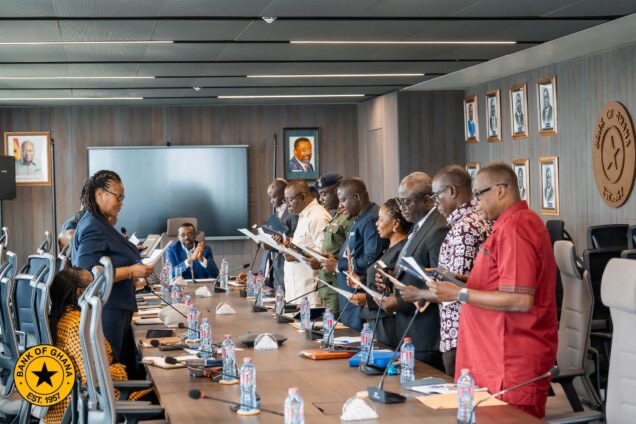
The Bank of Ghana (BoG) has inaugurated a Preliminary Investigation Committee on Seized Foreign Currency to address the growing challenge of undeclared currency moving through Ghana’s airports and border posts. The initiative forms part of the central bank’s broader effort to close significant gaps in the country’s financial system and strengthen mechanisms for monitoring foreign currency flows.
Governor Warns of Illicit Financial Risks
Speaking at the inauguration, the Governor of the Bank of Ghana, Dr Johnson Pandit Asiama, revealed that substantial amounts of foreign currency have been moving through the country’s borders without the required declaration. He cautioned that such flows pose serious threats to the integrity of Ghana’s financial sector, creating opportunities for money laundering, tax evasion and other illicit financial activities.
“Undeclared currency flows create room for money laundering, tax evasion and other illicit activity,” Dr Asiama stated in a post on August 29, 2026 .
Weakening Financial Intelligence
The Governor explained that undeclared currency movements also weaken the financial intelligence available to authorities who monitor the financial system. Additionally, currency moved outside declared channels diverts funds away from the formal market, undermining efforts to strengthen the country’s foreign exchange system .
Regulatory Framework
The initiative builds on the BoG’s amended guidelines on the importation and exportation of foreign currency, which took effect on September 1, 2025. Under the existing framework, travellers are permitted to carry up to US$10,000 without declaration. Amounts above this threshold must be declared in full using the official Foreign Currency Declaration Form (FX-5) from the Customs Division of the Ghana Revenue Authority .
For outbound travellers carrying more than US$50,000, the rules require declarations to be supported with endorsed bank slips or foreign exchange bureau receipts evidencing the source of funds. The regulations impose strict penalties for non-compliance, including immediate seizure of undeclared amounts, fines, or criminal prosecution. The transport of foreign currency through mail or cargo is also prohibited, with such funds liable to confiscation by the State .
Multi-Agency Collaboration
The Bank of Ghana is working in collaboration with several key institutions to safeguard the country’s borders, markets and resources. These include the Ghana Revenue Authority, Ghana Airports Company Limited, National Security, the Economic and Organised Crime Office (EOCO), the Financial Intelligence Centre and the Attorney General’s Office .
The committee’s establishment marks a significant step in the BoG’s efforts to combat currency smuggling and preserve the stability of the cedi, which has faced pressures from unauthorised capital flight and illicit financial flows.


