



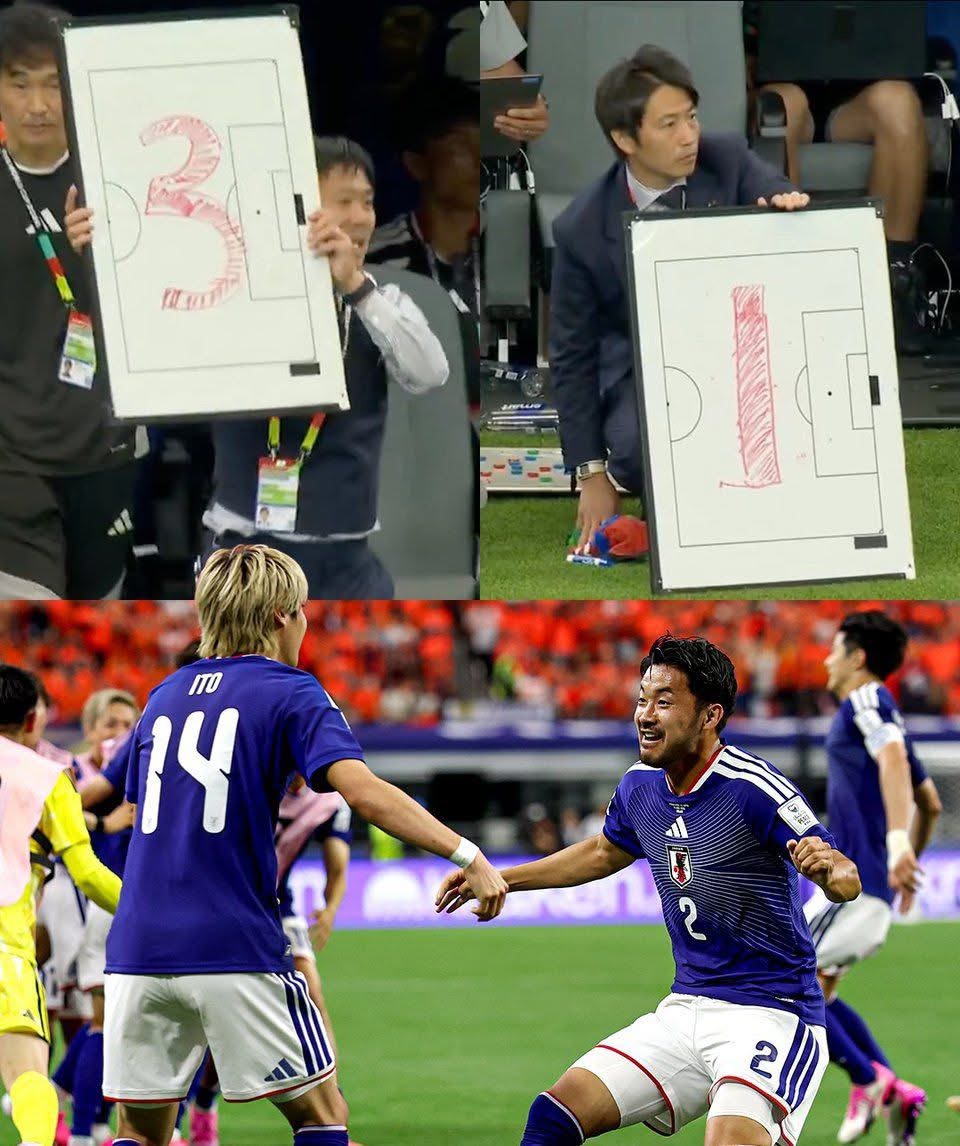
With a large clipboard clutched in one hand and numbers scrawled across every visible inch, Japan coach Hajime Moriyasu paced the technical area like a chess grandmaster orchestrating his final moves. Every substitution, every set-piece routine, every defensive adjustment was dictated from the sideline with clinical precision. By the final whistle, his masterplan had paid off: a thrilling 2-2 draw against the Netherlands in their Group F opener at AT&T Stadium.
Japan came from behind twice—first through Keito Nakamura in the 57th minute, then through Daichi Kamada in the 89th—to snatch a point against the 2022 quarter-finalists. For the Netherlands, who had taken the lead through captain Virgil van Dijk’s 51st-minute header and Crysencio Summerville’s 64th-minute strike, the result tasted bitter. For Moriyasu, who had prepared his players for this exact scenario, it was validation of a long-term vision.
A Tactical Metamorphosis
Moriyasu made history by becoming the first domestic coach to lead Japan to two consecutive World Cups, having taken charge following the 2018 tournament in Russia. After years of relying on a pragmatic four-man defence and counter-attacking football, he has overseen a quiet revolution.
“We were aiming to get three points, not one point,” Moriyasu told a post-match press conference. “The Netherlands were very strong, a very difficult opponent. The players were united as one, tenacious. They fought to the end and did not cease to persevere.”
The shift to a three-centre-back system has transformed Japan into a more aggressive and versatile attacking force. In Asian qualifying, they scored 51 goals—far surpassing their regional rivals—and posted a shot conversion rate of 21.1%. The formation allows full-backs to push forward like wingers, combining with two attacking midfielders to form a five-man attacking line in the opponent’s penalty area.
Against the Netherlands, that system came alive in the second half. After a tense first 45 minutes in which the Dutch controlled possession but could not break through, Moriyasu’s side grew into the contest.
Match Flow: Three Goals in 14 Minutes
The breakthrough arrived six minutes after the restart. Liverpool midfielder Ryan Gravenberch delivered a pinpoint cross from the right, and an unmarked Van Dijk powered a header beyond Japan goalkeeper Zion Suzuki. The Dutch captain’s first major tournament goal for his country had come at a crucial moment.
Japan’s response was immediate. Seven minutes later, Takefusa Kubo surged into the penalty area before pulling the ball back to Nakamura, who took two touches and fired low past Bart Verbruggen.
The Netherlands regained their lead in the 64th minute. Gravenberch turned provider once more, laying the ball off to Summerville, who curled a sublime left-footed effort into the far corner from the edge of the box.
With time running out and Koeman introducing defensive reinforcements to protect the lead, Japan intensified their pressure. Their persistence paid off with two minutes of normal time remaining. From a corner on the right, substitute Koki Ogawa met the ball with a glancing header that deflected off Kamada and past Verbruggen, sparking wild celebrations among the Japanese supporters.
The Man With the Numbers
Television footage captured Moriyasu throughout the evening clutching his oversized clipboard, making annotations after every passage of play. The image has since become a social media sensation—a symbol of the meticulous preparation that has defined his tenure.
That preparation was tested severely in the lead‑up to the tournament. Japan entered the World Cup without winger Kaoru Mitoma, ruled out after a hamstring injury, while captain Wataru Endo’s fitness was managed carefully throughout the tournament build‑up. Despite these setbacks, Moriyasu has instilled a belief that his squad can compete with any opponent.
Japan’s recent friendly results had already signaled their giant‑killing credentials. In the months before the World Cup, the Samurai Blue defeated Brazil 3-2 and England 1-0—results that caught the attention of the football world. Moriyasu has been unapologetically ambitious, stating before the tournament that Japan was aiming to win the World Cup outright, not merely progress from the group stage.
Koeman and Van Dijk React
Netherlands coach Ronald Koeman, who guided the Oranje to the UEFA Euro 2024 semi‑finals, was left frustrated by his team’s inability to see out the game.
“Wenn du Japan unterschätzt, ist das dein Problem”—”If you underestimate Japan, that’s your problem,” Koeman was quoted as saying after the match.
Van Dijk, captaining the Netherlands in what is likely his final World Cup at age 34, described the result as “bitter”. The Liverpool centre‑back’s 51st‑minute goal was a significant personal milestone, but it was not enough to secure victory. His assist from Gravenberch marked only the second time in World Cup history that a goal had been both scored and assisted by Liverpool players, after Ian Callaghan and Roger Hunt for England against France in 1966.
Historical Context
Japan have now reached the knockout stage in four of their past five World Cup appearances, having advanced to the Round of 16 in 2002, 2010, 2018, and 2022. Their 2018 campaign produced perhaps the most agonising moment in Japanese football history: leading 2‑0 against Belgium in the Round of 16 with 23 minutes remaining, they lost 2‑3 to a 94th‑minute counter‑attack winner.
Moriyasu has spoken repeatedly about using that heartbreak as motivation. “I felt certain that if we had cleared the hurdle of the Round of 16, we had the ability to make it all the way to the final match, and could have even won the championship,” he said before the tournament.
Japan’s 2‑1 victories over Germany and Spain in the 2022 group stage established the Samurai Blue as a genuine force capable of upsetting European powerhouses. The draw against the Netherlands continues that trend.
Group F Implications
The result leaves Sweden atop Group F with three points after their 5‑1 demolition of Tunisia, while Japan and the Netherlands sit level on one point each. Japan will face Tunisia in Monterrey on June 20, while the Netherlands take on Sweden the same day.
For Moriyasu, the message after the final whistle was clear: a draw is not enough.
“We were aiming to get three points, not one point. So in that point of view, of course it was a little bit disappointing.”
The clipboard, it seems, will be back in action on Saturday.


