



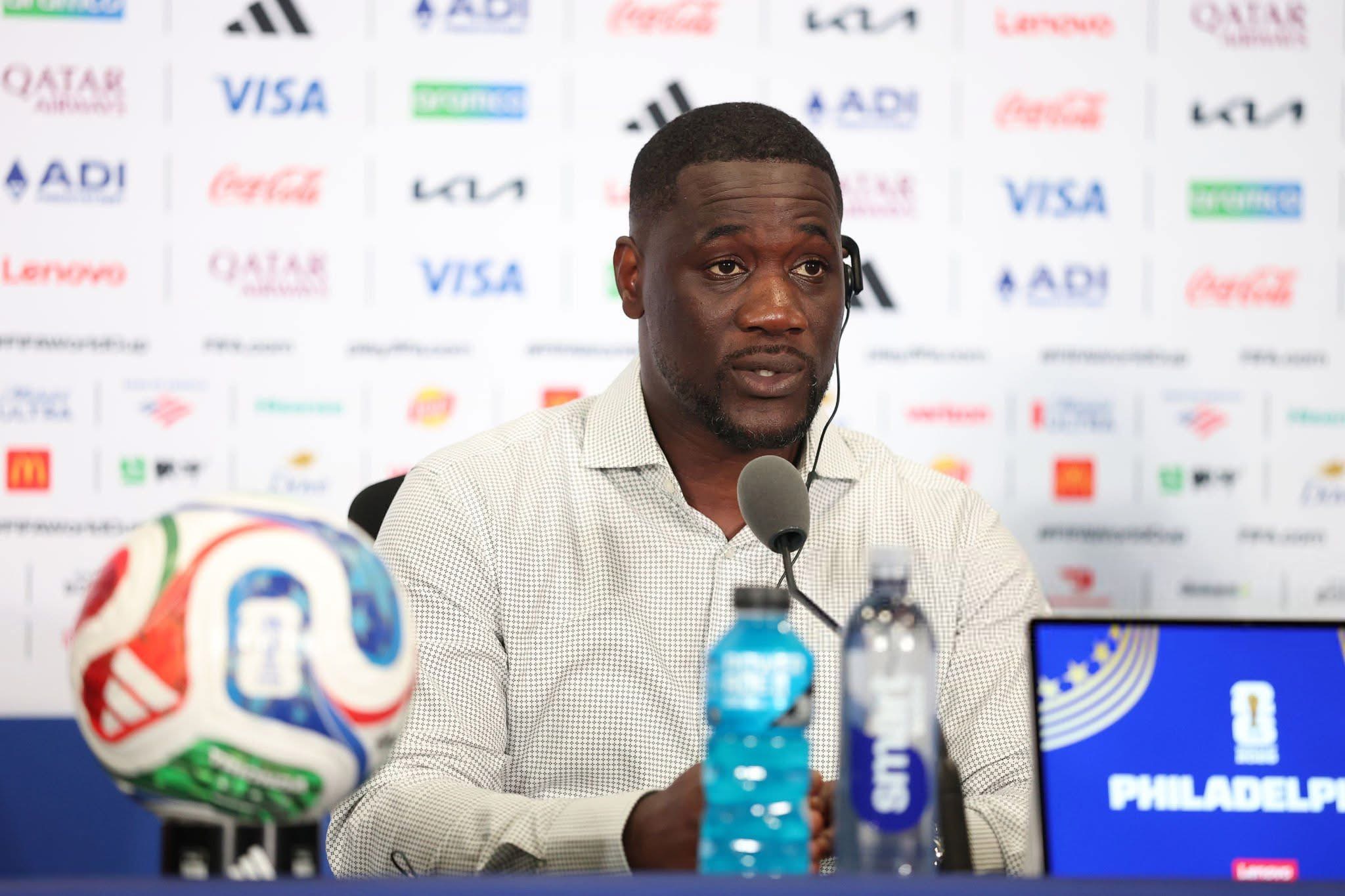
Ivory Coast coach Emerse Faé has delivered a defiant pre-match message on the eve of the biggest game of his managerial career: his resurgent Elephants are not in North America to admire the scenery.
“We didn’t come here to sightsee in the US and go home,” Faé told reporters at BMO Field on Friday, where his side will face four‑time world champions Germany on Saturday in a blockbuster Group E showdown. “We beat France and started well against a tough Ecuador. Germany has immense experience, but we are going out there to win and secure qualification on Matchday 2.”
A victory would send Ivory Coast into the round of 32 for the first time in the nation’s history, capping a remarkable turnaround for a side that had not appeared at a World Cup in 12 years.
From AFCON redemption to World Cup belief
Faé, 41, was born in Nantes and represented Ivory Coast as a midfielder at the 2006 World Cup—the country’s debut appearance on football’s grandest stage. After taking the helm during the 2023 Africa Cup of Nations, he orchestrated a stunning home triumph, defeating Nigeria in the final to claim the Elephants’ third continental title.
Since then, his record has been formidable: 32 matches, 22 wins, five draws and just five losses—a 68.75% win rate. He also became the first Ivorian head coach to guide his country to a World Cup, after three previous qualifications were managed by foreign tacticians.
The latest evidence of his side’s growing maturity arrived just 11 days ago, when Ivory Coast travelled to Nantes and produced one of the friendliest upsets of the pre‑tournament window, coming from behind to beat France 2-1 in La Beaujoire. France, the 2022 runners‑up, fielded Kylian Mbappé, Michael Olise and Rayan Cherki, controlled nearly 80% of the first‑half possession and led through Cherki’s 45th‑minute strike. But the Elephants responded emphatically after the break: Guela Doue equalised in the 53rd minute, and Amad Diallo—again introduced as a substitute—scored an 84th‑minute winner.
That night in Nantes, Faé later said, planted an unshakeable belief in his squad.
A statement opening win — and a chance to make history
Ivory Coast carried that belief into their World Cup opener against Ecuador in Philadelphia. For 89 minutes, a goalless draw seemed inevitable. Ecuador struck the crossbar twice in the first half and looked capable of extending a 19‑match unbeaten streak stretching back nearly two years. Then Amad Diallo, once again introduced from the bench, swept Wilfried Singo’s cross into the far corner in the 90th minute to secure a 1‑0 victory—Africa’s first win of the 2026 tournament.
The result ended several unwanted records. It was Ivory Coast’s first victory over a South American team in World Cup history, having previously lost to Argentina (2006), Brazil (2010) and Colombia (2014). It also gave the Elephants their first World Cup win in exactly 12 years—since beating Japan in Brazil in 2014. Most significantly, it marked the first time in four attempts that Ivory Coast have begun a World Cup campaign with a victory, having previously opened with defeats in 2006, 2010 and 2014.
“We were aiming to get three points, not one point,” Faé said after that match, borrowing a phrase that has become something of a motto for his tenure.
The German threat: wounded giants on a winning streak
Standing in Faé’s way on Saturday is a German machine that appears to be gathering unstoppable momentum. Julian Nagelsmann’s side thrashed tournament debutants Curaçao 7‑1 in Houston, marking Germany’s first opening‑match victory at a World Cup in 12 years. Felix Nmecha scored the fastest goal of the tournament so far after just six minutes, and Kai Havertz struck twice as Die Mannschaft stretched their winning run to 10 consecutive matches.
But the context beneath that scoreline is more nuanced. Germany have failed to make an impact in international tournaments since winning their fourth world title in Brazil in 2014, suffering shock first‑round exits in both 2018 and 2022. Nagelsmann opted to start Jamal Musiala—still recovering his top form after breaking his leg a year ago—while leaving in‑form striker Deniz Undav on the bench. The 7‑1 victory, while emphatic, came against the smallest nation ever to qualify for a World Cup, and Nagelsmann will know that Saturday’s opponent poses a far sterner test.
“The Germans know they cannot afford another early exit,” Faé observed. “That pressure is on them, not on us.”
Group E stakes: win and you are in
The expanded 48‑team format—12 groups of four, with the top two from each group advancing alongside the eight best third‑placed sides—means a second victory would almost certainly guarantee Ivory Coast’s passage to the round of 32. Germany and Ivory Coast currently sit level on three points, but the Germans lead the group on goal difference (+6 vs +1).
For Ivory Coast, the mathematics are simple: three more points against Germany on Saturday would put them out of reach of both Ecuador and Curaçao, who face each other in Kansas City on the same day. Faé’s declaration that his side are aiming to win—not merely to compete—reflects a coach who has already achieved what none of his predecessors could.
“We beat France, we ended Ecuador’s 19‑match unbeaten run, and we have three points,” Faé said. “But we are not satisfied. We came to the United States to make history. That means beating Germany and securing qualification on Matchday 2. Then we will see how far we can go.”
Kickoff details
Germany vs Ivory Coast will be played at BMO Field in Toronto on Saturday, June 20, with kickoff scheduled for 21:00 BST / 16:00 ET.


