



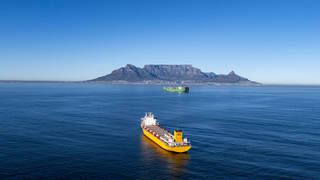
Maritime traffic surges around South Africa’s Cape of Good Hope as carriers avoid key Gulf waterway
Global shipping patterns are undergoing a dramatic transformation as escalating conflict in the Middle East forces commercial vessels to abandon the Strait of Hormuz, with traffic around southern Africa surging by approximately 35%, according to maritime tracking data.
The Strait of Hormuz, a critical chokepoint through which roughly 20% of the world’s oil supply normally passes, has seen traffic plummet to near-zero levels following the outbreak of hostilities between US-led forces and Iran late last month.
MarineTraffic data cited by Anadolu news agency indicates that only four ships transited the strait on March 3, a catastrophic decline from the typical daily average of 138 vessels. Oil tanker movements through the waterway have dropped by approximately 90% compared to pre-conflict levels.
Rerouting around Africa
In response, major international carriers including Hapag-Lloyd, CMA CGM, and Maersk have suspended Middle East routes and are redirecting vessels around the African continent. The Cape of Good Hope is now seeing approximately 94 ships daily, representing a 35% increase in traffic.
The shift carries significant economic implications, adding thousands of nautical miles and substantial fuel costs to voyages that would normally transit the shorter route via the Suez Canal and Persian Gulf.
Iranian threat to shipping
The near-total cessation of strait traffic followed warnings from Iranian military officials. Ebrahim Jabari, a senior adviser to the Iranian Revolutionary Guards commander-in-chief, issued a stark warning on Monday after US and Israeli airstrikes began February 28.
“If anyone tries to pass, the heroes of the Revolutionary Guards and the regular navy will set those ships ablaze,” Jabari stated.
Tanker movements through the strait were halted entirely on Monday following the commencement of military operations.
South African exporters feel the impact
The disruption is already reverberating through regional economies. South African trade organizations report growing uncertainty for exporters who rely on Gulf markets.
Terry Gale, chair of the Western Cape exporters association, noted that suspended shipping services and airspace restrictions are driving up freight costs and complicating supply chains.
“The Strait of Hormuz – one of the world’s most critical maritime chokepoints – handles roughly 20% of global oil supply and is a key route for trade moving in and out of the Gulf region,” Gale said.
His organization warned that rising fuel costs and shipping delays linked to the fighting are creating particular challenges for time-sensitive exports such as fresh produce, which traditionally moves through maritime corridors connected to the strait.
The full economic impact of the shipping realignment continues to unfold as military operations in the region show no signs of abating, forcing the global shipping industry to adapt to what may become a prolonged disruption to one of the world’s most vital trade arteries.


