



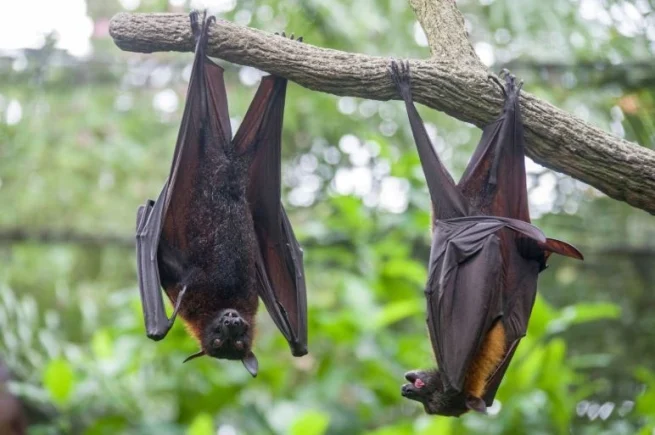
Global health authorities are issuing renewed warnings about the Nipah virus, a rare but exceptionally deadly pathogen classified by the World Health Organization (WHO) as a major epidemic threat. This comes amid ongoing outbreaks in Asia and growing concern over the virus’s high mortality rate and the absence of approved vaccines or treatments.
Identified first in 1999 during outbreaks in Malaysia and Singapore, Nipah virus is a zoonotic disease, spreading from animals to humans. Fruit bats of the Pteropus genus, or flying foxes, are its natural reservoir. The virus can infect other animals like pigs, and transmission to humans occurs through direct contact with infected animals, consumption of contaminated food—such as raw date palm sap—or, critically, through close person-to-person contact.
The infection presents a severe danger. After an incubation period of 4 to 21 days, it begins with fever and headaches but can rapidly escalate to severe respiratory distress and fatal encephalitis (brain swelling). The case fatality rate is estimated at a staggering 40% to 75%. Survivors often face long-term neurological consequences.
While human outbreaks have historically been confined to South and Southeast Asia—notably in Bangladesh, India, Malaysia, and the Philippines—the virus’s potential for wider spread is a core concern for the WHO. The organization lists Nipah as a priority pathogen requiring urgent research, citing its pandemic potential due to its high lethality and capacity for human-to-human transmission.
In March 2025, the UK Health Security Agency (UKHSA) also designated Nipah a high-priority pathogen, stressing an urgent need for diagnostics, treatments, and vaccines. Currently, care is limited to supportive management, though several experimental treatments are in development.
The UKHSA’s Public Health Rapid Support Team is actively engaged in international response, including educational programmes in Bangladesh to teach communities, starting with schoolchildren, about prevention.
For now, health officials state the risk to most travellers remains very low but advise basic precautions in affected regions: avoid bats and sick animals, do not consume raw date palm products, practice rigorous hand hygiene, and seek immediate medical attention if symptoms emerge after travel.


