



Fuel prices at the pumps are expected to remain unchanged for at least the next two weeks following a government directive to Ghana’s two local refineries to maintain their existing selling prices — a move that offers temporary relief to motorists and businesses bracing for what analysts had projected to be a sharp increase in petroleum product prices from October 1.
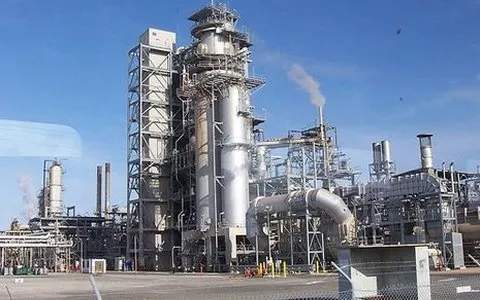
The directive affects the Tema Oil Refinery (TOR) and the Sentuo Oil Refinery, which have been asked to continue supplying Oil Marketing Companies (OMCs) at their previous prices. It comes on top of the government’s existing GH¢2 per litre diesel subsidy, which was extended for another two months on October 1 under a revised funding formula.
The intervention could not have come at a more critical time. The Chamber of Petroleum Consumers (COPEC) had projected diesel prices to surge by 22.91 per cent from GH¢18.24 to GH¢22.42 per litre from October 1, with petrol expected to rise by 5.21 per cent from GH¢16.90 to GH¢17.78 per litre. The projections were driven by a rise in international crude oil prices from $103.07 to $124 per barrel during the pricing window and a slight depreciation of the Ghana cedi against the US dollar, which moved from an average interbank rate of GH¢11.4830 to GH¢11.6211.
The Role of the Local Refineries
The directive to TOR and Sentuo is significant because of the two refineries’ growing importance in Ghana’s downstream petroleum sector.
The Tema Oil Refinery, a 63-year-old state-owned facility, came back to life in December 2025 after more than six years of inactivity, during which it had accumulated significant debt while much of its critical equipment deteriorated. The refinery is currently processing about 28,000 barrels per stream day (bpsd), with work continuing to restore its original nameplate capacity of 45,000 bpsd. President John Dramani Mahama has directed the Energy Ministry to prepare a roadmap for expanding TOR’s capacity to 100,000 barrels per day, with the long-term goal of positioning Ghana as West Africa’s leading petroleum refining hub.
The Sentuo Oil Refinery, Ghana’s first large-scale privately owned crude oil refinery, was built by the Chinese Sentuo Group at a cost of nearly $2 billion and commissioned in January 2024. It is currently Ghana’s largest active refining facility, processing 40,000 barrels per stream day and producing diesel, liquefied petroleum gas (LPG), and asphalt. The refinery has already created over 1,000 direct jobs, with 95 per cent of its workforce being Ghanaian. In June 2026, Sentuo broke ground on a Phase 2 expansion that will raise its total refining capacity from 40,000 to 100,000 barrels per day.
Both refineries received one million barrels of locally produced Jubilee Field crude oil for domestic processing in 2026 — a historic departure from Ghana’s longstanding practice of exporting raw crude and importing refined products at volatile global prices.
The GH¢2 Diesel Subsidy
The government’s directive to the refineries builds on the GH¢2 per litre diesel subsidy, which has become a key feature of Ghana’s fuel pricing landscape since its introduction in August 2026. Under the revised arrangement announced on October 1, GH¢1 of the subsidy will be financed through a reduction in the D-Levy on diesel, while oil industry margins will absorb the remaining GH¢1. The total relief at the pump remains GH¢2 per litre.
This is the fourth government intervention introduced to moderate fuel price increases since April 2026, when the state first announced it would absorb GH¢2.00 per litre on diesel and GH¢0.36 per litre on petrol. Without the government’s intervention, the National Petroleum Authority (NPA) had projected that diesel could have risen to about GH¢20 per litre at the pump.
The subsidy is particularly significant for commercial transport operators and businesses that rely heavily on diesel, as fuel costs feed directly into transportation, logistics and operating expenses. However, the opposition New Patriotic Party has dismissed the relief as a temporary measure, arguing that consumers have already borne the cost through fuel-related levies. The Ranking Member on Parliament’s Energy Committee, George Kwame Aboagye, noted that diesel prices would still remain above January 2025 levels even with the full GH¢2 reduction, and estimated that the intervention could result in about GH¢400 million in foregone revenue per month.
How SREF Shapes Pump Prices
Dr Riverson Oppong, Chief Executive of the Chamber of Oil Marketing Companies (COMAC), explained that the refineries’ decision to maintain their prices could prevent an immediate increase at the pumps, pointing to the Supplier Reference Exchange Rate (SREF) as a key determinant.
“Because the SREF is a very big indicator in the determination of the S pump. So, as long as your SREF does not change, as we know, basically your S pump should also reflect the same,” he said.
Dr Oppong explained that fuel pricing in Ghana follows a cost-reflective model, meaning changes in the various components of the industry’s cost structure ultimately affect pump prices. “We operate a very systematic standard. We’re creating that standard, which in petroleum economics we call the cost-reflective pricing,” he said.
He added that taxes, levies and other costs are factored into the pricing process, while OMCs’ margins are determined separately. “So whatever cost we incur, be it the SREF taxes and levies that are today being reviewed, we surely would add that, considering that our margin is what we set. Everything else is based on the industry price,” he said.
The government’s latest intervention could therefore delay the impact of higher costs on consumers, at least in the short term.
The Cost Structure Behind the Pump Price
To understand the significance of the government’s intervention, it is useful to examine what goes into every litre of fuel sold in Ghana. According to the National Petroleum Authority’s official pricing formula, taxes and levies per litre stood at GH¢3.35 as of mid-2025, following the introduction of a new GH¢1 Energy Sector Levy. This brought the total number of fuel-related levies to eleven, including the Energy Debt Recovery Levy (49 pesewas), Road Fund Levy (48 pesewas), Special Petroleum Tax (46 pesewas), and BOST Margin (12 pesewas). When margins for distribution, strategic stockholding, and price equalisation are added, the total levy and margin burden per litre of petrol reaches GH¢4.27, roughly 31 per cent of the pump price.
Ghana’s total petroleum product consumption reached 17.5 billion litres in 2025, a 15.29 per cent increase over the previous year. Within that total, petrol consumption reached 3.10 billion litres and diesel 2.76 billion litres, yielding average monthly consumption of approximately 258 million litres of petrol and 210 million litres of diesel. This means that a one-cedi reduction per litre translates into a half-billion-cedi monthly impact on public revenue — a figure that underscores the scale of the government’s intervention.
Industry Context and Challenges
The government’s directive comes amid broader tensions in Ghana’s downstream petroleum sector. COMAC has been vocal about the challenges facing the industry, recently calling for the indefinite suspension of Section 136 of the Customs Act 2026 (Act 1179), warning that the provision could disrupt fuel supply and pose risks to the downstream petroleum industry. The Chamber has also raised concerns about the overcrowding of the fuel sector, with 245 OMCs competing for market share, and has renewed its call for full deregulation of fuel prices.
Dr Oppong has acknowledged that while some components of the SREF are deregulated, government interventions remain a significant factor in the pricing regime. “There are aspects of the pricing price builder today that are not fully deregulated. For sure, I can say that the margins of some components of the SREF are kind of deregulated, but we still have government interventions,” he said.
What Happens Next
When asked whether the development could translate into a change in pump prices by Saturday or Monday, Dr Oppong said the industry would first have to review the new directive. “Hopefully, because this narrative was passed with certain lines, and now we are going to review it,” he said.
The development means motorists are likely to see continued stability at the pumps as government and industry players assess the impact of the measures on the fuel pricing chain. However, with international crude oil prices remaining elevated and the cedi continuing to face pressure, the sustainability of the current price stability will depend on how long the government and the refineries can hold the line. For now, consumers can expect a brief respite at the pumps — but the underlying pressures that drove COPEC’s earlier projections remain unresolved.


