



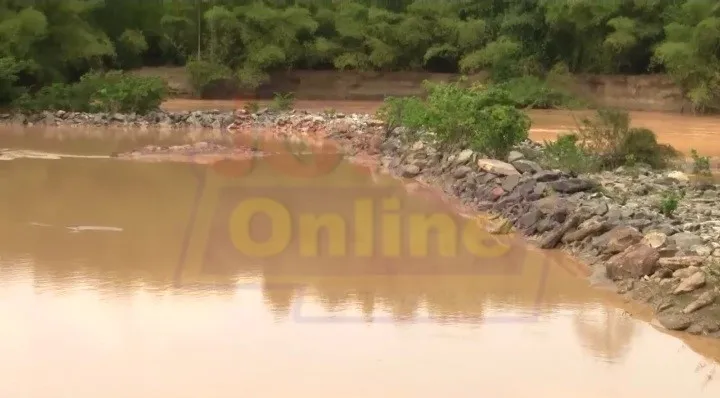
The National Anti-Illegal Mining Operations Secretariat (NAIMOS) has seized 10 excavators and destroyed several pumping machines in a sweeping enforcement operation targeting illegal mining activities that have diverted, silted, and heavily polluted the River Pra in the Adansi South District of the Ashanti Region.
The operation, dubbed Operation Water Shield, uncovered extensive mining activities at Adiemra and Tweapease near New Edubiase, where parts of the river had been reportedly redirected to facilitate washing operations. The raid, conducted on Monday, formed part of a sustained national campaign launched in September to protect Ghana’s major water bodies from the ravages of illegal small-scale mining, locally known as galamsey.
A Coordinated National Response
NAIMOS, established in June 2025 under the Ministry of Lands and Natural Resources, serves as the operational nerve centre for Ghana’s fight against illegal mining and its associated environmental destruction. The secretariat integrates security, environmental, and legal responses into a unified strategy, coordinating across multiple state agencies to dismantle the criminal networks sustaining galamsey.
Operation Water Shield, launched on 11 September 2026, marked a strategic shift from isolated raids to a sustained, intelligence-led campaign targeting priority river systems from their source areas to downstream communities and water-treatment facilities. The operation focuses on some of Ghana’s most threatened rivers — the Birim, Ankobra, Tano, Bia, Pra, and Offin — as well as affected sections of the Black and White Volta systems.
According to NAIMOS Spokesperson Paa Kwesi Schandorf, the campaign aims to “substantially degrade and contain illegal mining within protected watersheds, restrict the movement of heavy equipment into critical river systems, disrupt financing and supply networks, improve water quality and restore effective control over affected river basins”.
The Raid: From Subriso to Tweapease
The NAIMOS team was deployed to the Adansi South District on Monday to identify and shut down illegal mining activities along the Pra, particularly around the Ashanti-Central regional boundary. At Subriso, the team halted mining activity affecting wetlands close to the road before advancing further along the river to Adiemra and Tweapease.
At Adiemra, the team encountered mining operations being carried out perilously close to the Pra, with the river itself being used to process mined material. The operation also found mining activities encroaching on surrounding farmlands, with local farmers raising concerns about the impact on their livelihoods.
The team shut down an operation at Adiemra and arrested a man who claimed the site belonged to a person identified as Alhaji Shaibu Iddi. The suspect asserted that the operation possessed the necessary licences, but officials said the documents presented did not authorise mining at the location. According to the team, the documents related to processes involving different companies and locations — a discrepancy that raises questions about the misuse of permits to mask illegal operations.
At another site in Adiemra, the team found pumping machines positioned directly inside the River Pra. A man identified as Evans Badamawu, who described himself as the site manager for the same Alhaji Shaibu Iddi, was questioned during the operation. The site was among several mining operations captured during aerial surveillance, and the team said the activities were taking place within areas where mining is restricted around major water bodies.
A River in Peril
The situation at Tweapease was even more alarming. The operation found sections of the Pra heavily silted and polluted, with mining activities having altered the river’s course. Mining waste was found entering the waterway from multiple points, and the condition of the river made it difficult to distinguish some sections of the waterway from the surrounding mining landscape when viewed from above.
These findings echo earlier warnings from the Adansi South District Assembly’s National Disaster Management Organisation (NADMO), which conducted a hazard mapping exercise at Twapease in April 2026. The assessment found that illegal miners had diverted and blocked portions of the Pra River to facilitate washing operations, creating severe environmental degradation, heavy siltation, and a drastically increased risk of major localized flooding during heavy rainfall.
“Illegal mining along the Pra River is not just an environmental crime — it is an impending disaster,” the District NADMO Director stated at the time. “Blocking natural river courses causes artificial flooding, destroys vital farm belts, and leaves open traps for community members”.
The pollution of the Pra has had far-reaching consequences beyond the immediate mining areas. In August 2026, drone footage revealed illegal mining activities taking place along the River Pra directly opposite the Intake Pumping Station at Daboase, threatening water supply to millions. Turbidity levels at the Daboase Water Treatment Plant soared to 11,955 NTU — more than 23 times the permitted level of 500 NTU.
Communities along the river have felt the impact acutely. In Twifo Praso, palm oil manufacturers and fishing communities have urged government intervention, noting that the river — once integral to their farming and production activities — had become too polluted to depend upon. “The advent of illegal mining had severely polluted the water, disrupting their livelihoods,” residents told the Ghana News Agency.
The Human Cost
Some of the miners arrested during Monday’s operation were visibly distressed as the taskforce dismantled the illegal activities. However, some farmers in the affected communities welcomed the intervention, expressing hope that sustained enforcement could help restore the river and protect their farms.
The operation comes amid heightened national concern over the continued degradation of Ghana’s rivers and forests through illegal mining. A 2026 review published in a peer-reviewed journal found that galamsey has destroyed several hectares of forests and polluted water bodies including the Pra, Birim, Ankobra, Tano, and Offin rivers, rendering air in mining areas unsafe. Separate research using Daphnia magna and Lemna minor toxicity tests confirmed that river samples from mining-affected areas in Obuasi showed confirmed toxicity, indicating severe impacts on aquatic ecosystems.
A Sustained Campaign
NAIMOS says the operation will continue as Operation Water Shield enters its next phase, with the taskforce expected to sustain efforts to stop illegal mining activities along the Pra and other major water bodies. The campaign will also extend beyond miners at riverbanks to target the networks that enable their activities, including facilitators, unauthorised fabricators of chanfang machines, and individuals or companies that rent or supply excavators for illegal mining.
The Secretariat has called on traditional authorities, metropolitan, municipal and district assemblies, equipment owners, communities and the public to support Operation Water Shield and provide credible information on illegal mining activities and those who finance or facilitate such operations. NAIMOS cautioned that enforcement will be “firm, sustained and uncompromising within the law,” adding that illegal miners operating on water bodies and riverbanks should expect their operations to be disrupted and equipment seized, immobilised or otherwise dealt with in accordance with law.
The latest operation forms part of broader efforts to protect Ghana’s water resources from the environmental damage associated with illegal mining — a fight that, as the condition of the River Pra makes clear, remains as urgent as ever.


