



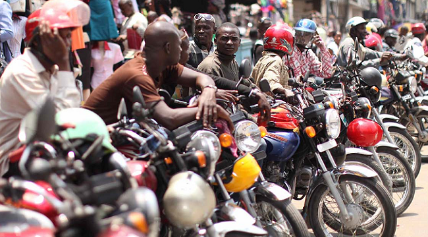
The increasing involvement of male students in commercial motorcycle riding, popularly known as Okada, and other economic activities is raising concerns over declining academic performance in the Gomoa East District of the Central Region, with education authorities pointing to a sharp drop in WASSCE results and deepening infrastructure challenges as key contributing factors.
According to the Central Regional Directorate of Education, the growing participation of students in Okada and other economic activities is one of several factors contributing to declining academic outcomes among students in the district.
The district’s Senior High School WASSCE performance dropped from 79.6 per cent in 2024 to 59.7 per cent in 2025, a decline of nearly 20 percentage points that has alarmed education officials and stakeholders. The district has four public senior high schools, all of which are facing significant infrastructure and resource challenges, with school heads citing a lack of laboratories and practical facilities as major causes of poor results.
The Directorate also identified infrastructure challenges in Senior High Schools, particularly inadequate accommodation and poor learning environments, as another major concern. Many students live off-campus without proper supervision, a situation that authorities say makes monitoring and controlling their activities exceedingly difficult.
Overcrowding and Infrastructure Deficits
The challenges in Gomoa East extend beyond the senior high level. The district, which boasts a total of 703 schools — including 585 private schools and 122 public schools — faces severe overcrowding in its public institutions. Average class sizes currently stand at about 50 pupils per class at the Kindergarten and Junior High School levels, far above the recommended class size of 35. At the primary level, class populations average 45 pupils instead of the expected 35.
The imbalance in the distribution of educational facilities has also created a situation where children in some rural communities must travel long distances to access quality education, while schools in urbanised areas continue to experience congestion. The northern communities within the Dominase Area Council continue to lag behind, while the southern parts of the district have the highest concentration of educational facilities.
Gomoa East currently has a total teacher population of 1,215, made up of 1,185 trained teachers and 30 untrained teachers. Out of the 1,185 trained teachers, 639 are females while 546 are males. Despite these numbers, education stakeholders believe that infrastructure deficits remain one of the biggest threats to quality education delivery in the district.
Call for Collective Action
Speaking to Citi News, the Central Regional Director of Education, Dr Juliet Dufie Otami, called on parents, school authorities, traditional leaders and other stakeholders to work together to address the challenges confronting students and improve academic performance in the area.
Dr Otami stressed the need for parents to take a more active role in ensuring that their children, particularly boys, remain focused on their education rather than becoming involved in economic activities at a young age.
She noted that the situation is particularly challenging for schools without adequate boarding facilities, forcing some students to stay in hostels or rented accommodation outside the school environment.
“Most of the boys are engaged in the Okada business, so I urge parents to be intentional about our male children enrolling in school. Some of these boys are in hostels and rented apartments, and so monitoring and controlling them is sometimes difficult, but we are currently working on getting boarding facilities,” she said.
Dr Otami has been a consistent voice on discipline and parental responsibility in the Central Region. In September 2025, she admonished parents and politicians not to interfere or shield their wards from being disciplined, stating that such intervention undermined the authority of the school and weakened their ability to train responsible future leaders.
A National Trend
The situation in Gomoa East reflects a broader national pattern. In the Kwaebibirim Municipality in the Eastern Region, the Municipal Education Directorate has identified Okada riding and illegal mining as major drivers of truancy, with many pupils abandoning classrooms to engage in these informal economic activities. Officials there noted that students who return from such ventures often display money in school, a behaviour that influences others to skip classes and join them in search of quick income.
Similarly, in the Kadjebi District of the Oti Region, stakeholders at a Community Child Protection Committee engagement expressed concern about the increasing involvement of underage children in commercial motorbike riding, describing it as a child protection concern that required a coordinated response from all stakeholders. Mr Isaac Robson Klu, Head of the Department of Social Welfare and Community Development in Kadjebi, stressed that exposing children to hazardous work such as commercial motorcycle riding constituted a violation of their rights to protection, education and development.
The Gender Dimension
The declining performance among boys in Gomoa East is part of a wider gender reversal in Ghanaian education. Data from the West African Examinations Council (WAEC) Ghana reveals that in major milestones like the WASSCE Distinction Awards, girls now consistently outpace boys, claiming the highest tier of performance across the nation. The Ghana Statistical Service has confirmed that gender parity has flipped, with the national population of girls in Senior High Schools now exceeding that of boys.
In the 2025 WASSCE, all three International Excellence Awards presented by WAEC went to female students. The overall best candidate, Miss Huda Suglo Suleman, along with second-place winner Miss Paula Adzo Elinam Suwo, both graduated from Legacy Girls’ College in Akuse. The third prize went to Miss Matthea Aba Andoh from Hope College, Gomoa Feteh, in the Central Region — a striking contrast to the challenges facing boys in the same district.
Analysts have observed that the aggressive drive for female empowerment over the past three decades has inadvertently left the Ghanaian boy behind, with parallel structural support for the vulnerable boy-child virtually nonexistent. While millions of Ghana Cedis are directed toward specialised female scholarships, girl-targeted STEM projects and sanitary pad distribution campaigns, similar interventions for boys are scarce.
Regulatory and Legal Context
The involvement of minors in Okada riding also raises legal questions. Ghana’s Parliament passed the Road Traffic (Amendment) Bill 2025, legalising commercial motorcycle operations subject to presidential assent, with a major provision setting the minimum age for commercial riders at 21, based on stakeholder input that individuals aged 18–20 should typically remain in education or apprenticeships.
At the local level, some assemblies have taken proactive measures. The Agona West Municipal Assembly, also in the Central Region, instituted a taskforce to clamp down on school children engaged in Okada and Pragyia business, citing the need to reduce truancy among school children and the under-aged, as well as to forestall the rampant road accidents in the area.
Ongoing Interventions
Despite the challenges at the senior high level, basic education results in Gomoa East have shown improvement, with BECE passing rates rising to 91.8 per cent in 2025. The district assembly has also made efforts to address infrastructure deficits, distributing dual and mono desks to schools to provide pupils with a more conducive environment for effective learning. In June 2025, the assembly provided 600 dual desks to schools within the district following appeals from school authorities who highlighted the lack of desks for pupils preparing for the BECE.
The Odikro of Gomoa Amoanda, Nana Kofi Budu Sersah IV, has also appealed for urgent government and stakeholder support to address challenges confronting the community, highlighting the lack of safe drinking water, inadequate school facilities and insufficient teachers, while urging action to strengthen education and improve learning conditions for pupils.
Education authorities say contingency measures are being implemented to boost performance, but stakeholders agree that without a concerted effort from parents, traditional leaders, school authorities and government, the district’s educational outcomes will continue to suffer.


