



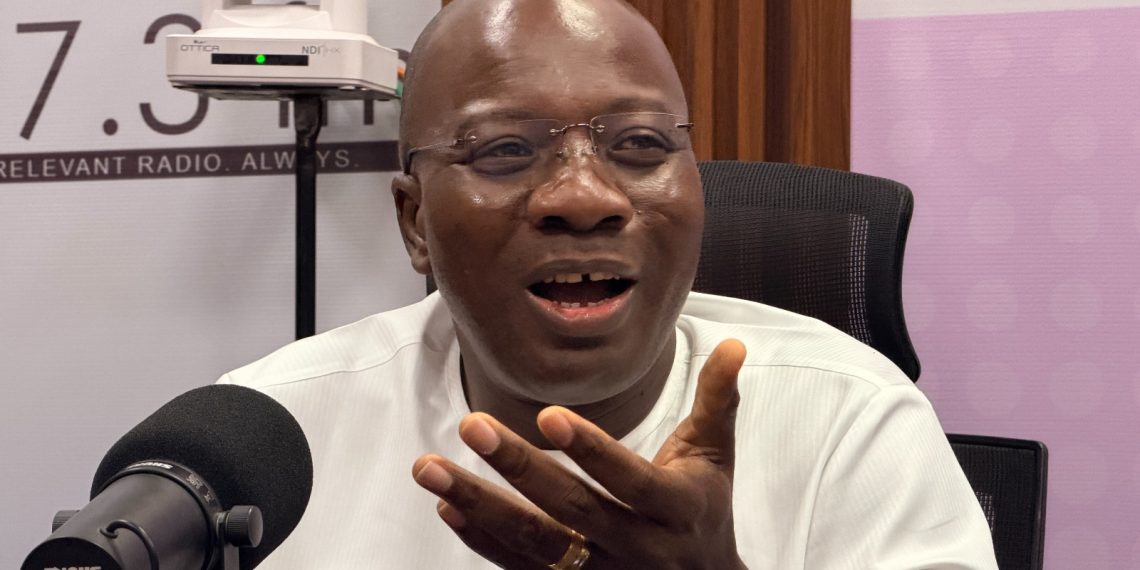
Minister for Local Government, Decentralisation and Rural Development, Mahama Ayariga, has expressed strong optimism that the remaining two and a half years of the Mahama administration are sufficient to address the deep-seated challenges confronting Ghana’s local government system, describing many of the problems as organisational rather than structural.
Speaking on the Citi Breakfast Show on Thursday, September 10, Mr Ayariga said the challenges affecting local governance can be resolved through improved coordination, stronger leadership, and more effective management of existing resources.
“I believe that even though I have barely two and a half years, I believe that that is enough time to fix the system,” he said.
Local Government as the Frontline of Democracy
The Minister emphasised that strengthening local government is critical to restoring public confidence in the state, noting that it is the level of government with which citizens interact most frequently. Metropolitan, Municipal and District Assemblies (MMDAs) are responsible for delivering essential services such as sanitation, local roads, education infrastructure, and healthcare facilities — making their performance central to the everyday experience of governance.
Mr Ayariga argued that his experience across various sectors of government places him in a strong position to provide the leadership needed to work with regional ministers and Metropolitan, Municipal and District Chief Executives (MMDCEs) to improve the system.
“There is significant resources at the local government level but they have not been fully utilised to address some of the challenges confronting the sector,” he noted, adding that his priority would be to improve coordination and make better use of existing resources to deliver more effectively at the local level.
A Sector Long Plagued by Challenges
Ghana’s local government system has faced persistent criticism over the years, with analysts, civil society organisations, and citizens alike pointing to inadequate funding, weak administrative capacity, political interference, and a lack of accountability as major obstacles to effective decentralisation.
The country’s decentralisation agenda, which dates back to the Local Government Act of 1993 (Act 462) and was later reinforced by the Local Governance Act of 2016 (Act 936), has long aimed to transfer political, administrative, and financial authority to local assemblies. However, implementation has been uneven, with many MMDAs remaining heavily dependent on central government transfers, particularly the District Assemblies Common Fund (DACF), which is often delayed and insufficient.
The common fund, established under Article 252 of the 1992 Constitution, requires that not less than five percent of national revenue be allocated to district assemblies. Yet, in practice, disbursements have frequently been erratic, hampering local development projects and service delivery.
Human Resource and Capacity Gaps
Beyond funding, the local government sector has grappled with human resource deficits. Many assemblies lack qualified planners, engineers, and finance officers, while others contend with high staff turnover and inadequate training opportunities. The result has been weak project implementation, poor monitoring and evaluation, and a general inability to meet the growing demands of local communities.
Political tensions between MMDCEs, who are appointed by the President, and assembly members, who are elected, have also created friction that undermines effective local governance. Critics argue that the appointment system reduces accountability to local residents, since MMDCEs answer primarily to the central government rather than to the communities they serve.
Calls for Reforms and Direct Election of MMDCEs
There have been longstanding calls from civil society, political parties, and governance experts for the direct election of MMDCEs to enhance accountability and deepen decentralisation. A 2019 referendum on the matter, which would have allowed political parties to participate in local assembly elections, failed to secure the required 40 percent turnout, dealing a blow to reform efforts.
President Mahama’s administration has signalled a commitment to revitalising the local government system, with Ayariga’s appointment seen as part of that effort. The Minister, who previously served as Minister for Environment, Science, Technology and Innovation, and as a Member of Parliament for Bawku Central, brings a wealth of experience in both legislative and executive roles.
Ayariga’s Background and Track Record
Mahama Ayariga is a lawyer and politician with extensive experience in Ghanaian governance. He has held several ministerial portfolios, including Minister for Information, Minister for Youth and Sports, and Minister for Environment, Science, Technology and Innovation. He has also served as a Presidential Staffer and was a Member of Parliament for the Bawku Central constituency for multiple terms.
His appointment to the Local Government Ministry is widely viewed as a strategic move to inject fresh energy into a sector that has long been criticised for sluggish reform. His stated focus on coordination, resource utilisation, and leadership suggests a pragmatic approach rather than ambitious structural overhaul.
What the Sector Expects
Stakeholders in the local governance space have welcomed Ayariga’s optimism but remain cautious. Dr Eric Oduro Osae, a local governance expert and Director-General of the Internal Audit Agency, has previously called for reforms to the DACF disbursement mechanism, arguing that timely and predictable funding is essential for local development.
The National Association of Local Authorities of Ghana (NALAG) has also repeatedly called for greater fiscal decentralisation, urging the government to cede more revenue-generating powers to MMDAs to reduce their dependency on the common fund.
Civil society organisations such as the Ghana Center for Democratic Development (CDD-Ghana) have advocated for stronger oversight mechanisms at the local level, including improved audit and citizen participation frameworks to curb corruption and ensure value for money.
The Road Ahead
With two and a half years remaining in the current administration, Ayariga faces the formidable task of translating his optimism into tangible improvements. Key priorities will include ensuring the timely disbursement of the DACF, building capacity within MMDAs, strengthening coordination between regional and local authorities, and fostering a culture of accountability.
Whether the Minister’s confidence translates into lasting change remains to be seen, but his remarks signal a renewed focus on the importance of local governance in Ghana’s democratic development.
“Strengthening local government is not just about policy — it is about restoring the faith of ordinary Ghanaians in the ability of the state to serve them,” Ayariga said, underscoring the stakes involved.
Background
Ghana’s Decentralisation Journey
Ghana’s decentralisation programme was formally launched in 1988 under the Provisional National Defence Council (PNDC) government, with the creation of District Assemblies as the highest political authority at the local level. The programme was designed to promote participatory democracy, local development, and administrative efficiency.
The 1992 Constitution further entrenched decentralisation, mandating the establishment of a District Assemblies Common Fund to ensure that a portion of national revenue is allocated to local authorities. Over the decades, however, implementation has faced numerous hurdles, including inadequate funding, limited local capacity, and political interference.
The Local Governance Act, 2016 (Act 936) consolidated all laws relating to local governance, providing a comprehensive legal framework for the establishment, composition, and functions of District Assemblies. Despite these legal foundations, the gap between policy intentions and on-the-ground realities persists.
Key Challenges
- Inadequate and Delayed Funding: The DACF is often disbursed late and in insufficient amounts, crippling local development projects.
- Weak Human Resource Capacity: Many MMDAs lack skilled personnel to plan, implement, and monitor development initiatives.
- Political Interference: The appointment of MMDCEs by the President has been criticised for undermining local accountability.
- Corruption and Poor Oversight: Some assemblies have been cited in audit reports for financial mismanagement and procurement irregularities.
- Limited Citizen Participation: Low awareness and weak participatory mechanisms have hindered community involvement in local governance.
Reform Efforts
Successive governments have attempted various reforms, including the introduction of the Composite Budget System, the Programme-Based Budgeting approach, and efforts to strengthen the DACF. The failed 2019 referendum on the direct election of MMDCEs was a significant moment in the decentralisation debate, highlighting both the appetite for reform and the political complexities involved.
The Stakes
As Ghana continues its democratic journey, the effectiveness of local government remains a critical determinant of national development. Local assemblies are the primary vehicle for delivering basic services, and their performance directly affects the quality of life of millions of Ghanaians. Fixing the system, as Ayariga acknowledges, is not just an administrative task — it is a democratic imperative.
The views, comments, opinions, contributions, and statements made by readers and contributors on this platform do not necessarily represent the views or policy of Multimedia Group Limited.


