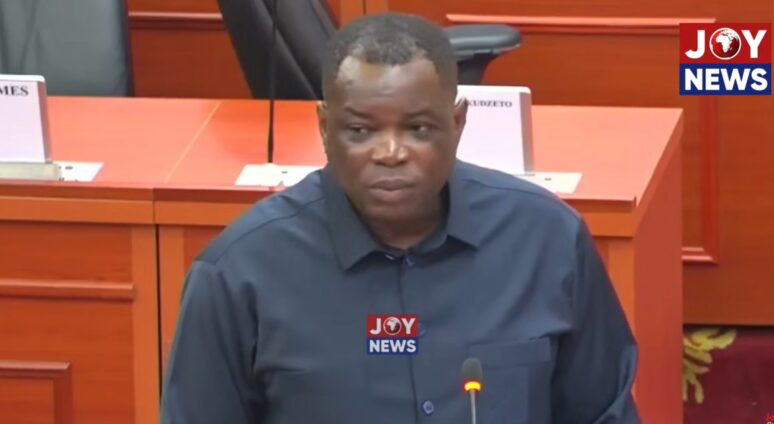
Bank of Ghana (BoG) Governor Dr Johnson Pandit Asiama has revealed that escalating tensions in the Middle East have placed significant strain on Ghana’s international reserves, forcing the central bank to deploy resources to support critical sectors of the economy.
Speaking during Part Two of “Time with the Governor,” an engagement with students from the Department of Economics at the University of Ghana and the University of Ghana Business School (UGBS), Dr Asiama disclosed that the country’s reserves had declined by US$1.2 billion over the past few months.
“The past three to four months have been quite challenging for us when it comes to the country’s international reserves. I am therefore not surprised that we lost 1.2 billion reserves,” Dr Asiama stated.
Reserve Decline in Figures
According to the July Economic and Financial Data released by the Bank of Ghana, the country’s international reserves fell from US12.9 billion during the period under review.
The decline comes as renewed hostilities in the Middle East, including the closure of the Strait of Hormuz, have pushed crude oil prices above US$85 per barrel and heightened uncertainty in global energy markets . For an oil-importing economy like Ghana, these developments have direct implications for import costs, transportation expenses, and consumer prices .
Domestic Transmission Mechanisms
The Middle East conflict has already begun to cast a shadow on Ghana’s domestic economy. Data from the Ghana Statistical Service shows that the escalation pushed crude oil prices past US60 to US$70 range, resulting in marginal month-on-month increases in fuel and transport prices .
Fitch Solutions has also revised Ghana’s 2026 real GDP growth forecast downward to 5.5% from 5.9%, citing the conflict’s impact on the near-term economic outlook . The firm noted that while Ghana’s external position remains somewhat insulated by record-high gold prices, imported inflation risks remain significant.
The Importance of Reserve Buffers
Dr Asiama used the engagement to stress the critical importance of maintaining strong reserves to cushion Ghana against global economic shocks, describing this as one of the central bank’s key achievements in recent years.
“This is why we can say that one of the good things we did last year was to build some high reserves for interesting times like this,” the Governor said.
He explained that maintaining adequate reserves was particularly vital amid heightened global economic uncertainty, noting that the decisions required to manage such pressures are difficult choices that countries must confront when faced with external shocks.
The Bank of Ghana’s Monetary Policy Committee had previously highlighted these risks, noting in its July report that “renewed tensions in the Middle East have heightened uncertainty in the global economic environment” and could slow the pace of global disinflation .
Strategy for Reserve Rebuilding
On rebuilding the reserves, the Governor pointed to the need to increase earnings from cocoa exports and non-traditional exports. He noted that non-traditional exports currently account for about 10% of Ghana’s exports and argued that this should be increased to 15%.
This ambition aligns with broader government efforts to diversify the economy beyond its heavy reliance on gold. Bank of Ghana data indicates that by July 2026, gold represented approximately 68.3% of total export earnings, compared with 12.5% for cocoa, 9.4% for crude oil, and only 9.8% for non-traditional exports .
Remittances as a Strategic Resource
The Governor also highlighted the significant potential of remittances to support the country’s reserves and broader economic development. He made a compelling case for channeling the more than US$8 billion received annually through remittances into productive investments rather than consumption.
President John Dramani Mahama has previously described Ghanaians abroad as “an essential extension of the nation,” highlighting their contributions through remittances estimated at about US$7.8 billion annually, as well as their role in knowledge transfer, innovation, and global exposure .
However, analysts have warned that a prolonged conflict in the Gulf region could destabilize economies that host many Ghanaian workers, potentially reducing remittance inflows and adding further pressure on the cedi .
Monetary Policy Response
The Bank of Ghana has maintained its monetary policy rate at 14% amid these emerging pressures, with the MPC citing “escalating geopolitical tensions in the Middle East and the associated increase in crude oil prices” as upside risks to the inflation outlook .
The central bank’s cautious stance reflects the complex balancing act facing policymakers: while domestic inflation has declined significantly, with rates falling to 3.3% in February 2026, the lowest since August 1999, external pressures threaten to reverse these gains .
Dr Asiama’s engagement with the students formed part of the 131st Monetary Policy Committee Meetings, through the MPC Educational Observership Programme, which allows students to participate in the central bank’s decision-making processes as part of their academic training.