



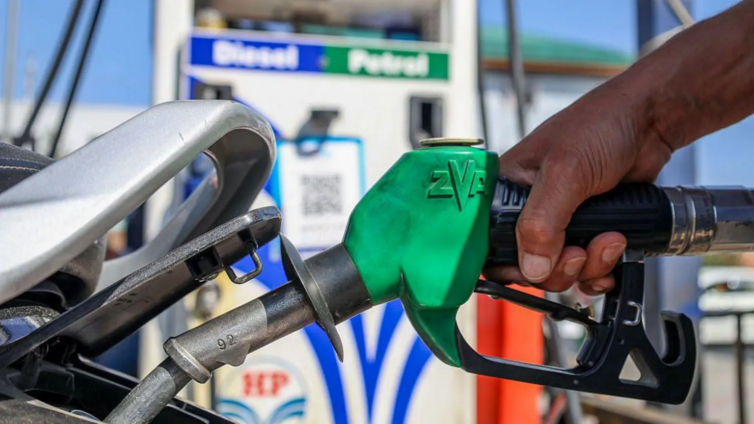
Ghanaian motorists face a split decision at the fuel pumps from today, with petrol prices expected to fall by as much as 2.90% while diesel could climb by 1.39%, according to indicative data from the Chamber of Oil Marketing Companies (COMAC). The mixed review—unusual in a market that typically moves in tandem—reflects diverging trends in international refined product prices and underscores the complexity of Ghana’s petroleum pricing formula.
The New Indicative Prices
Based on COMAC’s projections, petrol will likely sell at approximately GH¢15.82 per litre, down from the previous window’s average of about GH¢16.29. Diesel, however, is poised to rise to roughly GH¢17.73 per litre, up from GH¢17.49. Liquefied Petroleum Gas (LPG) is expected to see a marginal decline of 0.93%, with the per-kilogram price settling near GH¢16.21.
These figures are indicative, as Ghana’s retail fuel market is deregulated, allowing over 200 Oil Marketing Companies (OMCs) to set their own pump prices within the regulatory framework. The Chief Executive of the Chamber of Petroleum Consumers (COPEC) told JoyBusiness that many OMCs may opt to keep prices unchanged, citing competitive pressures and the need to absorb volatility before adjusting.
International Market Drivers
The divergent pricing stems directly from global commodity markets. Between mid-July and mid-August, average crude oil prices rose by 2.02% to US$90.41 per barrel, driven by heightened geopolitical tensions—particularly the ongoing US-Iran dispute and concerns over potential supply disruptions through the Strait of Hormuz, a critical chokepoint for global oil shipments.
However, refined product prices moved in opposite directions. Diesel, which is more sensitive to crude oil supply risks and global refining capacity constraints, surged by 2.86%. In contrast, petrol and LPG prices fell by 5.46% and 2.54%, respectively, as softer demand in major economies and ample gasoline stockpiles weighed on their benchmarks.
COMAC noted that this divergence creates a “mixed signal” for local pricing, which is based on a formula that averages the ex-refinery price, shipping costs, taxes, and margins over a two-week pricing window.
Exchange Rate Dynamics
The cedi’s recent performance adds another layer of nuance. Between July 27 and August 11, the currency depreciated by 1.20% to an average bank rate of GH¢11.7995 per US dollar—a factor that typically pushes import costs higher. However, the cedi has since staged a recovery, with the Bank of Ghana quoting GH¢10.9855 to the dollar on August 14. This late-cycle strengthening could mitigate the impact of higher crude prices on subsequent windows, and COMAC indicated that if the cedi’s appreciation continues, further pump price reductions are possible in the next pricing period.
NPA Adjusts Price Floor
In a parallel development, the National Petroleum Authority (NPA) has revised its minimum price floor for the second pricing window of August, which commenced on August 16. The floor—the lowest price OMCs are legally allowed to charge—has been reduced across the board:
· Petrol: from GH¢14.53 to GH¢13.92 per litre (a drop of 4.1%)
· Diesel: from GH¢16.97 to GH¢15.19 per litre (a sharp reduction of 10.48%)
· LPG: from GH¢11.06 to GH¢10.98 per kilogramme (a marginal 0.72% decline)
The NPA has reminded all OMCs and LPG marketing companies that selling below these floors is prohibited during the window, a measure designed to prevent predatory pricing and ensure a minimum return for operators.
The Intervention Factor
COMAC also highlighted the ongoing government-industry intervention mechanism, which has been in place since the onset of global volatility in 2022. This arrangement—a combination of tax reliefs, a price stabilization levy, and negotiated margins—has helped cushion consumers from the full impact of imported fuel costs. For diesel, in particular, the intervention is moderating what would otherwise be a sharper price hike, given the 2.86% jump in international diesel prices.
Mixed Reaction from OMCs
Despite the clear downward trend in petrol and the upward push on diesel, the decentralized nature of Ghana’s retail market means uniformity is not guaranteed. Some OMCs, particularly major players with bulk storage and hedging capacities, may adjust prices immediately to reflect the new cost base. Others, especially smaller operators, could hold steady to protect market share or avoid customer confusion.
COPEC’s CEO noted that many consumers are already expecting a price reduction across the board, and if diesel rises while petrol falls, it could create public discontent—especially among commercial transport operators who rely heavily on diesel. The Chamber urged OMCs to be transparent in their pricing and to communicate any changes clearly.
Broader Economic Context
This mixed price review comes at a time when Ghana’s inflation rate is hovering around 18.2%, with transport costs being a major contributor to the consumer price index. While petrol is often the headline fuel, diesel is the lifeblood of the transport and logistics sector, and any increase will inevitably ripple through to the cost of goods and services.
Economists point out that the divergence between petrol and diesel prices is not unusual globally; in Europe and the US, gasoline and diesel often move in opposite directions due to different refining yield patterns and seasonal demand. For Ghana, however, the local pricing formula amplifies these international disparities, leaving consumers to navigate a two-tier fuel market.
Outlook for Next Window
Looking ahead, COMAC expects that if the cedi continues its recent strength and crude oil prices stabilize, the next pricing window could see broader reductions across all products. However, geopolitical risks remain elevated, and any escalation in the Middle East could quickly reverse the trend.
For now, Ghanaians heading to the pumps today should be prepared for a petrol discount but a diesel premium—a reminder that fuel prices are as volatile as the global forces that shape them. The NPA and COMAC have pledged to monitor the situation closely, with the next price review set for the end of August.


