



In a major shift to the country’s electoral calendar, the government has formally endorsed a Constitutional Review Committee (CRC) proposal to move Ghana’s presidential and parliamentary elections from December 7 to the first week of November – a move aimed at injecting predictability into the electoral cycle and easing the transition between administrations.
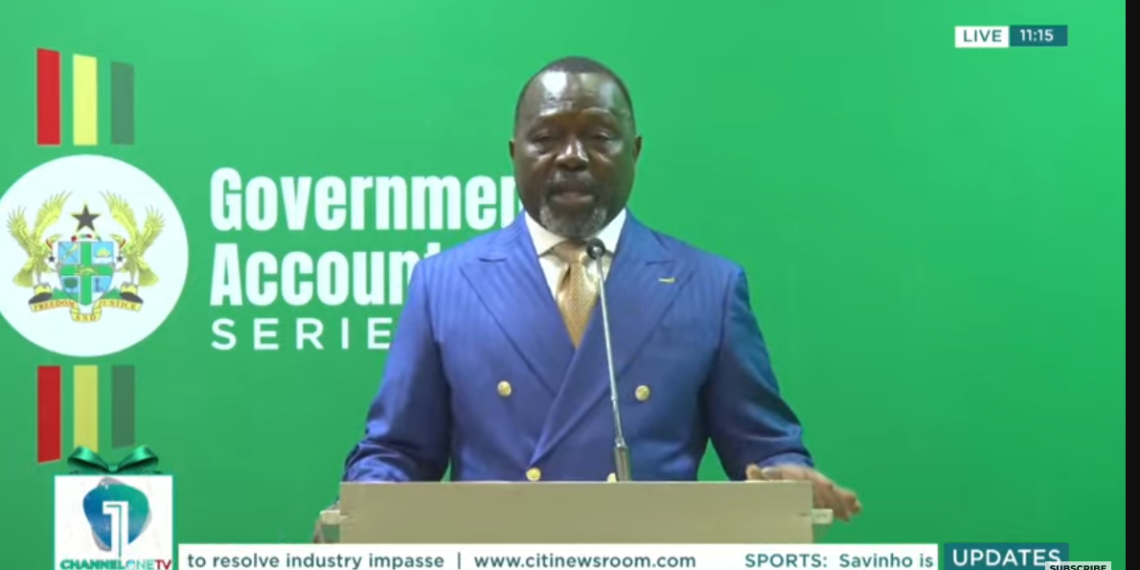
Attorney General and Minister for Justice, Dr. Dominic Ayine, announced the decision on Thursday during the Government Accountability Series, a public engagement platform for outlining constitutional reforms. He said the government had accepted the CRC’s recommendation “in full,” describing it as a practical fix to long-standing logistical and constitutional bottlenecks.
“We have accepted that the Presidential Election be held on a day in the first week of November as the Electoral Commission may specify by constitutional instrument,” Dr. Ayine stated. “A fixed period giving certainty to the electoral calendar. It allows the Commission, the parties and the observers to plan, and it ensures an adequate interval between the election and the inauguration of the incoming President on January 7.”
Why November? The Transition Gap
Under the current constitutional framework, elections are held on December 7, with the winner inaugurated on January 7 – a tight 31-day window. Critics have long argued that this compressed timeline leaves little room for recounts, legal challenges, or the meticulous planning required for a smooth handover of state power.
The November date, by contrast, would create roughly two months between polling day and the swearing-in ceremony. Proponents say the extra weeks would:
· Allow the Electoral Commission (EC) ample time to collate and certify results without rushing;
· Provide sufficient leeway for the courts to resolve any election-related disputes before inauguration;
· Give the outgoing and incoming administrations a more orderly transition period for briefings, budget handovers, and security arrangements.
Dr. Ayine underscored the urgency of reform, noting that Ghana’s electoral timeline has been a source of anxiety in every recent election cycle. “We have seen close calls where the EC has been under immense pressure to declare results within days, only to face legal challenges that linger well past January 7,” he said.
A Shift in Electoral Tradition
The December 7 date has been a fixture of Ghanaian politics since the return to multi-party democracy in 1992. It was chosen to align with the end of the fiscal year and to allow for Christmas holidays to serve as a natural cooling-off period. However, the CRC, chaired by Professor H. Kwasi Prempeh, argued in its final report that the date has outlived its usefulness.
The committee’s analysis pointed to several recent elections where the speed of results declaration and the subsequent inauguration created operational friction – from incomplete voter register audits to delayed appointment of new ministers. A November poll, the report concluded, would restore “constitutional calm” to the process.
Broader Reform Package
The November election proposal is one of several sweeping amendments in the government’s White Paper on the CRC’s work. Other endorsed reforms include:
· Capping ministerial appointments at 60 (up from the CRC’s suggested 57);
· Limiting Parliament to 300 seats;
· Extending the presidential term from four to five years;
· Reducing the minimum age for presidential candidates from 40 to 35;
· Separating the Attorney-General’s office from the Ministry of Justice.
Dr. Ayine stressed that all these changes are designed to strengthen governance, reduce executive overreach, and promote greater institutional stability.
Reactions and Next Steps
Political parties have reacted cautiously to the November proposal. The opposition New Patriotic Party (NPP) welcomed the added transition time but expressed concern that a November election could interfere with the rainy season and farming activities in northern Ghana – a point the CRC has acknowledged and recommended the EC consider when setting the exact date within the first week.
The Electoral Commission, for its part, has not issued an official statement, but sources indicate the EC has long favoured a longer post-election window and is prepared to draft the necessary constitutional instrument once Parliament gives the green light.
Civil society groups, including the Ghana Centre for Democratic Development (CDD-Ghana), have praised the move as “a prudent step toward electoral integrity” but urged the government to ensure that the November date does not conflict with international observation missions or regional economic summits.
The Path to Amendment
The proposed change to the election date will require a constitutional amendment, which must pass a two-thirds majority in Parliament before being submitted to a national referendum. With the government’s endorsement now public, the bill is expected to be tabled within the next parliamentary sitting.
If approved, Ghana would join a small number of African countries that hold presidential elections in November – including the United States and several Francophone neighbours – while still maintaining its January 7 inauguration tradition.
For now, the government has set the ball rolling. As Dr. Ayine put it, “This is not just about changing a date. It is about giving Ghanaians the assurance that their vote will be counted, their transition will be seamless, and their democracy will be stronger for it.”


