



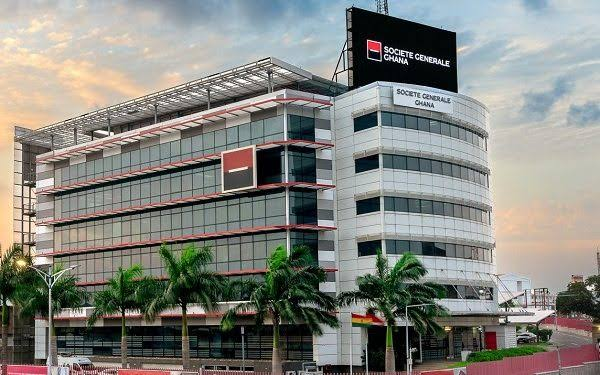
Société Générale Group has signed an agreement with pan-African banking group Attijariwafa Bank to sell its majority stake in Société Générale Ghana, ending the French banking group’s 23-year ownership of one of Ghana’s longest-established commercial banks.
Under the agreement, Société Générale Group will divest its entire 60.22% stake in the Ghanaian subsidiary. Morocco-based Attijariwafa Bank will acquire a 55.22% stake, while the Social Security and National Insurance Trust (SSNIT) will acquire the remaining 5%. The transaction will result in Attijariwafa Bank taking over all activities currently operated by Société Générale Ghana, including its client portfolios and employees within the entity.
The proposed divestment remains subject to the fulfilment of customary conditions precedent and approval by the relevant financial and regulatory authorities in Ghana and Morocco. The completion of the transaction will therefore depend on the necessary regulatory and other approvals.
A Two-Year Process
The deal ends a process that went public in May 2024, when Société Générale Ghana’s management confirmed that the parent group had begun a strategic review of its stake. In March 2025, Bank of Ghana Governor Johnson Asiama said several prospective buyers had contacted the central bank, and that its job was to issue a no-objection and confirm that any buyer met fit-and-proper requirements.
Morocco’s Bank of Africa and Nigeria’s Access Bank had reportedly emerged as contenders for the stake before Attijariwafa Bank clinched the deal.
The Buyer: Attijariwafa Bank
Attijariwafa Bank is Morocco’s largest bank and operates in 27 countries through majority-controlled subsidiaries. Its African markets include Egypt, Tunisia, Mauritania, Senegal, Burkina Faso, Mali, Côte d’Ivoire, Togo, Niger, Benin, Congo, Gabon, Cameroon and Chad. Every one of its sub-Saharan markets is French-speaking, making Ghana its first English-speaking country south of the Sahara.
The group is listed on the Casablanca Stock Exchange with a market capitalisation exceeding 150 billion dirhams as of March 2026, and has more than 7,000 branches and over 12 million clients.
Commenting on the acquisition, Mohamed El Kettani, Président Directeur Général of Attijariwafa Bank, said: “The signing of this agreement reflects the confidence we place in Ghana’s development prospects and in the quality of Société Générale Ghana. It fully aligns with our development strategy in Africa and demonstrates our long-term commitment to supporting the economies of our countries of presence”.
He added: “We will conduct this operation in a spirit of continuity, building on Société Générale Ghana’s strengths, the quality of its teams and its roots in the Ghanaian market. We have the ambition to support the bank’s development, contribute to financing the Ghanaian economy and strengthen economic exchanges between Ghana and Morocco, as well as with the other countries where the Group operates”.
The Seller: Société Générale’s African Retreat
For Société Générale Group, the divestment continues a broader restructuring of its African operations. In 2025, the French lender completed the sale of several African units, including those in Burkina Faso, Guinea, Mauritania and Equatorial Guinea. Since 2023, it has exited Congo, Chad, Mozambique, Madagascar, Burkina Faso, Guinea, Mauritania and Equatorial Guinea. On May 12, 2026, it transferred Société Générale Cameroun to the Cameroonian state, removing €1.9 billion of assets from its balance sheet.
The group’s African strategy is not a blanket withdrawal. It is exiting where scale, profitability or risk-adjusted returns no longer meet its criteria, while retaining or reinforcing operations in markets such as Tunisia and South Africa. In 2025, net banking income attributed to Africa fell to €1.35 billion from €2.02 billion in 2024, largely reflecting the deconsolidation of sold subsidiaries rather than a collapse in operating performance.
Société Générale’s first foothold in Ghana dates to March 2003, when it bought controlling shares in what was then SSB Bank.
The Local Partner: SSNIT’s Homecoming
SSNIT’s acquisition of an additional 5% stake represents a significant increase in its shareholding. The state pension fund started the bank in 1975 as Security Guarantee Trust Limited and owned it outright. SSNIT retained the controlling share until 1997, and in 2004, Société Générale took control. Prior to the current transaction, SSNIT held approximately 19.36% of the bank.
The acquisition follows the completion of the sale of Société Générale Group’s 60.22% controlling stake, which will raise SSNIT’s total shareholding in the bank to 24.36%.
The Bank: Société Générale Ghana
Société Générale Ghana is one of the leading banks in Ghana, with 40 networked branches and outlets across 24 cities and more than 500 employees. The bank has built a reputation for financial innovation, having introduced products such as factoring, finance leasing, cash management, foreign exchange hedging, consumer credit loans and bill payment services to the Ghanaian market.
For the year ended December 31, 2025, the bank reported net banking income of GH¢1.356 billion, a net profit of GH¢397 million, total balance sheet of GH¢9.7 billion and shareholders’ equity of GH¢2.6 billion. It is listed on the Ghana Stock Exchange with a market capitalisation of GH¢3.9 billion as of September 29, 2026.
However, earnings have come under strain as Ghana’s interest rates have declined. Profit after tax for the first half of 2026 fell 47.7% to GH¢128.2 million, with net interest income down 29.7% at GH¢432.9 million. On July 31, 2026, IC Securities rated the stock a sell, with a fair value of GH¢4.10 against a market price of GH¢6.96.
What It Means for Ghana’s Banking Sector
The transaction comes amid growing concentration of foreign ownership in Ghana’s banking industry. Bank of Ghana Governor Johnson Asiama disclosed in September 2026 that foreign-owned banks now control more than 60% of the industry’s assets, with total industry assets at GH¢500.2 billion as of August 2026.
“The current regime where over 60 percent of total banking assets accrue to foreign-owned banks, from a strategic point of view, that may not be very, very optimal. And so going forward, we will want to see our local banks increase their participation in the sector,” Governor Asiama said.
The shift occurred largely during the 2017–2019 banking sector clean-up, which saw the collapse of nine indigenous banks, including UT Bank, Capital Bank, UniBank, Royal Bank, Beige Bank, Sovereign Bank, Construction Bank, Premium Bank and Heritage Bank.
The transaction also reflects a broader trend of European banks retreating from Africa. Major groups such as Crédit Agricole, Société Générale and BNP Paribas are in the process of divesting—or have already exited—most African operations, with difficulties in achieving synergies cited as a key factor.
What Happens Next
The proposed divestment remains subject to the fulfilment of customary conditions precedent and approval by the relevant financial and regulatory authorities in Ghana and Morocco. The Bank of Ghana will perform a routine “fit-and-proper” check on the acquirer, and the central bank is also expected to assess compliance with its merger and acquisition guidelines.
The timeline for completion will depend on how quickly those clearances are obtained. For Société Générale Group, the divestment represents the latest step in its selective retreat from African retail banking. For Attijariwafa Bank, the acquisition would expand its footprint into West Africa and establish its first presence in an English-speaking African market south of the Sahara.


