



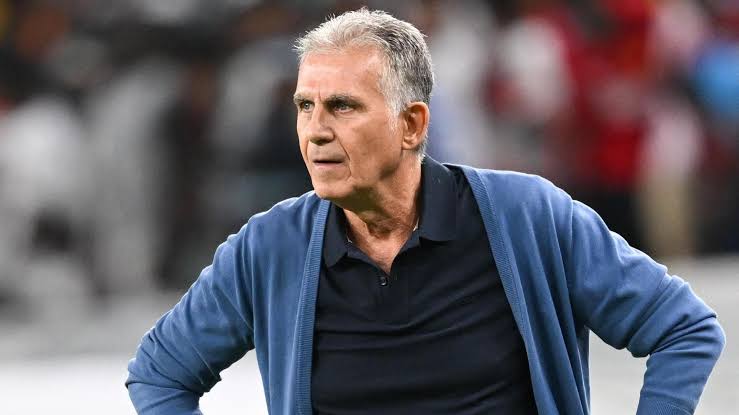
Carlos Queiroz had just guided Ghana to the knockout stage of the World Cup for the first time since 2010. Yet the veteran Portuguese coach was in no mood to celebrate.
Instead, he used his post-match press conference to deliver a blistering critique of FIFA’s decision to expand football’s showcase event from 32 to 48 teams — a change he says has turned the beautiful game into “moneyball”.
“I believe that value comes when things are rare,” Queiroz said after Ghana’s 2-1 defeat to Croatia in Philadelphia. “The number of teams that can qualify for this competition can turn it into something vulgar and ordinary. When so many teams can qualify, is the value still rare? That would seem debatable to me.”
The 2026 edition is the first World Cup to feature 48 teams, expanding from the 32-team format that had been in place since France 1998. The enlarged competition has increased the number of matches from 64 to 104, with the tournament now spread across three host nations — the United States, Canada and Mexico. FIFA is projecting revenues exceeding US$11 billion for this year’s tournament.
‘Everybody is qualified’
Queiroz, who is making his sixth World Cup appearance as a coach after previous campaigns with Portugal, Iran and South Africa, argued that the expansion has drained the drama from qualification — particularly in Europe and South America.
“In South America, in this moment, the brilliant success of one coach in South America is not to qualify,” Queiroz said sarcastically, noting that six of the confederation’s 10 nations now receive automatic berths, with a seventh eligible through the inter-confederation playoff.
“Who did not qualify in Europe?” he asked. “The qualification tournaments start to lose their significance if everyone qualifies. Qualification should be serious, it should be very tough, very competitive.”
No continent has benefited more from the expansion than Africa. In total, 10 African sides qualified for the tournament — double the five spots available under the previous 32-team format. Eight have advanced from the group stage to the round of 32.
Yet Queiroz insisted his concerns were about the integrity of the competition, not his own team’s good fortune. “I never see in my life common things, ordinary things that become huge value,” he said.
‘Money talks’
The 73-year-old coach, who has previously managed Real Madrid and served as assistant to Sir Alex Ferguson at Manchester United, did not mince words when asked about the driving forces behind the expansion.
“Today, money talks in the game,” Queiroz said. “Where we used to talk about football, it is now moneyball.”
The decision to expand the World Cup was approved unanimously by FIFA’s Council in January 2017, less than four months after Gianni Infantino was elected FIFA president. Infantino had made expansion a key campaign promise, arguing the tournament should be more inclusive and offer more nations the opportunity to compete on the global stage.
Under the new format, UEFA has 16 guaranteed places, Africa nine, Asia eight, CONCACAF six, CONMEBOL six and Oceania one, with two additional spots decided through intercontinental playoffs.
‘The World Cup should be rare’
Despite his reservations, Queiroz insisted his comments reflected his personal opinion rather than criticism of the teams that have earned their place.
“I prefer to see the World Cup as a rare event that should have great meaning and that you have to fight to be in,” he said. “The World Cup should be something with meaning and significance. It should be rare.”
Ghana, who finished third in Group L behind England and Croatia with four points from matches against Panama (1-0) and England (0-0), will face Colombia in Kansas City in the round of 32.
“I have just told my players that the real world championship starts in the next round,” Queiroz said. “The group stage is the warming-up and qualification for the next round is like a credit card — but now you have to start paying.”
The expansion has remained one of the most debated changes in modern football. Supporters argue that a larger World Cup offers more countries the chance to compete on the biggest stage, helping the sport grow beyond its traditional powerhouses. Critics, however, have questioned whether the expanded format weakens the quality of the competition, stretches an already congested international calendar and reduces the difficulty of reaching the finals.
For Queiroz, the answer is clear.
“The World Cup should be something with meaning and significance,” he repeated. “It should be rare.”


