



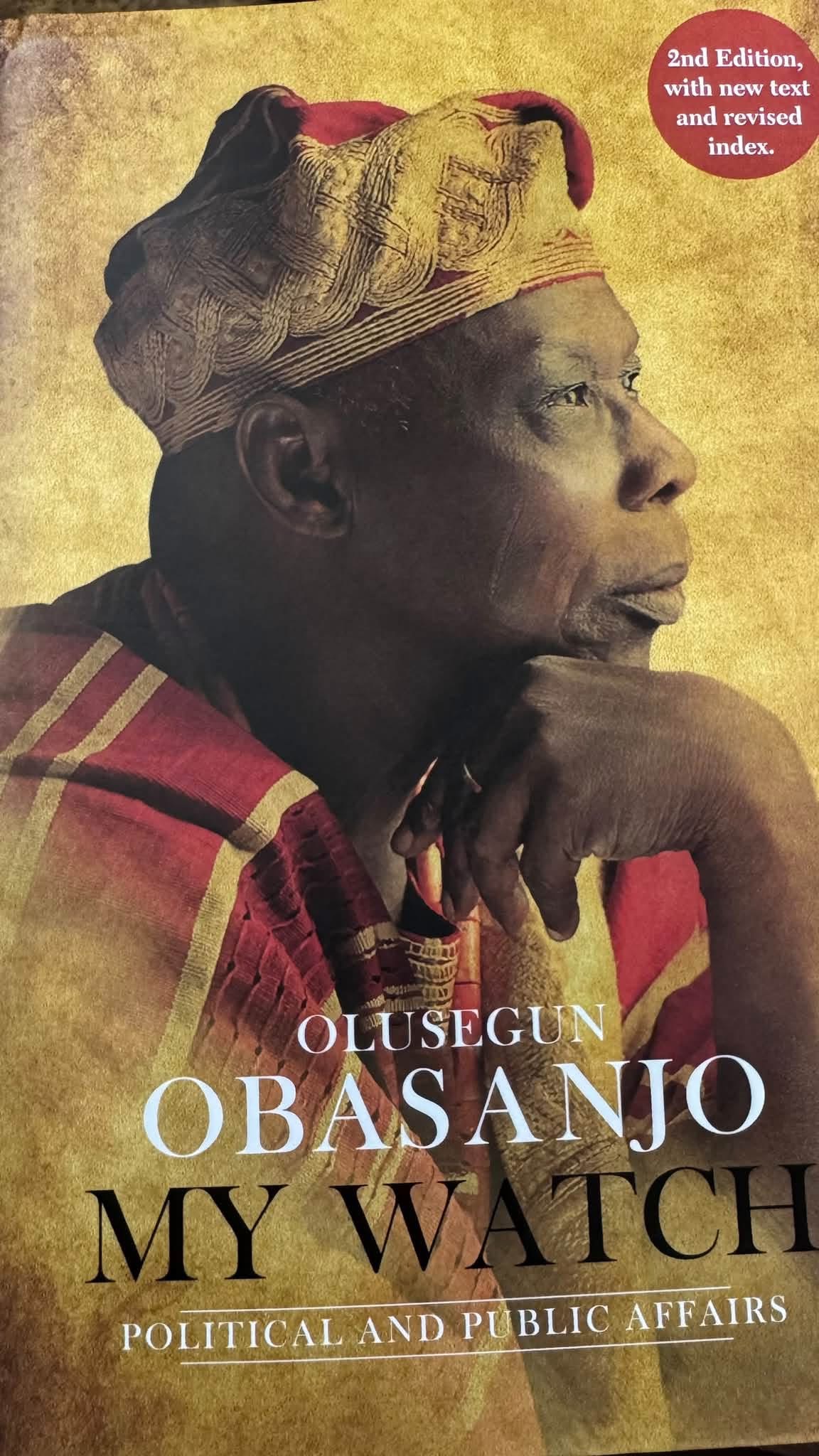
Former Nigerian President Olusegun Obasanjo has detailed what he describes as a pattern of betrayal by his former Vice President, Atiku Abubakar, revealing in his memoir My Watch that the rift between them began within days of their inauguration in 1999 and was rooted in Atiku’s alleged ambitions to supplant him.
In the book, Obasanjo recounts how the battle for the Senate presidency in June 1999 exposed what he calls Atiku’s “hand and character,” marking the beginning of an eight-year power struggle that would define their troubled administration .
The Senate Presidency Battle
According to Obasanjo, the most important officer in the National Assembly is the Senate President, and that office had been zoned to the South-East. Without seeking his view or approval, Atiku began planning the installation of Chuba Okadigbo as Senate President .
“I did a background check on Chuba including his past as a student and made enquiries about him in the National Party of Nigeria under Shagari and no one would recommend him for the post of Senate President,” Obasanjo wrote .
Obasanjo said he left Atiku to pursue his plan while he conducted his own “meticulous and detailed investigation” of each Senator from the South-East. The one who appeared most appointable was Evan Enwerem. Obasanjo canvassed the Senate across the board for his election, and Enwerem was elected .
“Atiku did not expect it and he felt sore,” Obasanjo wrote. “He began to strategise for Enwerem to be removed and Chuba Okadigbo to be installed” .
The Alleged Bribery
According to the memoir, Atiku’s strategy succeeded. Obasanjo was at Abuja Airport to receive a visiting Head of State when news reached him that the Senate had impeached Enwerem and elected Okadigbo. He said he was “not perturbed” .
“I came to understand from some senators including Florence Ita-Giwa, who later became my Special Adviser/Liaison Officer to the National Assembly, that Atiku distributed US$5,000 each to some senators to carry out the ‘coup,'” Obasanjo wrote .
“That was the beginning of bribing the legislature to carry out a particular line of action to suit or satisfy the purpose or desire of an individual or a group. The National Assembly had tasted blood and they would continue to want more” .
A Vice President ‘Impatient and Over-Ambitious’
Obasanjo’s characterization of Atiku in the book is scathing. He wrote that from the day he nominated Atiku as his vice, Atiku “set his mind not for any good, benefit or service of the country, but on furiously planning to upstage, supplant or remove me at all costs and to take my place” .
“That was what I brought him for, but he was impatient and over-ambitious. He was not ready to learn and to wait. Pity!”
Obasanjo also claimed that Atiku’s marabout had predicted that he would take over from Obasanjo “in a matter of months rather than years,” and that all of Atiku’s plans, appointments, and actions were directed toward fulfilling that prediction .
“Once I realised his intention and programme, I watched him like a hawk without giving any indication of what I knew and letting down my guard. I could not succumb to the distraction, diversion and malevolence of an ambitious but unwise deputy” .
The Aftermath
The Senate presidency crisis had lasting consequences. Okadigbo’s tenure was short-lived. In August 2000, he was impeached by 81 votes to 14 following allegations of corruption, including inflating contracts, accepting a $200,000 “Christmas welfare gift,” and acquiring eight unauthorized cars . His deputy, Haruna Abubakar, and Senate majority leader Samaila Mamman resigned before the ballot .
Obasanjo later described picking Atiku as his running mate as the “biggest mistake” of his presidency. In a 2026 interview, he said: “If I had known him as I came to know him later, I would not have picked him” .
Atiku has consistently rejected Obasanjo’s account. In response to recent criticism, he argued that Obasanjo’s 1999 victory was made possible by northern support, not Obasanjo’s own electoral strength, saying: “He could not even win his own state or the South-West; it was Arewa that made him President” .
A Defining Rift
The Obasanjo-Atiku relationship remains one of the most consequential and bitter political feuds in Nigeria’s Fourth Republic. They served together from 1999 to 2007, with their relationship deteriorating sharply during their second term over political disagreements .
My Watch was launched in Lagos in December 2014, with excerpts published widely across Nigerian media . The book remains a primary source for understanding the internal dynamics of Nigeria’s first civilian administration after military rule.


