



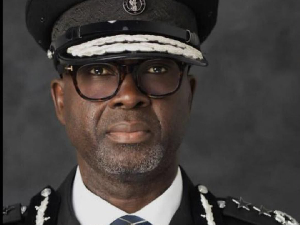
The National Security Coordinator, COP Osman Abdul-Razak, has issued a firm directive calling for an end to what he described as ineffective inter-agency meetings, urging Ghana’s security and intelligence agencies to adopt real-time operational coordination to effectively enforce the Vigilantism and Related Offences Act, 2019 (Act 999).
Speaking at the National Policy Dialogue on the Vigilantism and Related Offences Act, organised by Election Watch Ghana at the Kofi Annan International Peacekeeping Training Centre (KAIPTC) in Accra, COP Razak stressed that security agencies must function as a unified system to stay ahead of the evolving tactics of vigilante groups. He emphasised that preventing political violence requires continuous, practical collaboration rather than periodic meetings that have little impact on operations.
“Security agencies must establish shared communication channels, conduct joint risk assessments, integrate intelligence in real time, and operate under coordinated command structures,” COP Razak said. He noted that the Police Service, Ghana Armed Forces, Immigration Service, Prisons Service, and intelligence agencies must strengthen their collaboration to identify and address threats before they escalate.
The National Security Coordinator further advocated for early interventions ahead of elections, insisting that security planning should commence well before political tensions reach a critical stage. He urged security agencies to rely on evidence-based intelligence and early-warning mechanisms to identify potential threats and take preventive action before political violence occurs. He also called for joint field operations among the various security services, arguing that closer operational integration would improve the country’s ability to respond swiftly to emerging threats.
COP Razak also issued a stern warning against the rebranding of political vigilante groups, revealing that some groups that previously operated openly are now presenting themselves differently. “We are very much aware that some groups are rebranding as internal security teams, volunteer task forces, or community security initiatives,” he said. “Again, mobilisation has moved online on social media, encrypted chats, local disputes, private security arrangements, or other informal channels”.
He cautioned against interpreting the reduced visibility of organised vigilante groups as evidence that political vigilantism had been eliminated. “We must not mistake reduced visibility of these groups as complete eradication. A vigilante group is a vigilante group regardless of its name, uniform, or publicity,” he stated.
The National Security Coordinator also called for the enforcement of Act 999 to be completely free from political influence, stressing that the credibility of Ghana’s security institutions depends on their ability to apply the law fairly and consistently. He acknowledged that prosecutions under the Act had been limited and legal processes had sometimes been slow, warning that delayed or selective enforcement could weaken the deterrent effect of the law.
COP Razak further outlined a detailed timeline for election security preparedness, proposing that intelligence mapping and stakeholder engagement should begin 12 to 18 months before elections, followed by youth engagement and civic education nine to 12 months prior to polling, with active monitoring of political mobilisation beginning at least six months before elections.
He also traced the roots of political vigilantism in modern Ghana to the 1950s, when informal party task forces gradually evolved into organised groups that became involved in election-related violence. He warned that such violence could undermine public confidence in elections, weaken trust in state institutions, threaten Ghana’s democratic stability, and affect investor confidence.
COP Razak commended political parties that have increasingly relied on the Ghana Police Service to provide security during their internal elections and primaries, praising the Inspector-General of Police and personnel of the service for using such assignments to demonstrate professionalism and strengthen public confidence in the security sector.
Election Watch Ghana said the dialogue was convened to assess the implementation of Act 999, identify enforcement gaps, and develop measures to protect Ghana’s peace and democratic governance ahead of future elections.


