



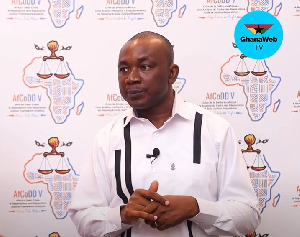
Ghana’s impressive macroeconomic recovery, marked by falling inflation, stabilised exchange rates, and improving debt metrics, risks becoming hollow if it does not directly translate into jobs for the country’s growing youth population, according to Professor Godfred Alufar Bokpin, an economist and senior lecturer at the University of Ghana.
Speaking at a policy dialogue on “Sustaining Growth Through Inclusive Employment” organised by the Institute of Economic Affairs (IEA) in Accra on Wednesday, Prof. Bokpin cautioned that while the government deserves credit for restoring fiscal discipline, the ultimate test of economic recovery lies in the labour market.
“We have seen debt service ratios fall from 55.7% to 28.6% of domestic revenue. Inflation has dropped to single digits. The cedi is relatively stable. These are commendable achievements. But if a young graduate cannot find a job, or a trader cannot afford to pay her rent, these statistics mean very little in their daily lives,” Bokpin said.
The Job-Creation Gap
Prof. Bokpin pointed to Ghana Statistical Service data showing that the national unemployment rate stands at approximately 13.5%, with youth unemployment (ages 15–35) exceeding 18%. He noted that while the service sector and digital economy have grown, they have not absorbed the large numbers of graduates entering the workforce each year.
“We are producing over 100,000 university graduates annually, but the formal sector creates fewer than 30,000 new jobs. That arithmetic simply does not work. We need a deliberate strategy to stimulate labour‑intensive sectors—agriculture, manufacturing, and construction—not just financial services and telecoms,” he argued.
Structural Transformation Required
The economist emphasised that Ghana’s current growth model is too reliant on extractive industries and services, which generate high revenue but few jobs. He called for renewed investment in agro‑processing, light manufacturing, and the creative arts, where employment multipliers are significantly higher.
“Every $1 million invested in agriculture processing creates about 20 direct jobs, compared to just 3 or 4 in mining,” he cited from a recent World Bank study. “We have the raw materials—cocoa, cashew, shea, maize—but we export them in raw form. We must add value at home, and that means supporting small and medium‑scale enterprises with affordable credit and reliable power.”
Fiscal Space Should Be Used Wisely
Prof. Bokpin acknowledged that the government now has more fiscal space due to reduced debt service costs, but warned against using that space for consumption‑driven spending. Instead, he urged that savings from debt restructuring be channelled into infrastructure, technical vocational training, and business development support.
“The mid‑year budget review shows that we are spending less on interest payments. That is a blessing. But we must not waste it on recurrent expenditure. We need capital investment that builds roads, irrigation systems, and industrial parks—things that create lasting jobs,” he said.
Private Sector as the Engine
While government has a role, Prof. Bokpin stressed that sustainable job creation must come from the private sector. He called for reforms to improve the ease of doing business, including reducing the cost of electricity for industrial users, streamlining tax compliance, and expanding access to microcredit.
“The private sector is not asking for handouts. They are asking for predictable policies, affordable energy, and a level playing field. If we give them that, they will invest and hire. It is not rocket science—it is economics,” he said.
The Political Imperative
Prof. Bokpin also touched on the political dimensions of joblessness, warning that high unemployment can fuel social unrest and political instability. He cited recent protests in other African countries as cautionary tales.
“Young people are patient, but not infinite. If they see economic growth but no opportunity, they will take to the streets. We have seen it in Kenya, in Nigeria, in South Africa. Ghana must not be next. The government must show not just numbers, but results,” he said.
Government’s Response
In a brief reaction, Deputy Minister for Finance, Dr. John Amponsah, acknowledged the concerns and noted that the government’s newly launched “Youth in Enterprise” programme aims to create 200,000 jobs over the next two years through grants and mentorship. He also pointed to the revival of the Ghana Industrial Parks project, which is expected to attract foreign direct investment and generate thousands of construction and operational jobs.
However, Prof. Bokpin remained sceptical, calling for regular independent monitoring of such programmes. “We have had many initiatives in the past that sounded good on paper but delivered little. I urge civil society and the media to track the actual job numbers, not just the announcements,” he advised.
A Call for Urgency
Concluding his address, Prof. Bokpin urged policymakers to treat job creation with the same urgency as debt restructuring. “Macroeconomic stability is not the end goal; it is the foundation. The building we erect on that foundation must be a prosperous, employed, and hopeful Ghana. We are not there yet, but we can be—if we choose wisely,” he said.
The IEA has indicated that it will compile the recommendations from the dialogue into a policy brief to be submitted to the Ministry of Finance and the National Development Planning Commission.


