



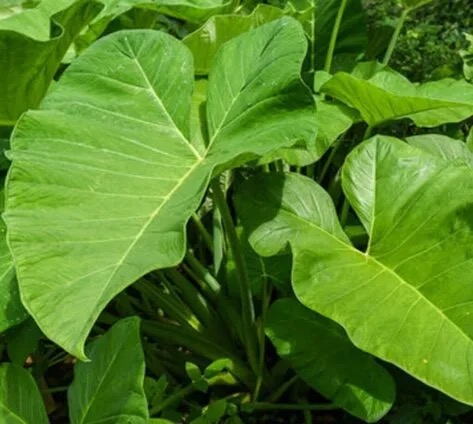
A leading nutrition expert has made a compelling case for Ghanaians to turn to a humble backyard vegetable that, she says, packs a more powerful nutritional punch than some of the world’s most celebrated “superfoods.”
Emelia Dery Gbogr, Principal Nutrition Officer and Head of the Dietetics Department at the University of Ghana Medical Centre (UGMC), has stated that kontomire—the widely available cocoyam leaf—offers superior nutritional value compared to popular imported vegetables like spinach and broccoli .
A Nutritional Powerhouse in Plain Sight
Speaking during a Joy Sustainability Month discussion, Ms. Gbogr presented a detailed comparison that challenges the perception of exotic vegetables as inherently more nutritious.
“When you look at the nutritional values, our kontomire has some of the nutrients higher than broccoli or spinach,” she stated. “When you look at the protein content of kontomire, it is higher than that of broccoli; when you look at vitamins, it is high in Vitamin A. Fibre levels are also higher compared to those of broccoli” .
Scientific research supports her assessment. Studies have shown that the crude protein content of cocoyam leaves can be as high as 26.3%, significantly surpassing many other leafy greens . These leaves are also rich in calcium, potassium, and iron—minerals often lacking in the typical Ghanaian diet .
The Case for Local Over Imported
The dietician’s endorsement of kontomire goes beyond its pure nutritional profile to include practical economic and environmental advantages.
“It is readily available to us, so compared to imported goods, which is broccoli or spinach, kontomire is readily available. It grows easily, so you can have it at your backyard, and compared to importation, you will have to pay more for the imported goods, so I will say that coming to cost-wise, kontomire is better,” she explained .
This message aligns with broader research advocating for the promotion of indigenous vegetables. A comparative study on leafy vegetables in Ghana concluded that proteins, dietary fibres, and key vitamins—including A, C, and E—were “significantly higher in indigenous vegetables than their exotic counterparts” .
A Call to Reclaim Indigenous Food Culture
Ms. Gbogr’s remarks come at a time when Ghana’s food habits are shifting, with many urban households developing a preference for imported foods over locally adapted, nutrient-rich staples . This shift has been linked to rising issues of food insecurity and malnutrition, as local crops are often better suited to Ghana’s growing conditions and possess unique nutritional advantages.
Her advocacy is part of a long-standing career dedicated to integrating nutrition into mainstream healthcare. As a qualified dietitian and nutritionist, her work focuses on empowering communities to make informed dietary choices that support long-term health and disease prevention .
By championing kontomire—the key ingredient in the beloved Ghanaian dish palava sauce—she is not just promoting a vegetable but advocating for a more sustainable, affordable, and health-conscious food system rooted in local heritage .


