

Kodal Minerals (LON: KOD) is advancing its West African lithium strategy from production to exploration, signing a binding agreement to acquire up to 80% interest in Ghana’s Asamankese lithium project, while its Bougouni mine in Mali has already generated cash flow to support this expansion.
According to an announcement this week, the London-listed company has reached an agreement with GH Geo-Consult Ltd, initially acquiring a 10% stake for $300,000, and may increase its interest to 80% through staged investments over five years. The project is located in Ghana’s Eastern Region, approximately 75 kilometers from Accra, covering an area of 156 square kilometers.
Exploration Data and Drilling Timeline
Early exploration results show promising potential. Historical rock chip samples returned grades up to 3.02% lithium oxide (Li₂O), while Kodal’s own sampling returned up to 2.49%, with 95 out of 164 samples exceeding 1%. Two priority targets have been identified: Amantra (pegmatite strike length exceeding 3 kilometers) and Nfranta (multiple pegmatite veins with a combined strike length exceeding 4 kilometers).
The company has appointed a local drilling contractor, with initial diamond drilling expected to commence before the end of 2026. CEO Bernard Aylward stated that the early geological characteristics of Asamankese are similar to those of Bougouni during its early stages, and the company will fund exploration using existing cash and Bougouni’s operating cash flow without the need for new equity financing.
Bougouni: Cash Flow and Pricing Support
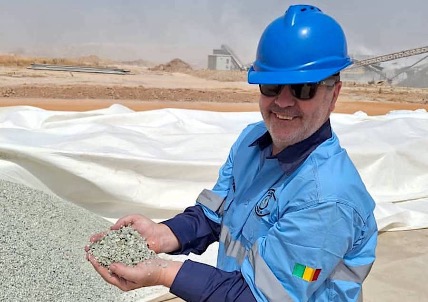
Kodal’s confidence stems from the operational performance of its Bougouni lithium mine in Mali. This is a joint venture with China’s Hainan Mining, in which Kodal holds a 49% interest, with Hainan Mining holding 51% and controlling operational management.
Production data shows that Bougouni produced 26,174 dry metric tons of spodumene concentrate in the second quarter of 2026, with year-to-date production reaching 53,195 tons. More critically, prices have rebounded significantly—the third shipment’s spodumene concentrate (SC6) price was equivalent to $2,304 per ton, a sharp increase from the first shipment’s $1,148 per ton. This directly improved project cash flow, with the operating company having repaid $13 million to Kodal Mining UK in the second quarter.
Regional Context: Ghana’s Lithium Track
Kodal is not the only player in Ghana. Australia’s Atlantic Lithium is advancing the Ewoyaa project, which obtained parliamentary ratification of its mining lease in March 2026, becoming Ghana’s first lithium mining license. Ghana has implemented a sliding royalty regime linked to spodumene prices, with rates ranging from 5% to 12%. Kodal will also need to navigate this regulatory framework.
Regarding security risks, Islamist militant activity in West Africa’s Sahel region has been expanding in recent years, with Mali particularly affected. Bougouni experienced an armed attack last year resulting in the death of one security guard. Aylward stated that the company is well-versed in local legislation and community relations, but security remains a risk factor that cannot be ignored for any mining company operating in the region.
For Kodal, Asamankese is an exploration-stage bet: if drilling confirms a resource, it would provide the company with a second lithium asset outside of Mali; if results fall short of expectations, the staged investment structure allows the company to exit at any time while retaining the interest already earned.