



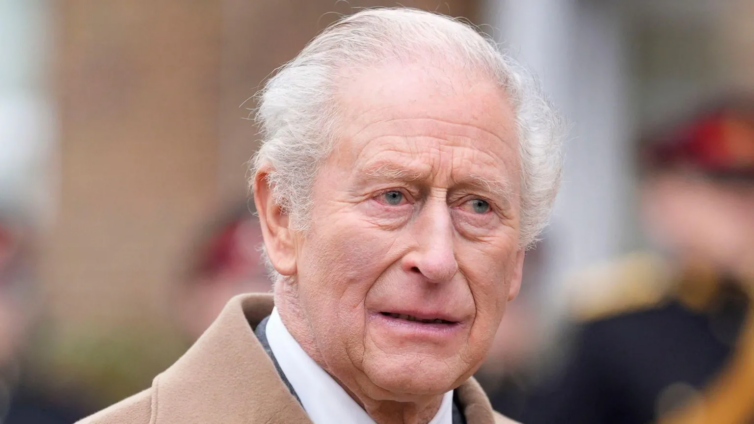
Buckingham Palace has issued a sharp and unusually direct rebuke on behalf of King Charles III following the publication of advance excerpts from a forthcoming memoir by Charles Spencer, the brother of the late Princess Diana, escalating a decades-old rift between the Spencer family and the House of Windsor into one of the most bitter public exchanges in recent royal history.
The book, Swan Song: Diana, My Sister, is scheduled for release on Tuesday, 22 September, and is being serialised by the Daily Mail. It details turbulent moments from Diana’s marriage to the then-Prince of Wales and the emotional aftermath of her death in a Paris car crash on 31 August 1997, at the age of 36. The memoir will be published in the United States by Penguin Press and translated into 12 languages.
The Phone Call That Shook the Palace
At the heart of the controversy is Earl Spencer’s account of a heated telephone exchange with the then-Prince of Wales regarding whether Princes William and Harry, then aged 15 and 12, should walk behind their mother’s coffin during the funeral procession. Spencer writes that he was informed by a senior Palace aide of the plan and objected firmly, believing Diana would not have wanted her sons subjected to such a public ordeal.
According to the memoir, Charles called him shortly after, and the conversation quickly deteriorated. Spencer writes that Charles “unleashed down the phone what I have always taken to be his pent-up contempt for Diana, and his horror that the world was so bowled over by her death.” He claims the King hissed: “Rest assured, we’ll forget her soon enough.”
In a separate passage, Spencer alleges that Charles sounded “giddily elated — like a lottery winner” during a phone call on the night of Diana’s death. “Unlike my other callers, who were stunned, barely able to articulate their condolences and offers of help, he sounded giddily elated — like a lottery winner, I remember thinking at the time,” Spencer writes. He adds that Charles informed him he had told William and Harry of their mother’s death that morning in their bedrooms at Balmoral, describing the account as “strangely matter-of-fact, given the enormity of the disaster.”
Palace Fires Back
Buckingham Palace responded late Wednesday with a statement that royal commentators have described as “unprecedented” in its directness by the measured standards of the royal household. “While we do not comment on books as a matter of principle, His Majesty is mindful that the pain of fraternal grief can cloud reason, affect judgment and colour memory in ways others do not recognise, even many years after such a loss,” the palace statement read.
The response echoes — and sharpens — Queen Elizabeth II’s famously understated line, “recollections may vary,” issued during the 2021 dispute with the Duke and Duchess of Sussex. Royal watchers noted that the palace opted for an immediate pushback to get ahead of damaging headlines, a strategy that mirrors past responses to high-profile controversies, though direct rebuttals remain uncommon for the institution.
The palace’s intervention came as the King appeared in public for the first time since the excerpts were published, attending a summit in Cumnock, Scotland, where he warned of the “existential dangers” of artificial intelligence. Meanwhile, the Prince and Princess of Wales were on their first official visit to the Isle of Bute, and the Duke of Sussex was expected at an Invictus Games event in London — a coincidence of royal diaries that underscored the awkward timing of the controversy.
A Funeral That Divided a Nation
The dispute over the funeral procession has haunted the royal family for nearly three decades. Earl Spencer claims he was informed by Queen Elizabeth II’s most senior aides that William and Harry would walk in the procession, prompting him to state flatly: “That’s not going to happen.” He alleges that Charles insisted the boys walk alongside him out of fear that, if he walked alone, members of the public might shout abuse at him.
Prince Harry has previously said that walking behind his mother’s coffin as a 12-year-old was something no child “should be asked to do.” In the 2017 BBC documentary Diana, 7 Days, Prince William described the decision as a “collective family decision,” while acknowledging that it was not easy. Spencer has previously explained that he was particularly concerned about Harry taking part in the procession.
The funeral itself became a defining moment in the monarchy’s modern history. The royal family faced a torrent of public criticism for what was perceived as a slow and emotionally detached response to Diana’s death. It was not until the day before the funeral that the Queen finally broke her silence with a live broadcast to the nation. Earl Spencer’s emotional and defiant eulogy at Westminster Abbey — in which he pledged that Diana’s “blood family” would ensure her sons’ “souls are not simply immersed by duty and tradition but can sing openly as you planned” — was widely interpreted as a swipe at the Royal Family and drew applause from the crowds gathered outside.
Diana’s Private Struggles
The memoir also revisits long-standing tensions surrounding the royal marriage, which officially ended in a 1996 divorce after the couple separated in 1992. Spencer recounts Diana’s early struggles, her battles with an eating disorder, and her complex relationship with royal medical staff.
“It is a sad fact that, in her later years, Diana drove herself more than once to Beachy Head, the highest chalk sea cliff in England, while contemplating ending it all. Her love for her sons stopped her from going further,” Spencer writes. Beachy Head, located in East Sussex, is a well-known coastal landmark and has long been associated with tragedy.
Reflecting on the marital breakdown, Spencer maintains a measure of neutrality regarding the blame while documenting his sister’s perspective. “I am not hypocritical enough to judge or criticise anyone else’s marital record. I am merely recording how my sister felt and am not assessing whether she was right or not,” he writes. He adds that his aim was to “tell the truth about Diana from her brother’s perspective, just as I attempted to do when speaking at her funeral.”
A Brother’s Mission
Charles Spencer, the 9th Earl Spencer, is a historian, author, broadcaster, and journalist who has written nine non-fiction books, including four Sunday Times bestsellers. Born on 20 May 1964, he was educated at Eton College and Magdalen College, Oxford, where he studied modern history. He became the 9th Earl Spencer on the death of his father in 1992.
The 62-year-old has long clashed with the Royal Family over their treatment of his sister. In a 2004 interview, he insisted that he meant no offence by his funeral eulogy, saying: “I am a brother who has lost a sister, and brothers who lose sisters don’t profit from their death.” He has remained close to his nephew Prince Harry, warmly greeting him at St Paul’s Cathedral during a memorial service in 2024.
The book is being positioned by its publishers as the first time Earl Spencer has spoken openly and at length about his sister. In an interview ahead of publication, Spencer said Diana “would approve of every word” in the memoir, vowing to correct what he describes as entrenched narratives about her life.
The Public Divides
Early polling suggests the British public is sharply divided over the claims. A YouGov poll conducted following the first extract found that 31% of respondents believed Earl Spencer’s account, 36% disbelieved him, and 33% said they did not know. Royal correspondent Sean Coughlan noted that while grief affects people differently and memories can diverge, the suggestion that Charles sounded “elated” at Diana’s death is “a strong allegation to make about a terrible moment for any family.”
Adding an unexpected twist to the saga, it emerged earlier this week that copies of the unreleased book had been stolen from a truck in the Netherlands. Four copies of the Dutch language edition were taken while en route from the Dutch publisher’s printers to their warehouse, according to the BBC.
The Road Ahead
As publication day approaches, observers note that the enduring public fascination with Diana’s legacy continues to shape the modern monarchy’s relationship with the media and the public, leaving both institution and family to navigate the delicate balance between private remembrance and public scrutiny. Buckingham Palace’s decision to break with precedent and respond directly suggests the King’s advisers are determined not to allow the allegations to go unchallenged — a sign of how seriously the palace views the potential reputational damage.
For Earl Spencer, the book represents a culmination of decades of frustration over what he perceives as his sister’s mistreatment by the institution she married into. For the King, it is a painful reopening of a chapter he has spent years trying to move beyond. And for the British public, it is yet another reminder that Diana’s ghost — beloved, contested, and endlessly reinterpreted — continues to haunt the House of Windsor.


