



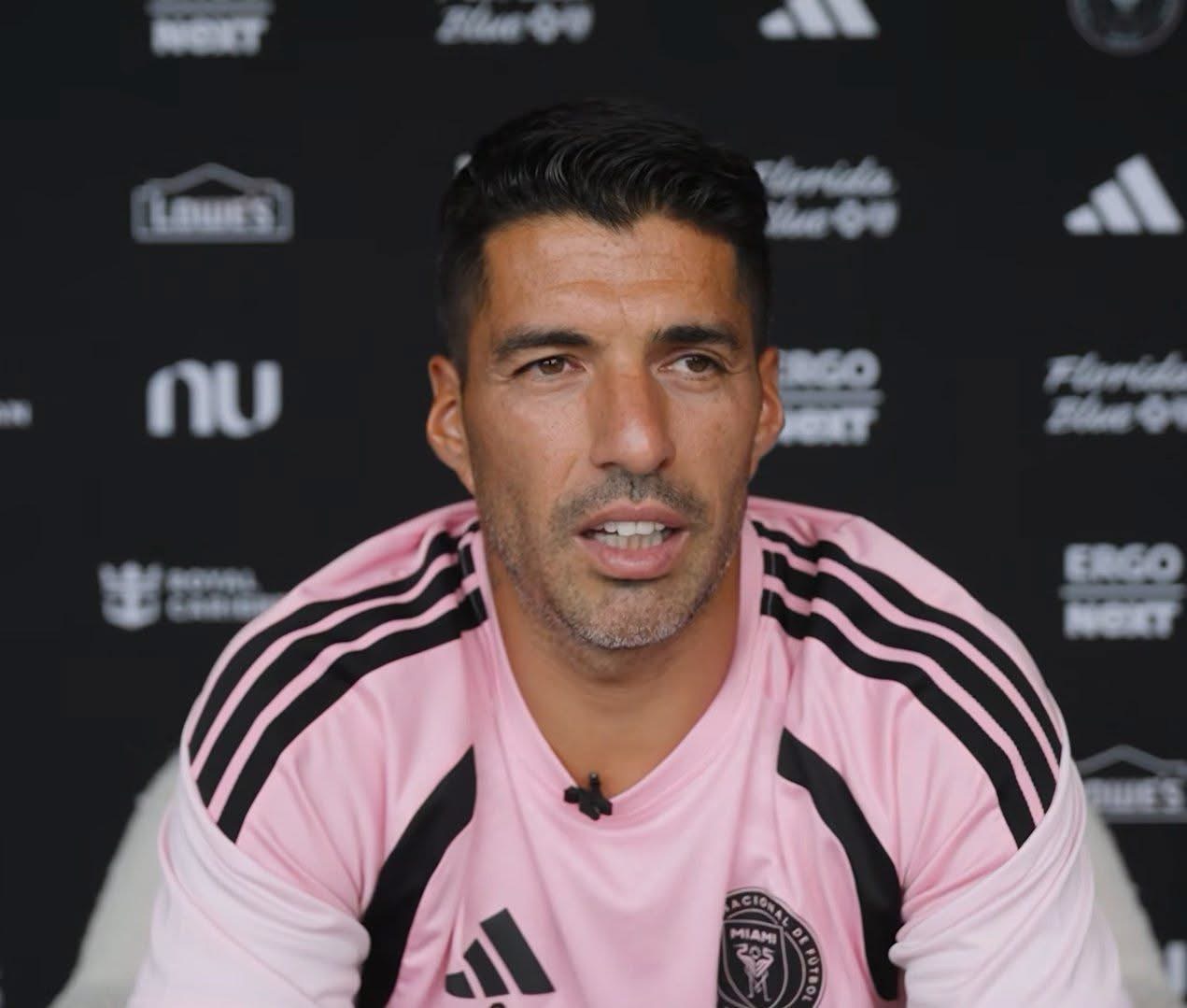
As the football world debated whether Lionel Messi’s legendary powers were finally waning ahead of the 2022 World Cup in Qatar, one of his closest allies and former teammates has offered a rare glimpse behind the curtain. Luis Suárez, the Uruguayan striker who forged a telepathic bond with Messi during their trophy-laden years at Barcelona, has insisted that the whispers of “old age” were merely background noise to a man driven by an unquenchable fire.
Speaking candidly about the period leading up to Argentina’s historic triumph, Suárez detailed the rigorous, unseen daily routines that defied the public narrative surrounding the then-35-year-old playmaker.
“Some people said that Messi was old, but I see him in training every day,” Suárez stated emphatically. He elaborated on how the Argentine icon had completely overhauled his physical regimen to maintain his explosive acceleration and sharp turns. Long gone were the days of relying solely on raw youth; instead, Messi focused heavily on core stability, cryotherapy, and personalized recovery protocols designed to combat the cumulative rigors of a two-decade-long professional career.
However, according to Suárez, the physical preparation was only half the story. The psychological edge is what truly sets the eight-time Ballon d’Or winner apart.
“I knew how he was preparing for this World Cup; he still has that hunger to keep wanting to be the best,” the Uruguayan revealed. Suárez pointed out that while many veteran players might settle for their existing accolades and coast through the twilight of their careers, Messi treats every training session as if it were a World Cup final. He is known to spend extra hours on the practice pitch perfecting free-kick trajectories and dissecting tactical video footage of opposing defensive lines, ensuring his football intelligence grows exponentially even as his physical peak slowly passes.
Suárez, who faced Messi as an opponent during the group stages in Qatar, underscored that the world was simply witnessing the product of an obsessive work ethic.
“What we see now is his professionalism,” Suárez added. “The best thing about Leo is his desire to improve himself at every moment.”
The Uruguayan stressed that this compulsive drive—the refusal to accept stagnation—is what separates Messi from his contemporaries. He recalled how Messi constantly demands the highest standards from those around him, perpetually seeking feedback and analyzing his own performances with a critical eye, regardless of how many records he has shattered.
Those inside Argentina’s camp would later attest that this mentality was the bedrock of their eventual victory in Lusail. Suárez’s revelation serves as a definitive rebuttal to the critics, painting a portrait of a player who did not merely rely on inherited talent to lift the iconic gold trophy, but rather forged his legendary status through sheer, obsessive dedication.
The numbers on the scoreboard in Qatar, Suárez implies, were simply the visible reward for an invisible war waged daily on the training ground—a war that Messi, even in his mid-thirties, refuses to lose.


