



Ghana Water Limited (GWL) has restructured its distribution operations in the Greater Accra Region, dividing its former three distribution regions into six smaller regions in a major reorganisation aimed at bringing the company closer to customers and improving service delivery.
The restructuring, which took effect on June 1, 2026, has split the former Tema, Accra East and Accra West distribution regions into Tema West, Tema East, Accra West, Accra South, Accra East and Accra North. Prior to the reorganisation, GWL operated three distribution regions in Greater Accra — Tema, Accra East and Accra West — alongside the Accra-Tema Metropolitan Area (ATMA) production region.
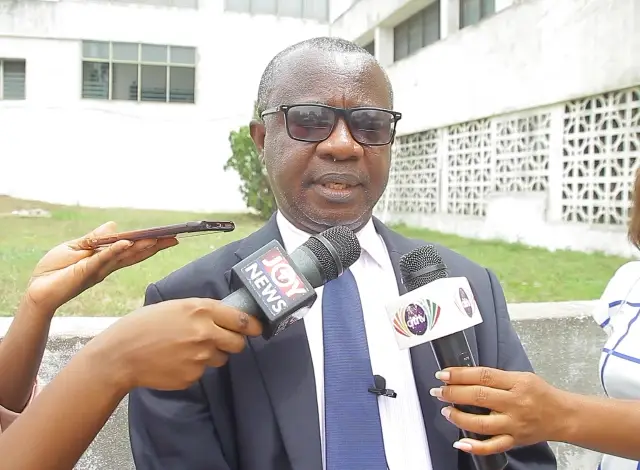
The Public Relations Manager for the Accra East Region of GWL, Nana Yaw Barima Barnie, disclosed this in an interview with The Ghanaian Times in Accra yesterday to inform the public about the new arrangement. He said the move would make the regions more manageable and enable the company to address customer concerns more promptly.
“Smaller things are better managed than bigger things,” Nana Barnie said, explaining that the new arrangement would bring management closer to customers and help the company better understand and resolve their challenges.
Accra East Remains Largest Region
Under the new structure, the Accra East Region, which previously comprised 11 districts, has been reduced to five districts — Accra East, Accra North, Accra Central, Dome and Kwabenya. Nana Barnie said that despite the restructuring, Accra East remained the largest region in terms of revenue collection and customer base. The region currently serves over 2 million residents and supplies 234,645.96 cubic metres of water daily.
Rationing Remains Necessary as Demand Outpaces Supply
On water supply, Nana Barnie said rationing remained necessary in Accra because demand continued to exceed available supply. He said each community had a rationing schedule, enabling residents to plan and store water ahead of periods of supply interruption. He explained that supply could also be disrupted by planned maintenance, burst pipelines and equipment repairs.
According to him, rising demand made it difficult to increase supply quickly because new treatment plants required significant investment and considerable time to construct.
The challenge is compounded by ageing infrastructure. The Managing Director of GWL, Adam Mutawakilu, has previously disclosed that several of the country’s major water facilities were constructed more than 60 years ago and are now operating below capacity. “We have the Candy plant in Accra, constructed in 1950. Then the Kpong old Works in 1954. The Weija plant was built in 1960,” he said. “These are very old plants, and they are still forming the backbone of our water supply today”. He noted that since recent investments in 2014 and 2015, “not even a gallon of water has been added to production in Accra” even as the population continues to grow.
Revenue Challenges Persist
Nana Barnie said GWL continued to face challenges with unpaid bills and illegal connections, despite efforts by revenue mobilisation teams to encourage customers to settle their arrears. He said customers who failed to pay their bills could be disconnected and would have to settle their outstanding balances before reconnection.
He appealed to customers to pay their bills regularly, stressing that GWL relied on internally generated revenue to finance operations, including salaries, chemicals, pipes, fuel and other essential requirements.
The revenue challenge is substantial. In February 2025, the Accra East Region alone launched an “Operation Recover All Arrears” exercise targeting over GH¢243.3 million owed by 168,398 customers across its districts. Nationally, GWL has reported customer arrears totalling around GH¢2 billion, with about 78 per cent resulting from illegal connections, meter bypassing, billing anomalies and outright water theft. The company’s non-revenue water — water that is produced but not billed — stood at 51.6 per cent as of December 2025.
Digital Transformation Underway
Nana Barnie said the company had introduced electronic meter reading and billing systems, with meter readers using mobile devices to record readings and photograph meters as evidence. He said the system was expected to improve accountability and reduce disputes, while customers now received electronic bills and could use the GWL Customers App and USSD platforms to check bills, view payment history and make payments.
He said new service connection applications had also been moved online, advising applicants to provide accurate GPS information to facilitate the location of their properties.
The digital push forms part of broader efforts to modernise GWL’s operations. The company has acknowledged that smart meters installed since 2017 are only now being fully activated for remote reading, with significant progress expected by December 2026.
A Company Under Pressure
The restructuring comes amid heightened scrutiny of GWL’s performance and a broader managerial shake-up. In August 2026, Managing Director Adam Mutawakilu approved mass transfers of chief managers, finance officers, communications personnel and technical staff across the company’s regional and operational structures, effective October 1, 2026. Earlier in the year, 41 district managers were reassigned as part of efforts to address internal sabotage and water theft.
Ghana Water Limited was established on July 1, 1999, following the conversion of the Ghana Water and Sewerage Corporation into a state-owned limited liability company. The corporation itself was created in 1965 under an Act of Parliament (Act 310) in line with recommendations of the World Health Organisation. Today, GWL manages 84 water supply systems across the country, serving an estimated 14 million people through 15 regional offices and 103 district offices.
Nana Barnie urged customers to maintain adequate water storage capacity and pay their bills regularly to support reliable service delivery.


