



The government has initiated a review of the GH¢25,000 fee for acquiring Ghanaian citizenship following mounting concerns from members of the diaspora that the cost is discouraging people from formalising their ties with the country.
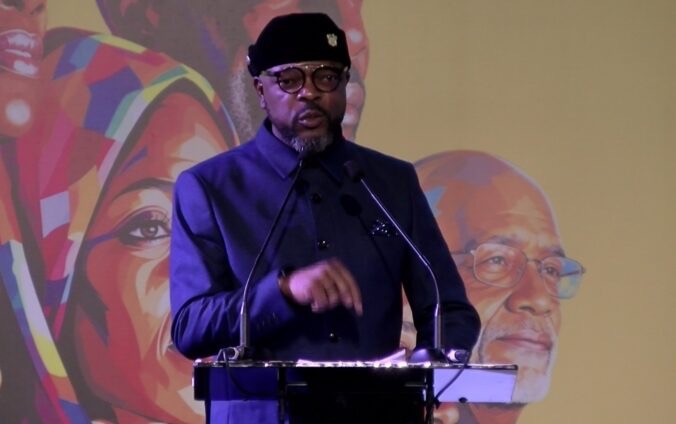
Kofi Okyere Darko, Director of the Diaspora Affairs Office of the President, confirmed that the matter had been raised with the Minister for the Interior and would be considered through the appropriate process. He said the government did not want the cost of citizenship to become a barrier for members of the diaspora seeking to establish formal ties with Ghana.
“We didn’t want to relegate or shelve citizenship because of that amount, but quite a number of the people in the diaspora family are not happy with it. So I’ve spoken with the Minister in charge of Interior for us to look at that amount again,” Mr Okyere Darko said.
The issue was raised during a diaspora engagement meeting in Accra, where participants discussed citizenship, investment, and efforts to deepen Ghana’s relationship with its historic diaspora.
Diaspora Voices: “How Are You Going to Charge Me?”
One participant, Imakhus Nzingah Okofu, popularly known as Mama One Africa, questioned the rationale for applying the same fee to people who have already established longstanding connections with Ghana. Ms Okofu, who has lived in Ghana since 1987, said her circumstances would make the fee particularly difficult to justify.
“For instance, if I have lived in this country for more than 10 years, married to a Ghanaian and invested much more than GH¢25,000 in Ghana, and I am now applying for citizenship, how are you going to charge me?” she asked.
She said the cost could create an additional hurdle for members of the diaspora who have already lived, worked, invested, or established families in Ghana.
Nathakie Kanban, a member of the Ghanaian diaspora in the United States who became a Ghanaian citizen in 2019, also questioned the current charge. Ms Kanban said she paid between GH¢150 and GH¢200 when she acquired Ghanaian citizenship in 2019, pointing to the significant difference between that amount and the current GH¢25,000 fee.
She also questioned the charge in the context of Ghana’s efforts to strengthen its relationship with the historic African diaspora, particularly amid discussions about reparations for the transatlantic slave trade.
“The fee is out of line with asking the rest of the world to pay reparations, with slavery being the worst crime against humanity. But then when you come, they request money,” she said.
A Steep Rise from GH¢150 to GH¢25,000
The GH¢25,000 fee was introduced in December 2025 as part of sweeping reforms to Ghana’s citizenship acquisition process announced by Interior Minister Muntaka Mohammed Mubarak. Under the revised framework, West African nationals must pay GH¢15,000, while other Africans and members of the African diaspora pay GH¢25,000 after residing in Ghana for approximately five years. Non-Africans are required to pay the cedi equivalent of US250,000.
The Minister defended the reforms at the time, citing national security concerns. “You could come into Ghana, stay for barely three months, submit fictitious documents, pay about GH¢7,000, and you would be made a Ghanaian,” he said, revealing that investigations showed more than 8,000 Chinese nationals and about 9,000 Indians applied for residency and citizenship in 2014 alone under a system that had become “dangerously lax.”
He stressed that citizenship must translate into economic benefit. “Ghana is peaceful, but we are not cheap. Citizenship must strengthen our economy and security,” the Minister emphasised.
The fee structure, approved by Parliament under the Fees and Charges (Miscellaneous Provisions) (Amendment) Regulations, 2025 (L.I. 2512), represented a dramatic increase from the GH¢150–GH¢200 range that applicants paid as recently as 2019.
Applications Suspended Amid Overwhelming Demand
The fee increase was accompanied by other changes that have frustrated applicants. In February 2026, the Ministry of the Interior and the Diaspora Affairs Office announced a temporary suspension of citizenship applications for members of the African diaspora, citing the need to make the system more accessible and user-friendly.
The suspension followed complaints about the number of stages involved in the process and the high cost. The application fee stood at $136, while shortlisted candidates were required to pay a further $2,280. Applicants also faced the requirement to submit DNA evidence within a tight one-week window, which Dr Erieka Bennet, ambassador for the Diaspora African Forum, described as “impossible” for most people. Some also questioned the reliability of DNA testing.
The suspension, announced on February 1, 2026, came just weeks before a scheduled citizenship ceremony on March 5, 2026. The government said updated timelines and guidelines would be issued “in due course,” without giving a timeframe. Uncertainty around the suspension has caused anxiety for some potential applicants planning their relocation or investments.
A Promise at Risk of Becoming a Privilege
The concerns extend beyond the fee itself. According to a report by the citizenship rights organisation Citizenship Rights Africa, nearly 2,000 diaspora members expressed interest in repatriation, far beyond the 150-plus who qualified. Yet many were excluded due to prohibitive costs. Beyond the headline fee, applicants face hidden charges including expedited background checks, transportation fees for official processing, and accommodation costs during the application period.
“Together, these costs create a financial burden that contradicts the principle of the Right to Return,” the report stated. “For many, the process is not only expensive but exclusionary, turning citizenship into a privilege reserved for the wealthy.”
The report also highlighted a leadership crisis within diaspora representation, with critics arguing that leaders now in their 80s, appointed by former President Kufuor, have become disconnected from younger generations seeking to reconnect with Africa.
Ghana’s Pan-African Vision and the Weight of History
The controversy comes at a particularly sensitive moment for Ghana, which has positioned itself as a beacon for the global African diaspora. The country’s outreach to Africans worldwide is rooted in its post-independence Pan-African vision championed by first President Kwame Nkrumah, and was relaunched in 2019 as the “Year of Return” to mark 400 years since the first enslaved Africans were taken from the continent.
The Year of Return campaign drew thousands of visitors from the diaspora and generated an estimated US$1.9 billion in economic activity. International arrivals rose from under 1 million in 2018 to nearly 1.3 million in 2024, while tourism revenues nearly doubled from $2.7 billion to close to $5 billion.
Rather than ending after one year, Ghana expanded the initiative into “Beyond the Return,” a 10-year programme running through 2030 aimed at strengthening long-term ties with the African diaspora. The country has also reinforced its commitment through policies allowing people of African descent to obtain citizenship and live, work, and invest in Ghana.
Since 2016, at least 1,213 people have received citizenship through diaspora pathways in Ghana, Sierra Leone, Benin, and Guinea-Bissau, with the vast majority receiving Ghanaian citizenship, according to data from the Migration Policy Institute. Among them are high-profile figures including music legend Stevie Wonder.
Members of the diaspora invest in sectors including real estate, agriculture, tech, and small businesses, often seeking Ghanaian citizenship so they can own property, vote, and access public services.
However, the tension between Ghana’s desire to attract diaspora investment and its decision to impose substantial fees has sparked a broader debate about whether the country is treating the Right of Return as a genuine gesture of reparative justice or as a revenue-generating mechanism.
Government Committed to Review
Mr Okyere Darko said the government’s interest extends beyond people simply acquiring Ghanaian citizenship. He said the focus includes members of the diaspora who have developed longstanding connections with Ghana — people who have lived in the country for years, obtained residency, and are willing to invest and contribute to national development.
He said the government’s broader objective was to deepen Ghana’s relationship with members of the diaspora who have genuine and sustained connections to the country. The review of the citizenship fee forms part of a wider discussion about how Ghana can encourage diaspora engagement while maintaining the requirements and processes governing citizenship. Any change to the fee would have to follow the appropriate government process, he added.
The concerns raised at the engagement have brought renewed attention to the balance between the financial requirements for acquiring Ghanaian citizenship and Ghana’s efforts to encourage members of its historic diaspora to reconnect, invest, and participate in national development — a balance that will determine whether Ghana’s Pan-African promise remains a genuine invitation or becomes an unaffordable privilege.


