



Ghana is set to construct a 1,200-megawatt state-owned gas-fired power plant that will become the country’s largest electricity generation facility upon completion, surpassing the longstanding Akosombo Hydroelectric Power Station’s 1,020-megawatt capacity .
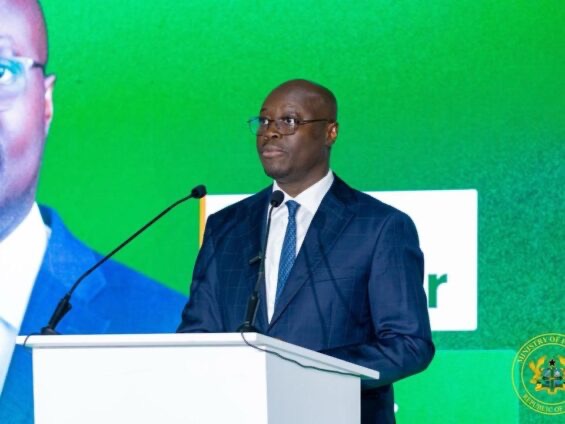
Finance Minister Dr Cassiel Ato Forson announced the landmark project at the Future of Energy Conference 2026, organised by the Africa Centre for Energy Policy (ACEP) in Accra. The facility, to be located at Kafodzidzi-Abrobeano in the Komenda-Edina-Eguafo-Abrem Municipality of the Central Region, represents a cornerstone of the government’s “Gas-to-Power Transformation Strategy” .
A Historic Investment in Energy Infrastructure
The plant marks Ghana’s most significant energy infrastructure development since independence, designed to provide reliable and affordable electricity for the nation’s industrial transformation. Speaking at the conference, Dr Forson declared: “Ghana is acting by building a 1,200 MW state-owned gas-fired power plant” .
The project will be developed in phases, with the first 600-megawatt phase expected to be commissioned in 2028 . Feasibility studies have confirmed the project’s viability, with environmental assessments, engineering designs, and permitting processes progressing steadily .
The government has already secured gas turbines directly from GE Vernova, achieving estimated cost savings of between 35 and 45 percent compared with third-party procurement . The facility is projected to create more than 2,000 direct and indirect jobs during the first phase and contribute to a reduction in electricity tariffs of between 10 and 20 percent .
According to the Ghana News Agency, the power plant is expected to generate approximately US$2 billion in benefits to the State over five years through fuel savings, foreign exchange savings, taxes, levies, and dividends .
Africa’s Energy Financing Challenge
Dr Forson placed Ghana’s investment within the broader context of Africa’s energy crisis and financing gap. “About 600 million Africans lack electricity, yet Africa attracts only around 2 per cent of global clean-energy investment,” he stated. “We cannot industrialise a continent the world considers too risky to power” .
The minister acknowledged that major energy projects required substantial long-term financing that governments could not provide alone. “In 2025, Africa’s debt-servicing costs were equivalent to more than 85 per cent of the continent’s energy investment. Public budgets cannot carry it alone,” he said .
He called for guarantees, blended finance, local-currency funding, deeper capital markets, and credible public-private partnerships to close Africa’s energy financing gap. The minister emphasised that Africa must create the right conditions to attract greater investment into its energy sector, requiring efficient utilities, predictable regulation, and credible opportunities for private investors .
Industrialisation and the Energy Imperative
The conference theme, “Powering Africa’s Industrial Transformation: Energy Systems for Value Addition and Competitiveness,” reflected growing consensus among policy leaders that energy access alone is insufficient for meaningful economic transformation.
Energy Minister Dr John Abdulai Jinapor, also speaking at the conference, questioned whether the electricity being provided could power competitive African industries. He noted that while the world has about 92 percent electricity access, the remaining 8 percent—approximately 660 million people without access—is heavily concentrated in Africa. “Of that 660 million, 600 million of them are from Africa,” he stated .
Dr Marit Kitaw, Economic Affairs Officer at the United Nations Economic Commission for Africa (UNECA), reinforced the message: “Universal energy access remains a moral and development imperative. Access alone is not enough, and industrial transformation requires power that is affordable, reliable, scalable and available” .
Dr Forson called for a shift from exporting raw materials toward high-value production within Africa. “Africa must industrialise as one market, not 54 fragmented economies. The Africa Continental Free Trade Area gives us reach, but agreements alone do not create trade. We must move from trading what we produce to producing what Africa trades in,” he stated .
Energy Security and Independence
The plant is part of a broader strategy to reduce reliance on imported fuel and expensive light crude oil, moving toward a more sustainable and self-reliant energy system. Gas output from Ghana’s key oil fields is rising, with the Jubilee and TEN partners currently producing about 130 million standard cubic feet daily. Additional production from Offshore Cape Three Points partners is expected to feed the new facility .
The government is also advancing plans to develop a modular gas processing facility to strengthen energy security and expand generation capacity . Land acquisition for the project has been completed, with financial close expected before the end of 2026 .
The project forms part of the government’s broader efforts to strengthen the country’s energy infrastructure and ensure a more reliable and affordable electricity supply to power industries, create jobs, and drive economic transformation .
A New Era for Ghana’s Energy Sector
The 1,200-megawatt plant represents a significant step toward Ghana’s energy security and industrial ambitions. For a nation with about 89 percent electricity access and targeting universal access by 2030 , the project signals a strategic pivot from merely expanding household access toward using energy as a catalyst for value addition and economic transformation.
“The resources are here in Africa, the market is with us, the people of Africa are ready,” Dr Forson concluded. “Let us turn Africa’s potential into production; production into jobs; and jobs into prosperity” .


