

Ghana has significantly improved its financial obligations to Independent Power Producers (IPPs), raising payments from approximately 40% to nearly 100% of monthly invoices, Minister of Energy and Green Transition Dr. John Abdulai Jinapor has disclosed.
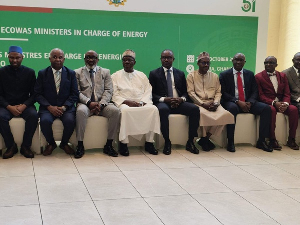
Speaking at the 16th Meeting of ECOWAS Ministers in Charge of Energy in Accra, Dr. Jinapor stated that the government inherited a power sector on the brink of disruption, with several IPPs threatening to curtail generation due to persistent payment arrears. To address this, the government implemented aggressive revenue mobilization measures and structural reforms aimed at restoring the financial stability of state-owned electricity utilities .
The Minister noted that while the initial revenue collection measures generated public dissatisfaction, they were necessary to prevent disruptions in electricity supply and safeguard the sector’s stability. “The government deliberately prioritized financial discipline over the immediate political consequences of enforcing payment obligations,” Dr. Jinapor said, emphasizing that reliable electricity is critical for households, businesses, and the broader economy .
Broader Financial Turnaround
The increase in IPP payments is part of a wider effort to stabilize Ghana’s energy sector, which has been burdened by legacy debt. Dr. Jinapor revealed that the government has cleared approximately $1.47 billion in legacy energy sector debt, which has helped rekindle investor confidence . Additionally, reforms to the Cash Waterfall Mechanism—the system used to distribute collected revenues among sector players—have been pivotal.
Before the current administration took office, only about GH¢6 billion was declared monthly into the mechanism, with IPPs receiving roughly 42% of their invoices. Currently, declarations have risen to nearly GH¢15 billion monthly, allowing IPPs to receive close to 100% of their billed amounts . The government has also renegotiated agreements with some IPPs, yielding additional savings of approximately $250 million .
Regional Implications
Addressing the ECOWAS gathering, Dr. Jinapor urged member states to strengthen financial management within their respective energy sectors, arguing that successful regional electricity integration depends on the financial stability and institutional credibility of individual national power systems. He stressed that financially sustainable utilities are essential for attracting continued investment into the region’s power sector and ensuring reliable cross-border electricity trade .
While the Minister’s disclosures highlight significant progress in payment discipline, challenges remain. The energy sector still faces structural issues, including high distribution losses and under-recovery of tariffs, which the International Monetary Fund has warned continue to pose fiscal risks . Nevertheless, the shift from liquid fuel to natural gas and the improved payment flows to IPPs represent a critical step toward restoring the viability of Ghana’s power sector .