



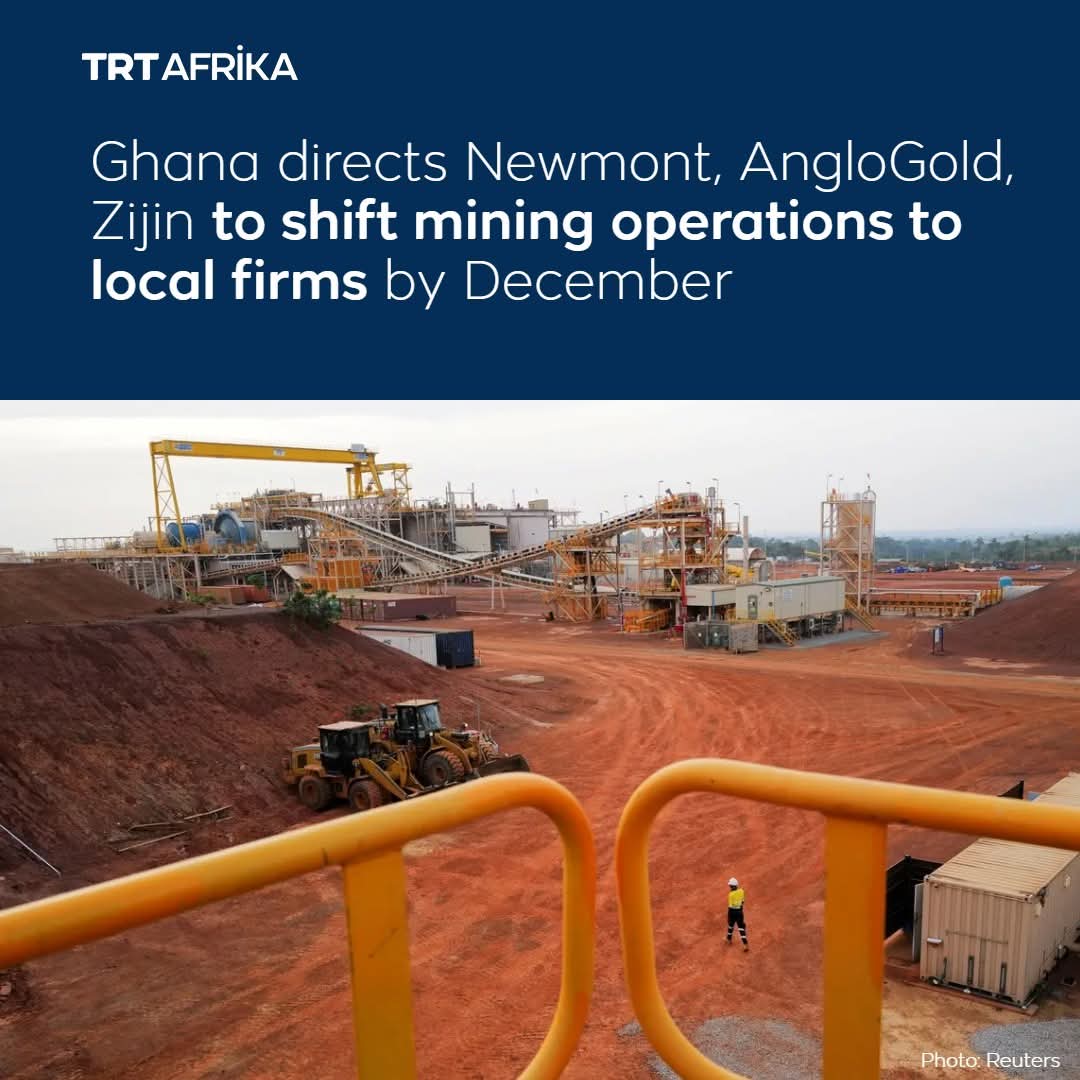
Ghana’s Minerals Commission has formally directed Newmont, AngloGold Ashanti and Chinese-owned Zijin to fully hand over their mining operations to locally owned contractors by December 2026 or face escalating sanctions, including potential mine shutdowns.
The ultimatum, contained in separate letters sent to the three companies in October and January and seen by Reuters this week, leaves them with just over eight months to comply.
The three firms currently operate their Ghanaian mines using their own employees and are the only large-scale miners still doing so, according to two government officials and three mining executives cited by Reuters. Almost all other major operators have already moved to contract mining since Accra tightened its local ownership rules in January 2025.
Under the revised regulations, surface mining must be performed by companies that are 100% Ghanaian-owned, while underground operations require at least 50% local ownership.
Newmont’s extension request rejected
Newmont, which runs the Ahafo North and South gold mines, asked to comply fully by 2027 instead, citing additional regulatory and governance requirements it faces as a publicly listed company. The company’s global chief executive, Natascha Viljoen, discussed the request with the Minerals Commission during meetings in Accra this month. However, regulators rejected the extension, pointing out that other listed miners, including Gold Fields, have already fallen into line.
“If I can be more efficient, why shouldn’t I mine myself?” a source within the Ghana Chamber of Mines said, reflecting the frustration among some in the industry at being forced to outsource.
Zijin says it is preparing shift; AngloGold silent
Zijin’s Ghana unit said it has been engaging with the Minerals Commission since November 2025, preparing tenders and technical frameworks for a shift to contract mining and rolling out new technologies that require initial benchmarking before a full tender process. AngloGold Ashanti did not immediately respond to requests for comment on Wednesday.
“Local companies have the capacity to take on expanded contract mining roles and the commission will hold their hands to execute,” one government official said.
Sanctions: large fines first, then shutdown
The Minerals Commission has warned that any miner that misses the deadline will first be hit with “a huge fine”. If non-compliance persists, the official added, “we have the right to shut down the mine.”
The push is part of a broader resource‑nationalism wave sweeping Africa. Ghana – Africa’s top gold producer – recorded gold exports of US$11.2 billion as of August 2025, with the mining sector contributing 16.6% of GDP growth last year.
Across the continent, Mali only ended a standoff with Barrick last November over its new mining code. Minerals Commission chief Isaac Tandoh made the government’s position clear at a February local‑content summit: “Employment is not the same as ownership. Labour is not the same as control. Our people are working in the mines, agreed, but do they own the mines?”
The December 2026 deadline is now seen as a decisive test of how global miners can adapt to Africa’s push to keep more value – and control – on the continent.


