


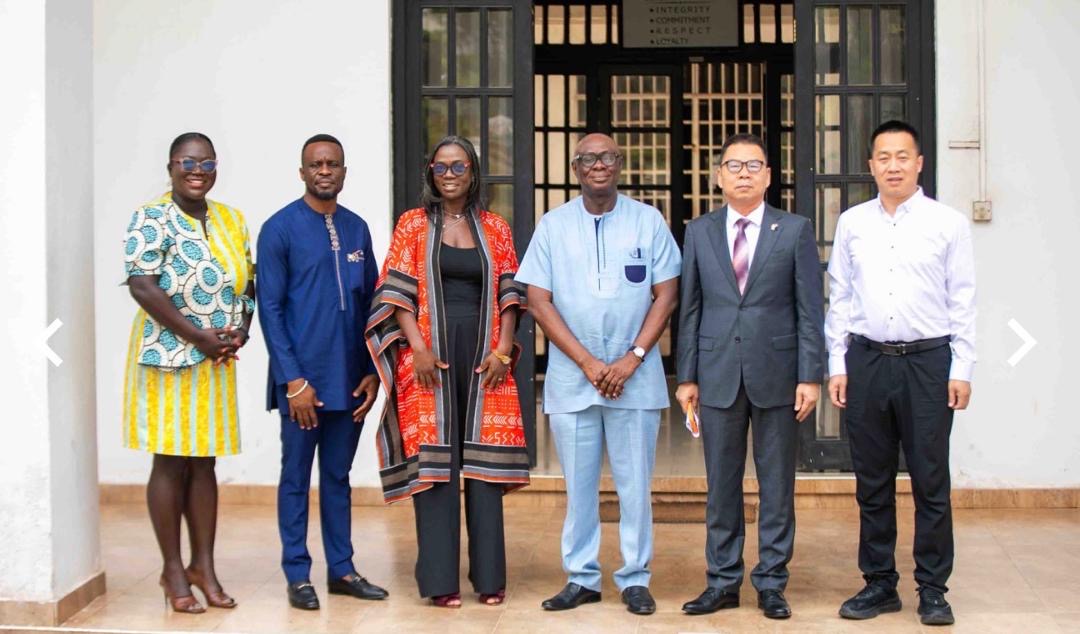
The School of Agriculture at the University of Ghana held its World Food Day celebration at the Legon campus on Friday, with the Ghana China Business Chamber of Commerce (GCBCC) sponsoring the event with 10,000 cedis to support a series of seminars and exhibitions focused on food security and agricultural innovation.
This year’s global theme for World Food Day is “Innovate today. Nourish tomorrow.” The School of Agriculture adapted the theme to the national context as “Innovation Today for a Food-Secure Ghana: From Research to the Dining Table,” focusing on how to translate agricultural research findings into practical productivity and increase young students’ engagement with food security issues.
Mr Liu Wen Min, Vice Chairman, General Secretary and Acting Chairman of the GCBCC, attended the donation ceremony on behalf of the chamber. Speaking during the event, Mr Liu said the chamber recognizes the foundational role of food production in Ghana’s economy and promised that his outfit will take more substantive measures in the future to support food production in the country. He did not specify the form or timeline of the follow-up support.
Background information shows that the Ghana China Business Chamber of Commerce was established in 2003 and has long been committed to promoting trade and investment cooperation between the Chinese and Ghanaian business communities. The chamber has previously taken action to support Ghanaian SMEs and young entrepreneurs, including establishing credit facilities for import-export trade and small and medium-sized enterprises. Mr Liu himself has publicly articulated the chamber’s position on supporting local businesses, reducing import costs, and facilitating connections between Chinese factories and Ghanaian merchants.
Analysts noted that while the donation amount is limited, it comes at a time when Ghana faces severe food affordability challenges. At a World Food Day seminar held at the University of Ghana around the same period, nutrition experts disclosed data showing that about 65% of Ghanaians cannot afford a healthy diet, and 43.5% of the population faces moderate to severe food insecurity. Against this backdrop, the chamber’s symbolic donation is interpreted more as a gesture expressing the interest of foreign business groups in the host country’s agricultural agenda rather than a direct solution to structural funding gaps.
The School of Agriculture did not disclose the specific allocation of the funds during the event. It is understood that the university’s World Food Day series also included a farmers’ market, cooking competitions and research exhibitions, aimed at bridging the gap between academic research and dining table consumption.